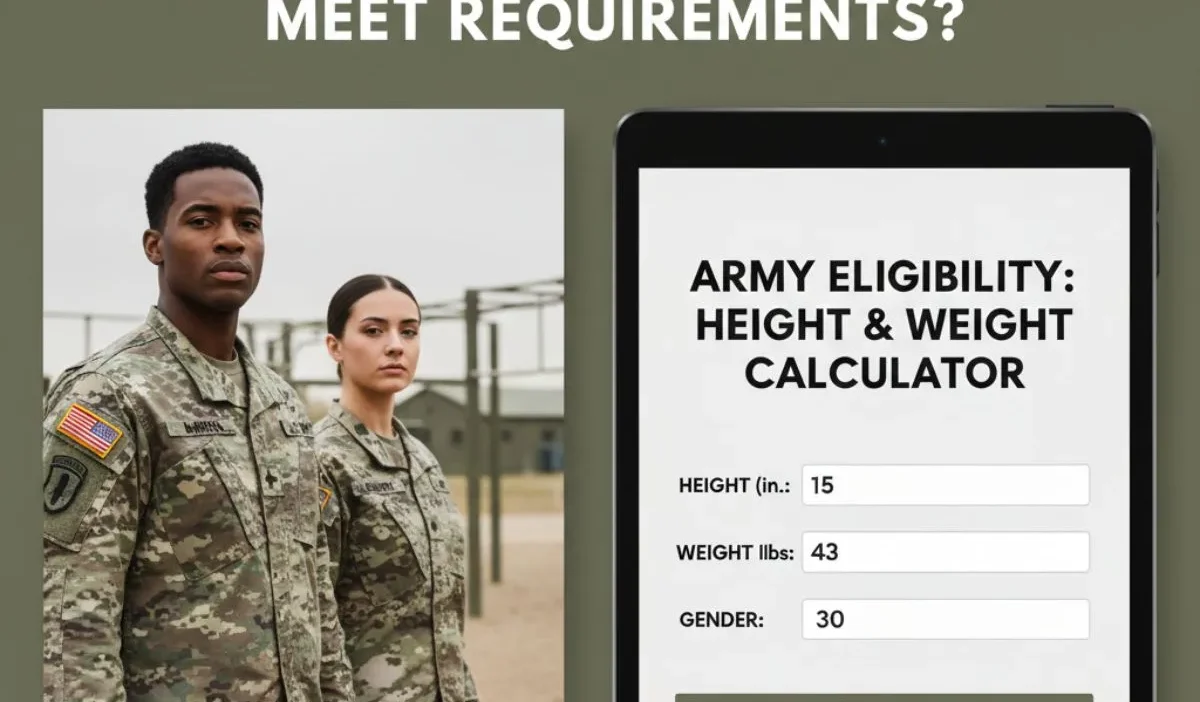
When it comes to joining the Army, physical fitness is a crucial part of the recruitment process. One of the first assessments that potential recruits face is the Army Height Weight Calculator. This tool helps determine whether an individual meets the Army’s strict height and weight standards, which are set to ensure recruits are fit for the demands of military service.
Understanding these requirements is vital for anyone considering a career in the Army, as both weight and body composition play a significant role in eligibility. The Army doesn’t just look at your weight they consider factors like body fat percentage and overall health.
In this article, we’ll break down the Army’s height and weight requirements, explain how the calculator works, and give you useful tips to meet the physical standards. Whether you’re aiming for active duty or reserves, this guide will help you prepare for the fitness assessment.
Army Height and Weight Standards
The Army has specific height and weight standards that all potential recruits must meet before they can move forward in the recruitment process. These standards are designed to ensure that soldiers are physically fit and capable of handling the physical demands of military service.
Height: While the Army does not have a specific minimum height requirement, there are upper limits based on gender and age. Generally, recruits must fall within a specified range, with men typically needing to be between 60 and 80 inches tall and women between 58 and 80 inches tall. These height limits help ensure that soldiers are physically capable of wearing the required uniforms and equipment and have the stamina to carry out military tasks.
Weight: The Army uses a weight-for-height ratio to assess recruits’ overall fitness. However, weight alone is not the only determining factor. Depending on your height, age, and gender, the Army will use a set range of allowable weights. If a recruit falls outside this range, they may not be eligible to continue with the recruitment process. It’s important to note that even if you’re within the weight limits, the Army also evaluates body fat percentage, ensuring that recruits are not carrying excess fat that could hinder their performance.
The Army Height-Weight Calculation Formula
The Army uses a specific height-weight calculation formula to determine whether a recruit meets the physical requirements for service. This formula isn’t just about your weight – it also takes into account your height and, in some cases, your age and gender. The calculation ensures that recruits are within healthy limits and ready for the physical demands of military life.
The primary method the Army uses to assess recruits is the Body Mass Index (BMI). BMI is a straightforward formula:
BMI = weight (kg) / height (m)^2
This formula provides a general idea of whether an individual has a healthy weight relative to their height. However, BMI alone isn’t always sufficient for military eligibility, as it doesn’t account for muscle mass. For example, a bodybuilder might have a high BMI due to muscle weight but may still pass the Army’s physical fitness standards.
In addition to BMI, the Army also checks body fat percentage, especially for recruits who may not meet the weight-for-height standard. This ensures that recruits are not just within weight limits but also have a healthy body composition. If your BMI is outside the allowable range, body fat measurements are used to assess your eligibility.
Understanding Body Fat Percentage and Its Role in Army Standards
While height and weight are important factors, body fat percentage plays a critical role in the Army’s physical fitness evaluation. Body fat percentage refers to the proportion of a person’s body mass that is made up of fat, as opposed to lean mass (muscles, bones, etc.). Unlike BMI, which can be influenced by muscle mass, body fat percentage gives a clearer picture of an individual’s overall health and fitness level.
For recruits, the Army has specific body fat percentage standards that vary by age and gender. Generally, male recruits should have a body fat percentage between 18-26%, while female recruits should fall between 26-36%. These percentages represent the maximum allowable levels of body fat to ensure that recruits are fit enough to handle the physical demands of military training and operations.
Excess body fat can lead to health issues such as reduced endurance, joint stress, and even cardiovascular problems, which can impact a soldier’s performance. Therefore, if a recruit’s BMI is within acceptable limits but their body fat percentage exceeds the Army’s standards, they may be disqualified.
Achieving a healthy body fat percentage is as important as meeting weight requirements. Regular exercise and a balanced diet are essential for maintaining a healthy body composition.
Using the Army Height-Weight Calculator
The Army Height-Weight Calculator is a straightforward tool that helps determine whether a recruit meets the physical standards required for military service. This tool is essential for anyone considering joining the Army, as it provides an easy way to assess your eligibility based on your height, weight, and sometimes age or gender.
To use the calculator, you’ll need to input basic information:
- Height: Your height is typically measured in inches or centimeters, depending on the system used.
- Weight: Your weight is entered in pounds or kilograms.
- Age and Gender: Some calculators may ask for your age and gender, as these factors can influence the allowable weight ranges.
Once you input your data, the calculator will give you an immediate assessment, showing whether your height and weight fall within the Army’s approved limits. If you meet the weight-for-height requirements, the calculator may also check your body fat percentage, as this is another key factor in eligibility.
Many online calculators are available for free through official military websites or trusted third-party sites. Using the Army Height-Weight Calculator regularly can help you track your progress as you prepare for the physical requirements of recruitment.
Common Misconceptions About Army Height and Weight Standards
Many individuals have misconceptions about the Army’s height and weight requirements, often leading to confusion or unrealistic expectations. It’s important to address some of these myths to help potential recruits better understand the standards and the true requirements for military service.
Myth 1: “I’m too short to join the Army.”
While there are minimum height requirements, they are not extremely restrictive. For men, the typical range is between 60 and 80 inches, and for women, it’s between 58 and 80 inches. These ranges allow some flexibility based on your individual build and the role you’re applying for.
Myth 2: “I can join as long as I’m within the weight limits.”
Meeting the weight-for-height standards is just one part of the equation. Body fat percentage is equally important. A recruit might be within the acceptable weight range but still fail to meet the Army’s body fat standards. If this is the case, further assessment may be required to determine overall eligibility.
Myth 3: “BMI alone determines my eligibility.”
While BMI plays a role in assessing fitness, it doesn’t account for muscle mass. For example, athletes or bodybuilders with more muscle may exceed BMI limits but still meet the Army’s physical standards.
Tips for Meeting Army Physical Standards
Meeting the Army’s height, weight, and body fat standards requires dedication, a solid fitness plan, and consistency. Whether you need to lose weight, build muscle, or improve your overall health, here are some practical tips to help you meet the Army’s physical requirements.
1. Start with a Solid Workout Routine
Focus on a balanced fitness regimen that includes cardiovascular exercise, strength training, and flexibility. Cardiovascular activities like running, cycling, and swimming will help you burn fat and improve your endurance. Strength training exercises such as squats, push-ups, and weightlifting will build muscle, which can positively impact your body composition.
2. Eat a Healthy, Balanced Diet
A proper diet is essential for losing fat and building lean muscle. Focus on a nutrient-dense diet with plenty of lean proteins, complex carbohydrates, and healthy fats. Avoid processed foods and sugary snacks. Make sure to stay hydrated and eat smaller meals throughout the day to maintain energy levels.
3. Track Your Progress
Use tools like the Army Height-Weight Calculator regularly to track your weight and body fat percentage. By measuring your progress, you can adjust your fitness plan and diet as needed to stay on track.
4. Stay Consistent
Achieving Army standards isn’t an overnight task. Consistency is key to maintaining a healthy weight and body composition over time.
Additional Factors That Affect Army Eligibility
While meeting the Army’s height, weight, and body fat standards is essential, it’s not the only part of the recruitment process. Several other factors can affect your eligibility for service, including physical fitness, medical evaluations, and specific role requirements.
1. Physical Fitness Test (PFT)
The Army uses a Physical Fitness Test (PFT) to assess your overall fitness level. The test includes exercises like running, push-ups, sit-ups, and sometimes a hand-release push-up test. Passing the PFT is crucial for recruitment, as it ensures you have the endurance, strength, and physical capability to handle military tasks. A good fitness routine can improve your PFT scores and increase your chances of passing.
2. Medical and Health Evaluations
Before you can join, you’ll need to pass a medical exam. Conditions like asthma, heart issues, or poor vision may disqualify you unless you qualify for a medical waiver. It’s important to address any pre-existing health conditions before applying.
3. Vision and Hearing Standards
The Army also has specific standards for vision and hearing. For example, you may need to pass a basic vision test or meet hearing standards to be eligible. Some conditions, such as color blindness, might require further evaluation.
Meeting all of these requirements is crucial for your Army eligibility.
FAQs about Army Height and Weight Standards
1. What happens if I don’t meet the Army’s height or weight requirements?
If you don’t meet the height or weight standards, you may be disqualified from the recruitment process. However, if you are close to meeting the standards, you may be given time to improve your fitness before a final decision is made. The Army also considers body fat percentage, so it’s essential to maintain a healthy body composition.
2. Is there a specific weight requirement for different Army roles?
The weight requirements are generally based on height and age, and they apply to all recruits, regardless of role. However, certain roles may have additional physical fitness tests or requirements, such as for specialized forces (e.g., special operations) that may require higher levels of physical conditioning.
3. Can I still join the Army if I’m overweight but in good physical condition?
Yes, if you have a higher body fat percentage but are in good physical condition (able to perform well on the Physical Fitness Test), you may still be eligible. Body fat percentage is a key factor, and passing the PFT can sometimes compensate for other minor shortcomings.
4. Do I need to maintain these physical standards throughout my military career?
Yes, the Army requires soldiers to maintain physical fitness throughout their service. Regular fitness tests and assessments ensure that soldiers remain fit and ready for duty.
Conclusion
In conclusion, meeting the Army’s height, weight, and body fat standards is an essential step in the recruitment process. These standards ensure that all recruits are physically prepared for the demands of military life, contributing to overall readiness and operational efficiency. By using the Army Height-Weight Calculator, you can easily determine whether you meet the basic physical requirements and identify areas where improvement may be needed.
Remember, the Army doesn’t just look at weight body composition, including body fat percentage, plays a critical role. Achieving a healthy body fat percentage and staying within the Army’s weight-for-height standards requires a combination of proper exercise, a balanced diet, and dedication to your physical fitness. Staying consistent and tracking your progress using the Army Height-Weight Calculator can help you stay on track toward meeting the Army’s requirements.
If you’re serious about joining the Army, take proactive steps to get fit and maintain a healthy body composition. With the right mindset, fitness plan, and persistence, you can pass the Army’s physical standards and be one step closer to your military career. Start preparing today and set yourself up for success in the recruitment process.

I’m Etalia Robert, the mind behind PeacefulQuotes.com. I share thoughtful words and meaningful quotes that inspire calm, reflection, and a little spark of wisdom in everyday life.