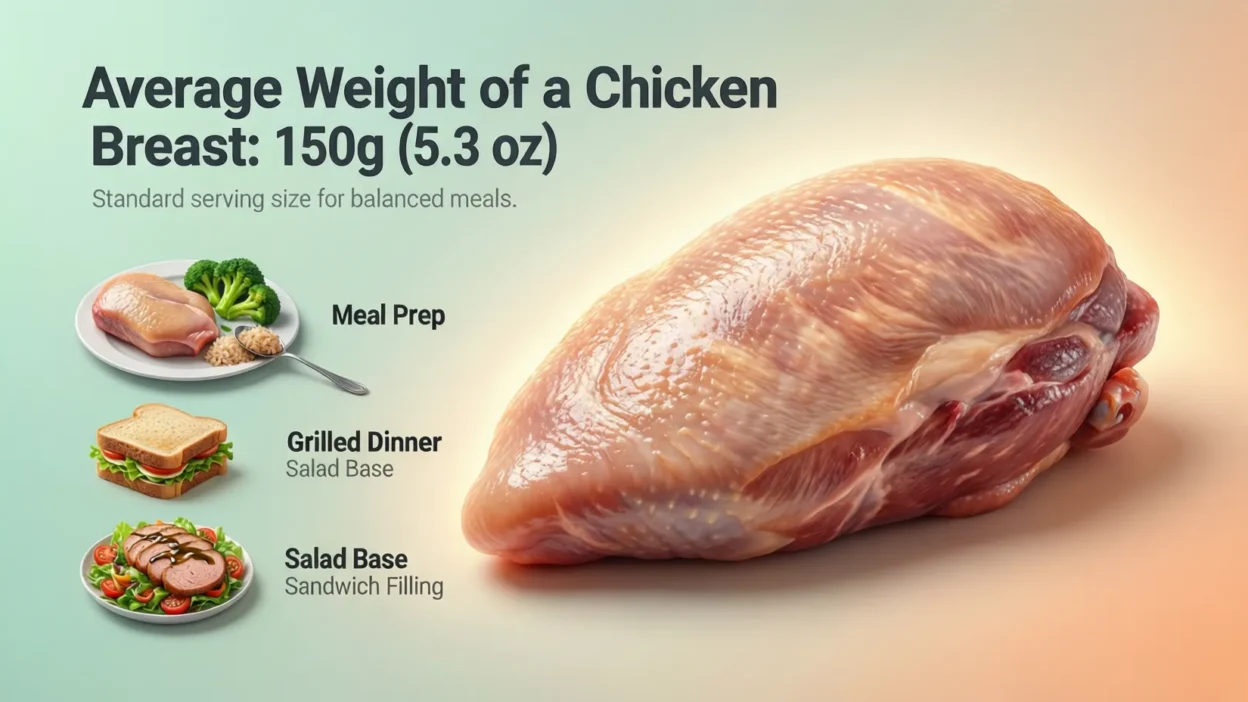
Chicken breast is one of the most popular sources of lean protein, but many people are surprised to learn that the weight of a single breast can vary widely. Recipes often call for “one chicken breast,” but without knowing its actual weight, it’s easy to miscalculate portions, calories, and nutritional content.
Whether you’re meal prepping, following a diet plan, or simply cooking dinner, understanding the average chicken breast weight is essential for accuracy.
In this article, we’ll explore the typical weight ranges of chicken breasts, differences between raw and cooked, and how factors like bone-in versus boneless or farm-raised versus supermarket chicken can affect size.
You’ll also learn practical tips for portioning, measuring, and cooking chicken breast, ensuring perfectly balanced meals every time. By the end, you’ll have all the knowledge you need to cook confidently and track nutrition with precision.
Understanding Chicken Breast Weight
Not all chicken breasts are created equal, and their weight can vary significantly depending on several factors. One of the first things to consider is raw vs. cooked weight. Raw chicken breast contains water, which evaporates during cooking, causing it to shrink by roughly 20–25%. This means a 6-ounce (170 g) raw breast may weigh only around 4.5 ounces (128 g) once cooked.
Another important distinction is boneless vs. bone-in chicken breast. Boneless breasts are lighter and more convenient for recipes, while bone-in breasts weigh more due to the bone and can take longer to cook.
On average, chicken breasts fall into weight categories:
- Small: ~4 ounces (115 g)
- Medium: ~6 ounces (170 g)
- Large: ~8 ounces (225 g)
- Jumbo: ~10–12 ounces (280–340 g)
Factors like the chicken breed, age, and whether it’s farm-raised or supermarket-bought can also influence size. Additionally, processing methods—such as trimming excess fat or skin—affect the final weight.
Knowing these details helps when following recipes, calculating calories, or preparing meal portions accurately. With this understanding, you can confidently plan meals without guessing the weight of each breast.
Nutritional Information by Weight
Understanding the nutritional content of chicken breast is just as important as knowing its weight, especially for meal planning, dieting, or bodybuilding. Chicken breast is a lean protein source, low in fat and carbohydrates, making it a staple for many healthy diets.
For raw, boneless, skinless chicken breast, the average nutritional values per 100 grams (3.5 ounces) are approximately:
- Calories: 165 kcal
- Protein: 31 g
- Fat: 3.6 g
- Carbohydrates: 0 g
Based on weight categories, here’s a rough breakdown:
- Small (115 g / 4 oz): ~190 calories, 36 g protein, 4 g fat
- Medium (170 g / 6 oz): ~280 calories, 53 g protein, 6 g fat
- Large (225 g / 8 oz): ~370 calories, 70 g protein, 8 g fat
Cooking reduces water content, concentrating nutrients slightly, so a cooked chicken breast may have slightly higher calories and protein per ounce.
By knowing these values, you can accurately track protein intake for weight loss, muscle gain, or maintenance. Combining weight awareness with nutritional info ensures your meals are balanced, portioned correctly, and aligned with your dietary goals.
Measuring and Portioning Chicken Breast
Accurately measuring and portioning chicken breast is key for cooking, meal prep, and tracking nutrition. While many recipes simply call for “one chicken breast,” the actual weight can vary, which can impact both cooking times and dietary calculations.
The most precise method is using a kitchen scale. Place the raw breast on the scale to determine its exact weight in grams or ounces. This ensures you can follow recipes accurately and calculate calories and protein for meal planning.
For those without a scale, visual portion guides can help:
- A small breast (~4 oz) is roughly the size of a deck of cards.
- A medium breast (~6 oz) is about the size of your palm.
- A large breast (~8 oz) is comparable to a cell phone or slightly larger than your palm.
If a breast is larger than needed, you can cut it into smaller portions, freeze the extras, or use them in multiple meals. Proper portioning also helps with even cooking, preventing overcooked edges or undercooked centers.
By combining weight measurement with visual guides, you can confidently portion chicken breasts for recipes, diet plans, and meal prep without guesswork, making your cooking both precise and efficient.
Cooking Considerations
The weight and size of a chicken breast directly affect how it should be cooked. Smaller breasts cook faster, while larger ones require more time to reach a safe internal temperature of 165°F (74°C). Cooking without accounting for weight can lead to undercooked or dry chicken, so it’s essential to adjust times accordingly.
For boneless, skinless chicken breasts, general guidelines are:
- Small (4 oz / 115 g): 12–15 minutes baking at 375°F (190°C)
- Medium (6 oz / 170 g): 18–20 minutes
- Large (8 oz / 225 g): 25–30 minutes
Methods like grilling, baking, or pan-searing all require slight adjustments. Thicker breasts may benefit from butterflying or pounding to an even thickness for uniform cooking. Marinating can enhance flavor and keep meat juicy, especially for larger cuts.
It’s also important to account for bone-in breasts, which take longer to cook than boneless varieties. Using a meat thermometer is the most reliable way to ensure safety and tenderness.
By considering weight, thickness, and cooking method, you can achieve perfectly cooked chicken every time—juicy, flavorful, and safe. Understanding these details helps meal prep, portioning, and recipe accuracy.
FAQs About Chicken Breast Weight
1. How many ounces is one chicken breast?
The weight varies depending on size and type. On average, a small breast weighs about 4 ounces (115 g), a medium breast around 6 ounces (170 g), and a large breast about 8 ounces (225 g). Jumbo chicken breasts can weigh 10–12 ounces (280–340 g).
2. Why does cooked chicken weigh less than raw?
Chicken loses water during cooking, causing shrinkage of roughly 20–25%. This means a 6-ounce raw breast may weigh only 4.5 ounces after cooking.
3. Does bone-in chicken weigh more?
Yes, bone-in chicken breasts weigh more due to the bone, and they also take longer to cook. Boneless breasts are lighter and more convenient for portioning and recipes.
4. Does organic or free-range chicken weigh more?
Not significantly. Breed, age, and feed affect weight more than whether the chicken is organic or free-range.
5. How can I portion chicken breast without a scale?
Use visual guides: a small breast is about the size of a deck of cards, medium is roughly your palm, and a large breast is slightly bigger than your palm.
Answering these common questions ensures accurate cooking, proper portioning, and better nutritional tracking for all types of meals.
Conclusion
Knowing the average weight of a chicken breast is more than just trivia—it’s essential for cooking accurately, tracking nutrition, and planning meals effectively. Whether you’re following a diet, meal prepping for the week, or trying a new recipe, understanding the differences between small, medium, and large chicken breasts can help prevent overcooking, under-portioned meals, or miscalculated calories.
Raw vs. cooked weight, boneless vs. bone-in, and factors like breed or processing all influence the final weight, so it’s important to measure or estimate carefully. Using a kitchen scale or simple visual guides ensures consistency and precision in your cooking. Combined with nutritional information, this knowledge allows you to control protein intake, balance meals, and meet dietary goals efficiently.
By paying attention to weight, portioning, and cooking times, you can enjoy perfectly cooked chicken breasts that are juicy, flavorful, and nutritious. Next time a recipe calls for “one chicken breast,” you’ll know exactly what that means in grams or ounces and how to adjust for your needs. Accurate measurement transforms meal prep from guesswork into a simple, reliable process.

I’m Agatha Christie, the voice behind PeacefulQuotes.com. I craft thoughtful words and timeless quotes that bring calm, clarity, and a touch of wisdom to everyday life.