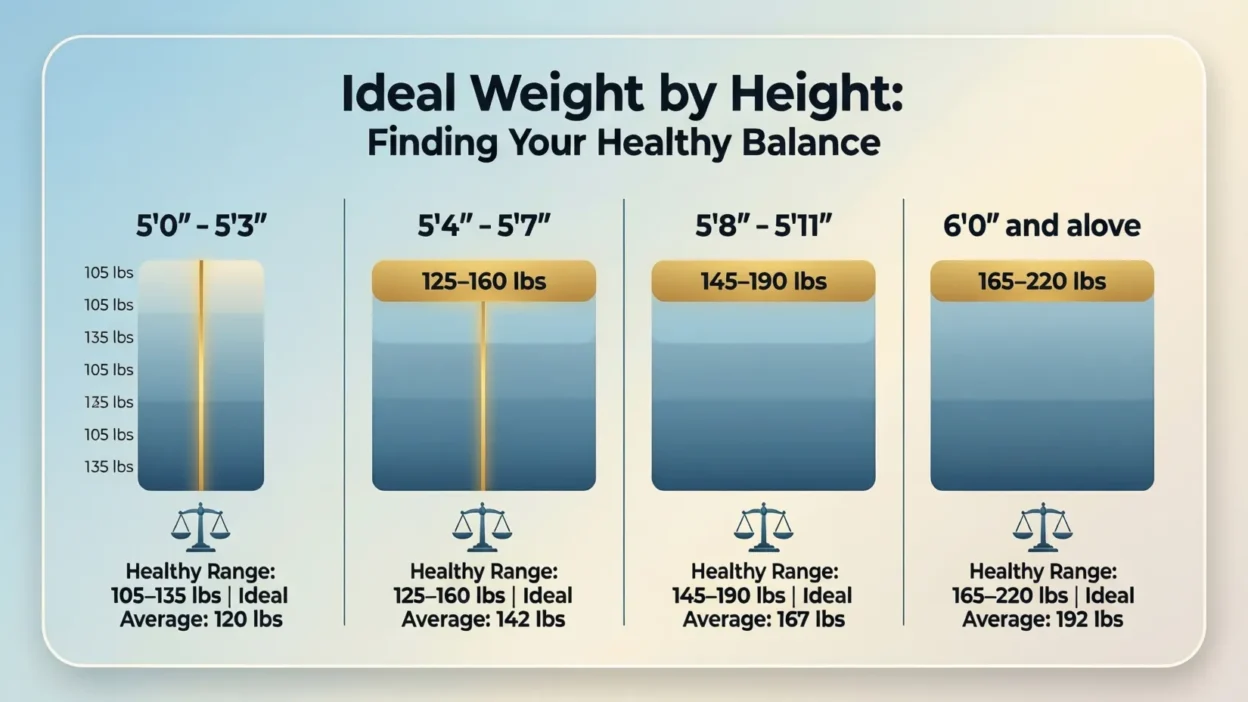
Have you ever wondered if your weight is truly healthy for your height? Many people focus on the number on the scale without considering whether it aligns with their body type, age, and lifestyle. Understanding the average weight by height is more than just curiosity, it’s a key factor in assessing overall health and preventing long-term risks like heart disease, diabetes, or joint problems.
Average weight isn’t a strict rule; it’s a guideline based on population data, body composition, and health studies. Factors like muscle mass, bone density, and genetics mean that two people of the same height can have very different healthy weights.
In this article, we’ll break down how average weight is measured, explore height-to-weight charts, explain what constitutes a healthy range, and offer practical tips to maintain or reach a weight that’s right for you. By the end, you’ll have a clear understanding of where you stand and what steps to take next.
Understanding Average Weight
When it comes to health, the number on the scale is often the first thing people notice. But what does average weight really mean? Simply put, average weight refers to the typical weight range observed in a population for a specific height and age group. It serves as a baseline to help individuals understand where they stand compared to general standards.
It’s important to recognize that average weight is not the same as ideal or perfect weight. Two people of the same height can both be healthy even if their weights differ, depending on factors like muscle mass, body fat percentage, bone density, and overall body composition. For example, an athlete with high muscle mass may weigh more than someone of the same height with lower muscle mass, yet both can be perfectly healthy.
Several factors influence average weight, including age, gender, genetics, and lifestyle habits. Men typically carry more muscle mass, which can make their healthy weight slightly higher than women of the same height. Likewise, as we age, muscle mass tends to decrease and body fat may increase, slightly altering what is considered average for a given height.
Understanding these nuances helps you interpret weight charts more accurately and focus on healthy body composition rather than just a number on the scale. Average weight is a helpful guide, but personal health factors should always take priority.
How Average Weight is Measured
Measuring average weight isn’t just about stepping on a scale it involves understanding how weight relates to height and overall health. One of the most common tools used for this purpose is the Body Mass Index (BMI). BMI is a simple calculation that uses your weight and height to estimate whether you fall into categories such as underweight, normal, overweight, or heavier . The formula is straightforward:
BMI = weight (kg) ÷ height² (m²)
For adults, a BMI between 18.5 and 24.9 is generally considered normal, though it’s important to remember that BMI alone doesn’t tell the whole story. It does not account for muscle mass, bone density, or fat distribution, meaning a muscular person may appear “overweight” on paper while being perfectly healthy.
Other methods provide additional insight into average weight and health. Waist-to-hip ratio helps determine fat distribution, and body fat percentage measurements distinguish fat from lean muscle.
Height-to-weight charts, often based on population data, provide an average weight range for each height, typically separated by gender and age. These charts are a helpful reference, but personal factors such as genetics, lifestyle, and health conditions can influence where your healthy weight lies.
In short, average weight is best understood as a guideline rather than a strict rule, combining statistical data with individual health considerations to provide a more complete picture of wellbeing.
Average Weight by Height Tables
One of the most practical ways to understand average weight is through height-to-weight tables. These tables provide a clear reference for what is typically considered a healthy weight range for different heights, often separated by gender and age. They are widely used by health professionals, fitness coaches, and individuals tracking their wellness goals.
For example, a male who is 5’8” (173 cm) typically falls within a healthy weight range of 139–169 pounds (63–77 kg), while a female of the same height may be healthy between 125–155 pounds (57–70 kg). These ranges are averages derived from population studies and provide guidance rather than strict rules.
It’s important to note that the tables consider statistical averages, not individual differences. Factors such as muscle mass, bone density, and overall body composition can mean that a person slightly above or below the listed range is still perfectly healthy.
Visual charts or infographics are particularly helpful for interpreting these tables quickly. Many people find it easier to see a graphical representation of weight ranges by height rather than just numbers.
While height-to-weight tables are a great starting point, they should be combined with BMI calculations, body composition analysis, and personal health considerations to get a full picture of what weight is healthy for you.
Factors That Influence Average Weight
While height plays a major role in determining average weight, it is far from the only factor. Several biological, lifestyle, and environmental elements influence how much a person weighs at a given height. Understanding these factors helps explain why weight charts should be used as guidelines rather than fixed targets.
Age is one of the most important influences. As people grow older, muscle mass naturally decreases while body fat may increase, even if overall weight remains stable. This can shift what is considered an average or healthy weight over time.
Gender also matters. Men typically have higher muscle mass and denser bones than women, which often results in a higher average weight at the same height. Hormonal differences further affect how fat is stored and distributed in the body.
Lifestyle habits such as diet, physical activity, sleep quality, and stress levels play a critical role. Regular exercise and balanced nutrition can support a healthier body composition, while sedentary habits may lead to weight gain.
Genetics influence metabolism, fat storage, and appetite, meaning some individuals naturally weigh more or less than average despite similar habits.
Lastly, medical conditions and medications can impact weight, making personalized health assessments more important than relying solely on height-to-weight averages.
Healthy Weight vs. Average Weight
It’s easy to assume that falling within the average weight range automatically means you’re healthy, but that isn’t always the case. Average weight reflects statistical data collected from large populations, while healthy weight is more personal and considers how well your body functions at a certain weight.
A healthy weight supports key aspects of wellbeing, including energy levels, cardiovascular health, mobility, and metabolic function. Someone may fall outside the average weight range for their height yet still be healthy due to high muscle mass, strong bones, or excellent fitness levels. On the other hand, a person within the average range may still face health risks if they have high body fat, poor diet habits, or limited physical activity.
Tools like BMI, waist circumference, and body fat percentage help bridge the gap between average and healthy weight. BMI provides a quick estimate, but combining it with other measurements gives a more accurate picture of overall health. Medical professionals often assess these indicators together rather than relying on weight alone.
Understanding this distinction helps shift the focus away from comparison and toward individual health goals. Instead of trying to match an average number, aim for a weight that allows you to feel strong, maintain daily activities comfortably, and reduce the risk of chronic disease. Ultimately, the healthiest weight is one that supports your long-term physical and mental wellbeing.
Tips to Reach and Maintain a Healthy Weight
Reaching and maintaining a healthy weight is not about quick fixes or extreme diets it’s about building sustainable habits that support long-term wellbeing. The first step is adopting a balanced diet that includes lean proteins, whole grains, fruits, vegetables, and healthy fats. Paying attention to portion sizes and limiting highly processed foods can make a significant difference over time.
Regular physical activity plays an equally important role. A combination of cardiovascular exercises, such as walking, cycling, or swimming, and strength training helps burn calories while preserving muscle mass. Even moderate activity performed consistently can improve body composition and overall health.
Lifestyle factors are often overlooked but are just as important. Quality sleep supports hormone balance and appetite regulation, while chronic stress can lead to weight gain by increasing cortisol levels. Simple practices like maintaining a regular sleep schedule and incorporating stress-management techniques can support healthy weight maintenance.
Tracking progress can also be helpful. Monitoring weight, body measurements, or fitness improvements provides insight into what’s working and helps maintain motivation. However, it’s important not to obsess over daily fluctuations.
Most importantly, focus on progress rather than perfection. Small, consistent changes are more effective than drastic short-term efforts, making it easier to maintain a healthy weight that aligns with your height, lifestyle, and personal health needs.
Common Myths and Misconceptions
When discussing average weight by height, many myths can lead to confusion and unrealistic expectations. One of the most common misconceptions is that everyone should fit perfectly into a weight chart. In reality, these charts are based on averages and do not account for individual differences such as muscle mass, bone density, or genetics.
Another widespread myth is that BMI is always accurate. While BMI is a useful screening tool, it does not distinguish between fat and muscle. As a result, athletes or physically active individuals may be classified as overweight despite having low body fat and excellent health.
Many people also believe that muscle weighs more than fat. Technically, muscle and fat weigh the same, but muscle is denser and takes up less space. This misunderstanding often causes people to worry about weight gain when they are actually improving body composition through strength training.
There is also a misconception that being under the average weight range automatically means better health. Being underweight can carry risks such as weakened immunity, hormonal imbalances, and nutrient deficiencies.
Lastly, some assume that weight alone defines health. In truth, overall wellbeing depends on multiple factors, including physical fitness, diet quality, mental health, and lifestyle habits. Understanding and debunking these myths allows for a more balanced, realistic, and healthy approach to weight management.
Tools and Resources
Understanding your average and healthy weight becomes much easier when you use the right tools and reliable resources. One of the most commonly used tools is a BMI calculator, which quickly estimates your weight category based on height and weight. While BMI should not be used alone, it provides a useful starting point for evaluating overall weight status.
Height-to-weight calculators and interactive charts are also helpful. These tools allow you to input your height, age, and gender to view an estimated healthy weight range. Many fitness and health websites offer these calculators to make the information more personalized and accessible.
For a deeper understanding, body composition tools such as body fat percentage calculators or smart scales can provide insight into how much of your weight comes from fat versus muscle. This is especially useful for individuals who are physically active or strength training.
In addition to tools, it’s important to rely on credible health resources. Organizations like the World Health Organization (WHO), Centers for Disease Control and Prevention (CDC), NHS, and Mayo Clinic publish evidence-based guidelines on healthy weight and body measurements.
Mobile apps for tracking nutrition, physical activity, and weight trends can also support long-term progress. When used consistently and paired with professional advice, these tools help transform average weight data into meaningful, actionable health insights.
Frequently Asked Questions
1. What is the average weight for my height?
Average weight depends on your height, gender, age, and body composition. Height-to-weight charts and BMI ranges provide general guidance, but they should be used as reference points rather than exact targets.
2. Is average weight the same as ideal weight?
No. Average weight reflects population data, while ideal or healthy weight is individualized. Factors such as muscle mass, bone density, lifestyle, and medical history play a major role in determining what weight is healthiest for you.
3. How accurate are BMI and weight charts?
BMI and weight charts are useful screening tools, but they do not account for fat distribution or muscle mass. For a more accurate assessment, they should be combined with waist measurements and body fat analysis.
4. Can I be healthy if I’m outside the average weight range?
Yes. Many people fall outside average ranges and are still healthy. Physical fitness, metabolic health, and lifestyle habits are often more important than meeting a specific number on a chart.
5. Does age affect average weight by height?
Yes. Metabolism, muscle mass, and fat distribution change with age, which can affect what is considered a normal or healthy weight over time.
6. Should I consult a doctor about my weight?
If you’re unsure about your weight or experiencing health concerns, consulting a healthcare professional can help you determine a healthy and sustainable weight based on your individual needs.
Conclusion
Understanding the average weight by height provides a valuable starting point for evaluating overall health, but it should never be viewed as a strict rule. Weight charts, BMI calculations, and height-to-weight tables are designed to offer general guidance, not definitive answers. Every individual is unique, and factors such as age, muscle mass, genetics, lifestyle, and medical history all influence what a healthy weight looks like.
Rather than focusing solely on a number on the scale, it’s more important to consider how your weight supports your daily life, energy levels, and long-term wellbeing. A healthy weight is one that allows you to move comfortably, maintain good physical and mental health, and reduce the risk of chronic diseases. Being slightly above or below the average range does not automatically indicate poor health.
Using tools like BMI calculators, body composition analysis, and professional guidance can help you better understand your personal weight range. Pairing this knowledge with balanced nutrition, regular physical activity, quality sleep, and stress management creates a sustainable approach to weight management.
Ultimately, the goal is not to match an average, but to find a weight that works best for your body. By focusing on healthy habits and informed decisions, you can build a lifestyle that supports long-term health, confidence, and overall quality of life.

I’m Etalia Robert, the mind behind PeacefulQuotes.com. I share thoughtful words and meaningful quotes that inspire calm, reflection, and a little spark of wisdom in everyday life.