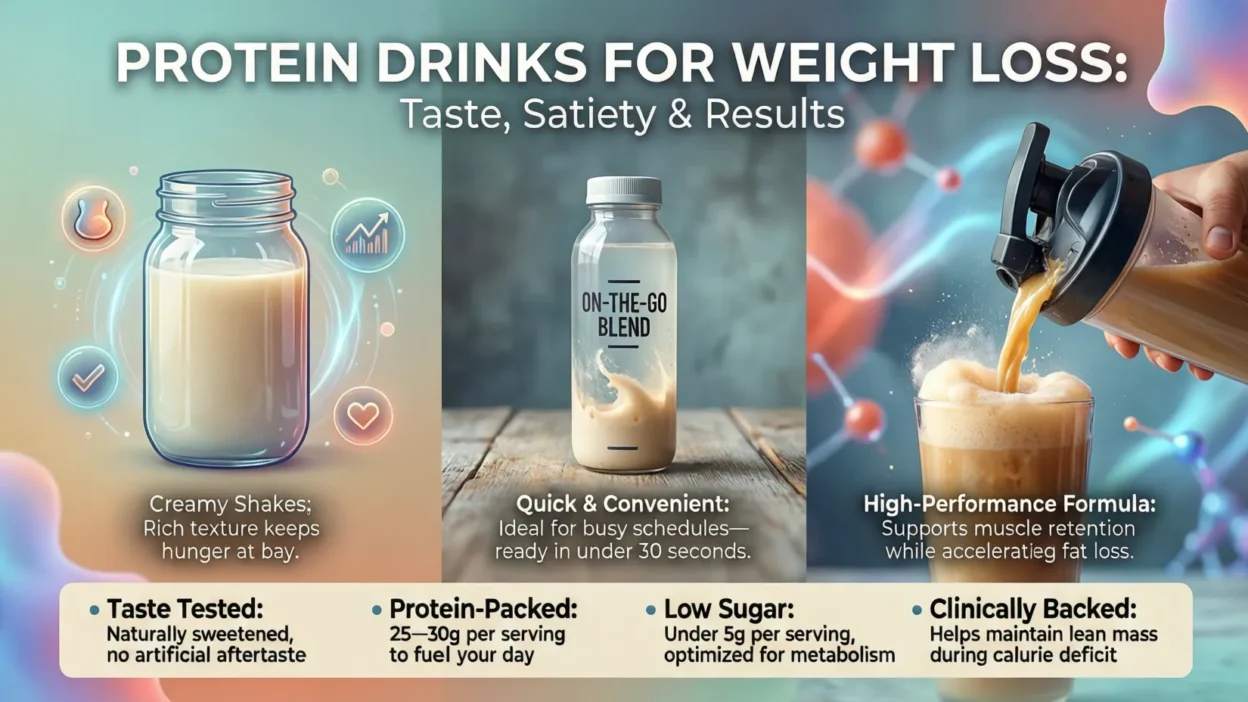
Trying to lose weight can feel overwhelming, especially with so many “healthy” drinks and shakes claiming to burn fat. The truth is, not all protein drinks are created equal. Some are packed with sugar and empty calories, while others can genuinely support fat loss by keeping you full, preserving muscle, and helping you stay in a calorie deficit. When chosen correctly, protein drinks become a powerful tool, not a shortcut or a gimmick.
Protein is the most filling macronutrient, which means it helps control hunger and reduces cravings throughout the day. It also supports lean muscle mass, allowing your body to burn more calories even at rest. This combination makes protein drinks especially useful for people who want convenient, low-calorie nutrition without sacrificing results.
In this guide, you’ll discover the best protein drinks for weight loss, what to look for on nutrition labels, which ingredients actually matter, and how to use protein drinks the right way to support sustainable, long-term fat loss.
How Protein Drinks Help With Weight Loss
Protein drinks support weight loss by addressing the three biggest challenges of fat loss: hunger, muscle loss, and poor calorie control. When you reduce calories, your body naturally increases hunger signals and tries to conserve energy. Protein helps counteract this process more effectively than carbohydrates or fats.
First, protein has a powerful effect on appetite. It increases hormones that promote fullness while reducing hunger hormones, helping you stay satisfied for longer periods. This makes it easier to eat less without feeling deprived or constantly thinking about food. A protein drink between meals or as part of breakfast can significantly reduce snacking and overeating.
Second, protein preserves lean muscle mass during weight loss. When you lose weight, you want most of that loss to come from fat, not muscle. Muscle tissue helps maintain a higher metabolism, so protecting it allows your body to burn more calories even while resting. Protein drinks provide an easy way to meet your daily protein needs, especially if whole food intake is inconsistent.
Third, protein has a higher thermic effect than other macronutrients. This means your body burns more calories digesting protein compared to carbs or fats. While the effect is small, it adds up over time and supports a calorie deficit.
Finally, protein drinks offer convenience and portion control. They provide predictable calories and nutrients, making it easier to track intake and avoid high-calorie, low-nutrition foods. Used correctly, they simplify fat loss without replacing the need for balanced, whole-food meals.
What Makes a Protein Drink Good for Weight Loss
A good protein drink for weight loss is not just about protein content; it’s about the right balance of nutrients that support fat loss without adding unnecessary calories. The first thing to look for is high protein per serving, ideally between 20 to 30 grams. This amount is enough to promote fullness, support muscle retention, and help control appetite throughout the day.
Calories are just as important as protein. For weight loss, most protein drinks should fall between 100 and 180 calories. Anything higher can quickly turn a helpful supplement into a hidden source of excess energy, especially if consumed multiple times a day.
Sugar content is another critical factor. Many “healthy” shakes contain large amounts of added sugars that spike blood sugar and increase cravings. A quality weight loss protein drink should have less than 5 grams of sugar, preferably from natural sources like milk or small amounts of fruit rather than syrups or refined sweeteners.
Ingredient quality also matters. Look for short, clean ingredient lists without artificial colors, seed oils, fillers, or unnecessary thickeners. The simpler the label, the easier it is to know what you’re putting into your body.
Finally, a great protein drink should be easy to digest and satisfying. Proteins like whey isolate, casein, and pea protein are popular because they provide strong satiety. Some formulas also include fiber, which further increases fullness and helps stabilize blood sugar, making weight loss more manageable and sustainable.
Types of Protein Used in Weight Loss Drinks
Not all proteins work the same way in the body, and the type of protein in your drink can affect how full you feel, how your digestion responds, and how well it supports fat loss. Understanding these differences helps you choose the best option for your goals.
Whey protein, especially whey isolate, is one of the most popular choices for weight loss. It is low in calories, digests quickly, and is rich in essential amino acids that support muscle preservation. Whey also has a strong effect on satiety hormones, helping reduce hunger between meals.
Casein protein digests much more slowly than whey. This makes it ideal for controlling appetite over longer periods, such as at night or when long gaps between meals are expected. It provides a steady release of amino acids and helps prevent muscle breakdown while keeping you fuller for longer.
Plant-based proteins, such as pea, rice, soy, and hemp, are excellent for vegans or those with dairy sensitivities. Pea protein in particular is highly filling and comparable to whey in appetite control. Many plant-based blends combine multiple sources to create a complete amino acid profile.
Egg white protein is another high-quality option. It is fat-free, low in calories, and provides excellent muscle support, though it is less common in ready-to-drink products.
Collagen protein is often added for joint and skin health but should not be used alone for weight loss. It lacks key amino acids needed for muscle preservation and should be combined with a complete protein source.
Choosing the right protein type ensures better satiety, improved metabolism support, and more effective fat loss results.
Protein Drinks vs Protein Shakes vs Meal Replacements
Although the terms are often used interchangeably, protein drinks, protein shakes, and meal replacements serve different purposes, and choosing the wrong one can slow down weight loss progress. Understanding the difference helps you use each option correctly.
Protein drinks are usually ready-to-drink beverages designed to provide a quick dose of protein with minimal calories. They are best for appetite control, post-workout recovery, or boosting daily protein intake without adding too many extra nutrients. For weight loss, protein drinks should be low in sugar and calories while offering at least 20 grams of protein.
Protein shakes are typically made from protein powder mixed with water, milk, or other ingredients. They are more customizable and can be either low-calorie or high-calorie depending on what you add. A shake made with water or unsweetened almond milk is ideal for fat loss, while one blended with fruits, nut butters, and oats can quickly become a high-calorie meal.
Meal replacement shakes are designed to replace a full meal and contain protein, carbohydrates, fats, vitamins, and minerals. They are higher in calories, usually between 250 and 400 or more. These can be useful when you are short on time, but using them too often can slow weight loss if calorie intake is not carefully managed.
For fat loss, protein drinks and simple protein shakes are usually the better choice. They support fullness and muscle retention without replacing whole foods or adding unnecessary calories. Meal replacements should be used sparingly and strategically, not as a daily substitute for balanced meals.
Best Ready-to-Drink Protein Drinks for Weight Loss
Ready-to-drink protein beverages are one of the most convenient tools for weight loss. They require no preparation, have controlled portions, and make it easy to hit your protein goals even on busy days. However, convenience can be misleading, because many bottled protein drinks are loaded with sugar, unhealthy fats, and unnecessary additives that can sabotage fat loss.
The best ready-to-drink protein drinks are those that combine high protein with low calories and minimal sugar. Ideally, they should contain 20 to 30 grams of protein, stay under 180 calories, and have less than 5 grams of sugar. This balance helps control hunger while keeping your daily calorie intake in check. Drinks that exceed these numbers often function more like meal replacements than fat-loss tools.
Ingredient quality is especially important in bottled products. Look for drinks made with whey isolate, casein, or pea protein, and avoid those that rely heavily on corn syrup, vegetable oils, artificial coloring, or long lists of chemical-sounding ingredients. A shorter ingredient list usually signals a cleaner product.
Another key factor is how filling the drink feels. Some protein drinks include fiber or thicker textures that slow digestion and improve satiety. These options are especially useful if you plan to use the drink as a snack replacement rather than just a protein boost.
Ready-to-drink protein options are best used between meals, after workouts, or during times when real food isn’t available. When chosen wisely, they provide structure, consistency, and simplicity, which are critical elements of long-term, successful weight loss.
Best Protein Powders for Weight Loss
Protein powders offer more flexibility than ready-to-drink options and are often more cost-effective. They allow you to control exactly what goes into your shake, making them ideal for weight loss when used correctly. A good protein powder should be high in protein, low in calories, and free from added sugars and unnecessary fillers.
Whey protein isolate is one of the top choices for fat loss. It is highly purified, meaning it contains more protein and fewer carbohydrates and fats than regular whey. This makes it easier to stay within a calorie deficit while still getting enough protein to support muscle and metabolism. It also mixes easily and digests quickly, making it perfect for post-workout use.
Plant-based protein powders are excellent alternatives for those who are vegan or lactose intolerant. Look for blends that combine pea, rice, or soy protein to ensure a complete amino acid profile. High-quality plant proteins can be just as filling as whey and are often easier on digestion.
For those following low-carb or keto diets, zero-carb or ultra-low-carb protein powders are ideal. These typically use whey isolate or egg white protein and avoid sugars entirely, helping maintain ketosis while supporting satiety.
When choosing a protein powder, always check the label. Aim for at least 20 grams of protein per serving, fewer than 3 grams of sugar, and a calorie range of 100 to 140. Avoid powders that contain long ingredient lists, artificial colors, or excessive sweeteners.
Protein powders work best when mixed with water or unsweetened almond milk. Keeping the base simple prevents your shake from turning into a high-calorie meal and ensures it remains a powerful tool for weight loss.
Homemade Protein Drinks for Fat Loss
Homemade protein drinks are one of the best options for weight loss because they give you full control over ingredients, calories, and portion sizes. Unlike store-bought versions, which often contain added sugars, preservatives, and unnecessary fillers, homemade drinks can be kept clean, simple, and highly effective for fat loss.
The biggest advantage of making your own protein drink is customization. You can choose a high-quality protein powder, adjust the liquid base, and add ingredients that support fullness without drastically increasing calories. Using water or unsweetened almond milk keeps the calorie count low, while still creating a smooth and satisfying drink.
For weight loss, focus on simple combinations. A basic shake made with whey isolate or pea protein, water, ice, and cinnamon can be under 130 calories while delivering over 20 grams of protein. If you want more satiety, adding fiber-rich ingredients like chia seeds, flaxseed, or a small amount of frozen berries can help control hunger without turning your drink into a calorie bomb.
Homemade protein drinks are also ideal for people with food sensitivities. You can avoid lactose, gluten, artificial sweeteners, or other ingredients that may cause digestive discomfort. This improves consistency, which is key for long-term weight loss success.
Another benefit is cost. Making protein drinks at home is usually far cheaper than buying ready-to-drink bottles every day. Over time, this can save a significant amount of money while still delivering better nutritional quality.
When done correctly, homemade protein drinks become a powerful daily habit that supports fullness, muscle preservation, and steady fat loss without unnecessary calories or additives.
When to Drink Protein for Weight Loss
Timing your protein drinks can make a noticeable difference in how effective they are for weight loss. While total daily protein intake matters most, using protein at strategic times helps control hunger, stabilize energy, and prevent overeating.
One of the best times to drink protein is in the morning. Many breakfasts are high in carbohydrates and low in protein, which can lead to quick hunger and cravings later in the day. A protein drink at breakfast helps you feel fuller longer and reduces the urge to snack before lunch.
Post-workout is another ideal time. After exercise, your muscles need protein for recovery and repair. Drinking protein after a workout supports muscle preservation and growth while keeping calories controlled. This is especially important during fat loss because it helps ensure that the weight you lose comes from fat rather than muscle.
Between meals is a powerful time to use protein drinks. If you tend to snack on high-calorie foods in the afternoon or evening, a protein drink can replace those snacks and keep hunger under control. It provides structure without adding excessive calories.
Nighttime can also be beneficial for certain people. A slow-digesting protein like casein before bed can help reduce late-night hunger and support muscle recovery while you sleep. This is useful if nighttime snacking is a problem.
The key is not to use protein drinks randomly, but strategically. They should replace high-calorie snacks or low-protein meals, not add extra calories on top of an already balanced diet. When used at the right times, protein drinks become a tool for appetite control and consistency.
How Many Protein Drinks Per Day Is Safe?
Protein drinks can be a helpful addition to a weight loss plan, but moderation is essential. The goal is to use them as support, not as a replacement for real, whole foods. Most people do best with one to two protein drinks per day, depending on their total protein needs, activity level, and diet quality.
Your daily protein requirement generally ranges from 0.6 to 0.8 grams per pound of lean body weight for fat loss and muscle preservation. Protein drinks make it easier to reach this target, especially if you struggle to consume enough protein from meals alone. However, relying too heavily on liquid nutrition can lead to nutrient gaps, reduced satiety from chewing, and digestive issues.
One protein drink per day is usually enough for most people. It can be used as a snack replacement, post-workout recovery drink, or quick breakfast option. For highly active individuals or those with higher protein requirements, two protein drinks may be appropriate, as long as the rest of the diet includes whole foods like lean meats, vegetables, fruits, and healthy fats.
Drinking more than two protein drinks daily is generally unnecessary and may indicate an unbalanced diet. Excessive reliance on shakes can crowd out real meals and increase the risk of consuming too many calories without realizing it.
It is also important to pay attention to digestion and hydration. Protein increases the body’s need for water, so drinking enough fluids is essential. If you experience bloating or discomfort, it may be a sign to reduce intake or change protein types.
Used responsibly, protein drinks are safe, effective, and supportive of long-term weight loss goals.
FAQs
Can protein drinks replace meals for weight loss?
Protein drinks can replace a meal occasionally, especially when you are short on time, but they should not replace most of your meals. Whole foods provide fiber, vitamins, minerals, and chewing satisfaction that liquids cannot fully replicate. For best results, use protein drinks as supplements to a balanced diet, not a full replacement.
Can I lose weight using only protein drinks?
Technically, weight loss can happen on a liquid-based diet if calories are restricted, but it is not sustainable or healthy long term. It can lead to nutrient deficiencies, muscle loss, and poor eating habits. Protein drinks work best when combined with real foods and a varied diet.
Are protein drinks good for belly fat?
Protein drinks do not target belly fat specifically, but they help create the calorie deficit needed for overall fat loss. By reducing hunger and preserving muscle, they support steady fat reduction, including in the abdominal area.
Do protein drinks work without exercise?
Yes, they can support weight loss without exercise by helping control calories and appetite. However, combining protein intake with strength training and movement produces faster, healthier, and more sustainable results.
Are protein drinks safe every day?
For most healthy adults, daily use is safe when consumed in moderation. The key is choosing clean, low-sugar options and ensuring your overall diet includes a wide variety of whole foods.
Should men and women use different protein drinks?
No, protein needs are based on body weight and activity level, not gender. Both men and women benefit from high-protein, low-calorie options when trying to lose fat.
Conclusion
Protein drinks can be a powerful and practical tool for weight loss when they are chosen and used correctly. They are not magic solutions, but they simplify one of the hardest parts of fat loss: getting enough protein while keeping calories under control. By supporting fullness, preserving lean muscle, and helping regulate appetite, protein drinks make it easier to stay consistent with a calorie deficit.
The best protein drinks for weight loss are high in protein, low in sugar, and made with clean, simple ingredients. Whether you choose ready-to-drink options, protein powders, or homemade recipes, the same principles apply. Focus on products that deliver at least 20 grams of protein, stay under 180 calories, and avoid unnecessary additives that add calories without nutritional value.
Remember that protein drinks should complement, not replace, a healthy diet built around whole foods. Lean meats, vegetables, fruits, whole grains, and healthy fats still form the foundation of sustainable fat loss. Protein drinks simply fill the gaps when convenience or appetite control is needed.
Consistency matters more than perfection. One well-chosen protein drink used at the right time each day can help prevent overeating, reduce cravings, and keep you on track. When combined with smart food choices and regular movement, protein drinks become a reliable support system for long-term, healthy weight loss.

I’m Agatha Christie, the voice behind PeacefulQuotes.com. I craft thoughtful words and timeless quotes that bring calm, clarity, and a touch of wisdom to everyday life.