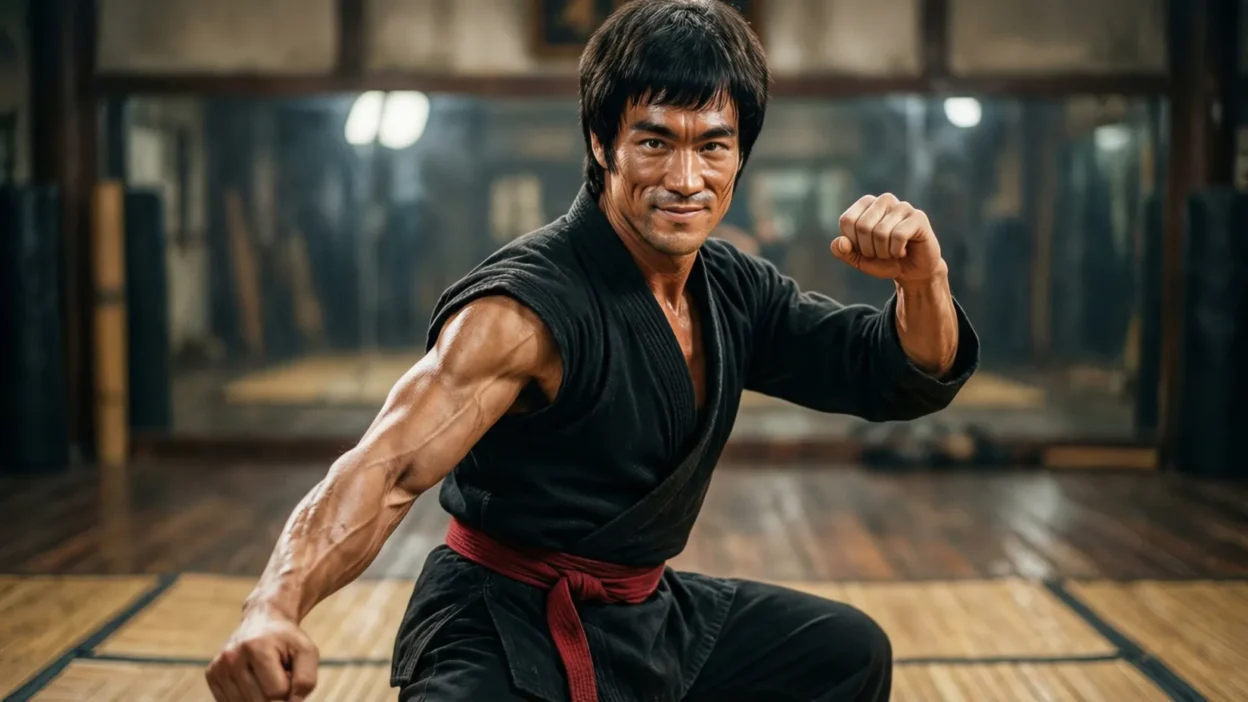
Bruce Lee is not only a legendary martial artist and actor but also an enduring symbol of peak physical fitness. Many fans and fitness enthusiasts are fascinated by his incredible physique, especially his lean, muscular build at a relatively modest weight.
At around 128 pounds (58 kg) and standing 5’7” (170 cm) tall, Bruce Lee achieved a body that was both powerful and agile, with a body fat percentage estimated at just 6–8%. Unlike modern bodybuilders who focus primarily on size, Lee prioritized functional strength, speed, and endurance, making his physique highly practical for martial arts.
His unique combination of intense training, disciplined nutrition, and mental focus allowed him to maintain an impressive balance of lean muscle and low body fat throughout his life. In this article, we’ll explore Bruce Lee’s weight, body stats, training regimen, and diet, uncovering the secrets behind his iconic physique and how you can apply his principles today.
Bruce Lee’s Physical Stats
Bruce Lee’s physical stature continues to amaze fitness enthusiasts and martial artists around the world. Standing at 5 feet 7 inches (170 cm), he weighed approximately 128 pounds (58 kg) at his peak—a weight that reflected his lean, muscular, and highly functional build. Unlike typical bodybuilders who focus on size, Lee maintained a low body fat percentage of 6–8%, which allowed him to achieve remarkable muscle definition and agility without carrying unnecessary bulk. His muscles were not just for show; they were highly functional, enabling explosive power, lightning-fast strikes, and exceptional endurance.
Lee’s body was the result of careful planning and discipline. He combined intense martial arts training with strength exercises, core conditioning, and cardio workouts to create a physique that was both strong and agile. His arms, shoulders, chest, and core were perfectly balanced, giving him a proportionate and aesthetic look, while his legs were powerful enough for high kicks and dynamic movement.
For context, his lean weight and functional muscle mass were unusual for someone of his height, especially in the 1960s and 1970s, when bodybuilding emphasized bulk over mobility. Bruce Lee’s physical stats weren’t just numbers—they represented a philosophy: a body built for performance, speed, and efficiency, rather than mere size. Understanding these stats is the first step in exploring how he achieved his iconic physique.
Factors Contributing to His Weight
Bruce Lee’s remarkable weight and physique were not accidental—they were the result of a combination of genetics, training, nutrition, and disciplined lifestyle choices.
Genetics played a role in his naturally lean frame and fast metabolism, giving him a baseline advantage for staying slim. However, it was his rigorous training regimen that truly sculpted his body. Lee’s workouts combined martial arts drills, strength training, and cardio. He emphasized functional strength through exercises like push-ups, pull-ups, squats, and core conditioning, all designed to improve speed, agility, and explosive power rather than bulk. Flexibility and mobility were also crucial, allowing him to execute high kicks, jumps, and acrobatic movements with ease.
Nutrition was equally important. Lee focused on a high-protein, moderate-carb, and healthy-fat diet, often eating small, frequent meals to fuel his intense training sessions. Foods like lean meats, eggs, rice, vegetables, and fruits provided sustained energy, while he avoided excessive processed foods or sugars.
Finally, Lee’s lifestyle and discipline amplified his results. Adequate sleep, mental focus, meditation, and consistent practice ensured his body recovered and adapted efficiently. This holistic approach—combining genetics, smart training, proper nutrition, and mental discipline—was key to maintaining his iconic lean, strong, and agile physique.
Bruce Lee’s Approach vs. Modern Fitness Trends
Bruce Lee’s approach to fitness was revolutionary for his time and continues to influence athletes, martial artists, and fitness enthusiasts today. Unlike many modern trends that focus heavily on muscle size or aesthetic appearance, Lee prioritized functional strength, speed, and agility. His workouts were designed to enhance performance rather than simply build bulk, making him exceptionally fast, powerful, and efficient in movement.
In contrast, today’s bodybuilding culture often emphasizes heavy lifting, isolation exercises, and gaining mass, which can sometimes compromise mobility and endurance. Lee’s method, on the other hand, integrated martial arts drills, plyometrics, and high-intensity cardio, creating a lean, explosive physique optimized for real-world athletic performance. Core strength and flexibility were non-negotiable, whereas modern routines may neglect these elements in favor of pure size or weightlifting numbers.
Nutrition also set Lee apart. While contemporary diets often fluctuate between fad trends or high-calorie bulking plans, Lee maintained a balanced, protein-rich diet with moderate carbohydrates and healthy fats, tailored to his energy needs and recovery. Small, frequent meals ensured consistent fuel without unnecessary fat gain.
The key lesson from Bruce Lee’s approach is timeless: a body built for function, discipline, and consistency often outperforms a body built solely for aesthetics. His philosophy emphasizes that modern fitness enthusiasts can achieve better performance, mobility, and lean muscle by adopting his principles, rather than blindly following trends.
Debunking Myths About Bruce Lee’s Weight
Bruce Lee’s lean, muscular physique has inspired countless fans, but it has also given rise to several myths about his weight and strength. One common misconception is that because he weighed only around 128 pounds (58 kg), he was fragile or underweight. In reality, Lee’s weight reflected a highly functional and muscular frame rather than frailty. His low body fat percentage of 6–8% and lean muscle mass enabled him to deliver explosive power and remarkable endurance—proof that weight alone does not determine strength.
Another myth is that Bruce Lee relied solely on martial arts techniques for his physique. While martial arts were central to his training, Lee combined them with strength training, core conditioning, flexibility exercises, and cardio, creating a balanced and versatile body. He also paid careful attention to nutrition, eating high-protein, balanced meals that fueled his intense workouts and maintained his lean frame.
Some believe that his body was purely genetic luck. While genetics played a role, Lee’s discipline, consistency, and holistic approach were far more important in shaping his iconic physique.
Understanding these myths is crucial for fans and fitness enthusiasts. Bruce Lee’s weight was not about appearing small—it was about performance, efficiency, and lean strength, offering valuable lessons for anyone seeking a functional, athletic body.
How to Achieve a Bruce Lee-Type Physique
Achieving a physique like Bruce Lee’s requires more than just knowing his weight—it demands a combination of training, nutrition, and mindset. Lee’s body was the result of functional strength, agility, and disciplined habits, all of which can be adapted for modern fitness enthusiasts.
Training Principles: Focus on functional exercises that build strength without unnecessary bulk. Include compound movements like push-ups, pull-ups, squats, and core exercises. Incorporate martial arts drills or high-intensity interval training (HIIT) to improve speed, coordination, and endurance. Flexibility and mobility work should be part of every routine to maintain agility and prevent injuries.
Nutrition Guidelines: Emulate Lee’s approach with a protein-rich, balanced diet. Lean meats, eggs, vegetables, fruits, and complex carbs provide sustained energy for workouts. Eating small, frequent meals can help maintain a low body fat percentage, while avoiding excessive sugars or processed foods keeps the body lean.
Consistency & Lifestyle: Bruce Lee’s results came from discipline and routine. Prioritize sleep, recovery, and mental focus to allow your body to adapt and grow stronger. Tracking progress through body weight, muscle definition, and endurance is more important than obsessing over the scale alone.
By combining functional training, smart nutrition, and a disciplined mindset, anyone can develop a lean, agile, and powerful physique inspired by Bruce Lee, tailored to their own body and goals.
Bruce Lee’s Legacy & Fitness Philosophy
Bruce Lee’s influence extends far beyond his movies—his approach to fitness and body development has left a lasting legacy in martial arts, athletics, and general fitness culture. He didn’t just aim for a visually appealing physique; he created a body built for function, speed, and strength, demonstrating that peak performance is possible with discipline and intelligence.
Lee’s fitness philosophy centered on balance: strength without bulk, speed without sacrificing power, and agility without compromising stability. He combined rigorous martial arts training, functional strength exercises, cardiovascular conditioning, and flexibility routines into a comprehensive system. He also emphasized mental fitness, including focus, meditation, and visualization, showing that physical excellence is inseparable from mental discipline.
His legacy is seen today in MMA athletes, functional fitness enthusiasts, and martial artists, who strive for the same combination of speed, power, and endurance that Lee exemplified. He proved that a lean, low-weight body can deliver explosive force, and that diet, consistency, and mindful training are just as important as genetics.
Ultimately, Bruce Lee’s philosophy teaches that fitness is not about mere appearance—it is about function, efficiency, and mastery of one’s body and mind. His principles continue to inspire generations to pursue a lean, agile, and powerful physique, showing that discipline, intelligence, and dedication can transform the human body.
FAQs
1. What was Bruce Lee’s weight?
Bruce Lee weighed around 128 pounds (58 kg) at his peak, standing 5’7” (170 cm) tall. Despite his relatively modest weight, he maintained a lean, muscular physique with high functional strength and low body fat (~6–8%).
2. How did Bruce Lee stay so lean?
Lee combined intense martial arts training, functional strength exercises, cardio, and flexibility routines with a disciplined, high-protein diet. Small, frequent meals and avoidance of processed foods helped him maintain a low body fat percentage.
3. Was Bruce Lee’s body natural or the result of supplements?
While genetics contributed to his lean frame, his iconic physique was primarily the result of hard work, discipline, and consistent training, rather than supplements or shortcuts.
4. Can I achieve Bruce Lee’s physique?
Yes, with a combination of functional training, martial arts or HIIT workouts, proper nutrition, and consistent lifestyle habits. Focus on lean muscle, agility, and performance rather than sheer bulk.
5. Did Bruce Lee focus on bodybuilding?
No. Unlike traditional bodybuilders, Lee emphasized functional strength, speed, and mobility, making his workouts practical for martial arts and real-world performance.
6. What can we learn from Bruce Lee’s fitness philosophy?
His approach teaches that discipline, balance, and mental focus are just as important as physical training. A lean, agile, and strong body comes from consistency, smart workouts, and proper nutrition.
Conclusion
Bruce Lee’s weight and physique continue to fascinate fitness enthusiasts, martial artists, and fans worldwide. At around 128 pounds (58 kg) and a height of 5’7” (170 cm), his lean, muscular body was the result of dedication, discipline, and a holistic approach to training, nutrition, and lifestyle. Unlike traditional bodybuilders who prioritize size, Lee emphasized functional strength, agility, speed, and endurance, making his body highly practical for martial arts and explosive performance.
His training combined martial arts techniques, strength exercises, cardio, core conditioning, and flexibility routines, while his nutrition focused on protein-rich, balanced meals eaten consistently throughout the day. Coupled with mental focus, meditation, and recovery, this approach allowed him to maintain an iconic lean physique with a remarkably low body fat percentage.
Bruce Lee’s legacy teaches an important lesson for anyone seeking fitness today: it’s not just about the number on the scale or the size of your muscles—it’s about efficiency, discipline, and function. By prioritizing consistency, smart training, balanced nutrition, and mental focus, anyone can achieve a strong, agile, and lean body inspired by Lee’s principles.
Ultimately, Bruce Lee’s weight and fitness philosophy are timeless. They remind us that true strength and athleticism come from a disciplined approach to both the body and mind, not shortcuts or fleeting trends.

I’m Etalia Robert, the mind behind PeacefulQuotes.com. I share thoughtful words and meaningful quotes that inspire calm, reflection, and a little spark of wisdom in everyday life.