Choosing the right diaper size is one of the most important steps in keeping your baby comfortable, happy, and rash-free. While many parents rely on age to select diapers, the truth is that weight is a far more reliable indicator.
Babies grow at different rates, and even two newborns of the same age can require different diaper sizes. Using a diaper that is too small can cause leaks, red marks, and discomfort, while a diaper that is too large may not provide a proper fit, leading to frequent blowouts.
This guide will help parents navigate the sometimes confusing world of diaper sizing by weight, offering practical charts, tips, and expert advice. From newborns to toddlers, understanding the right size for your baby ensures not only a snug fit but also healthier skin, better mobility, and more peace of mind for busy parents.
Understanding Diaper Sizes
Diaper sizes are primarily based on a baby’s weight, rather than age, because every baby grows at a different pace. While age can give a general idea, two babies of the same age might need completely different diaper sizes depending on their body type and growth rate. Most diaper brands provide a weight range on the packaging, making it easier for parents to choose the right fit.
Diapers are designed to balance absorbency, fit, and comfort. A properly sized diaper should sit snugly around the waist and legs without leaving red marks or causing leaks. Newborn diapers, for example, are specifically made for babies up to around 10 pounds (4.5 kg), with soft materials and gentle elastic for sensitive skin. As babies grow, diapers increase in size and absorbency to handle larger volumes and more active movement.
It’s also important to note that diaper sizing can vary slightly between brands. One brand’s Size 2 may fit differently than another’s, so parents should always check the weight range and test the fit before buying in bulk. By understanding how sizes work, parents can ensure better comfort, fewer leaks, and healthier skin for their baby.
Diaper Size by Weight Chart
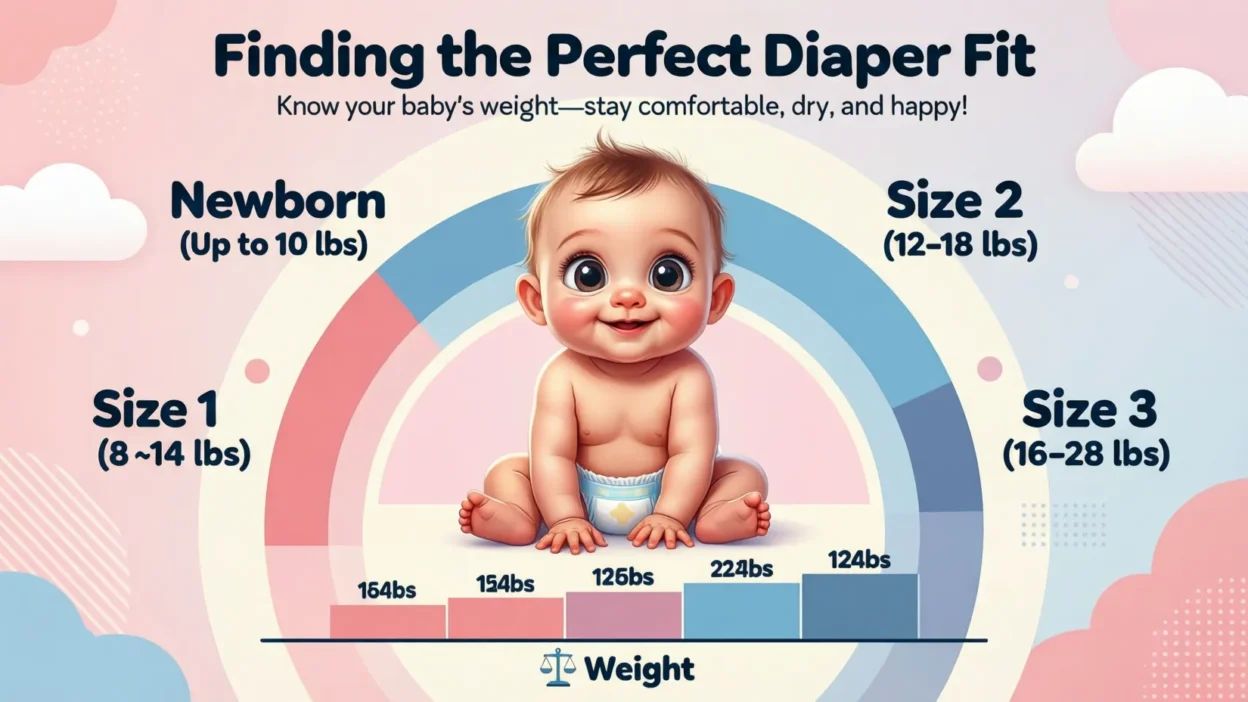
Using a diaper size chart based on your baby’s weight makes choosing the right fit much easier. Below is a general guide for most major brands:
| Diaper Size | Baby Weight | Notes |
| Newborn (NB) | Up to 10 lbs (0–4.5 kg) | Ideal for the first few weeks; soft and gentle for sensitive skin |
| Size 1 | 8–14 lbs (3.5–6 kg) | Common first size after newborn; overlaps with NB for slightly larger newborns |
| Size 2 | 12–18 lbs (5–8 kg) | Fits most babies around 3–6 months |
| Size 3 | 16–28 lbs (7–13 kg) | Great for active babies and early crawlers |
| Size 4 | 22–37 lbs (10–17 kg) | Suitable for toddlers; increased absorbency |
| Size 5 | 27+ lbs (12+ kg) | Older toddlers and potty-training stage |
| Size 6 | 35+ lbs (16+ kg) | Large toddlers or heavy wetters |
Tips for using the chart:
- Check your baby’s current weight regularly to know when to move up a size.
- If your baby is between sizes, consider the baby’s body shape and activity level—choose the size that allows comfort without leaks.
- Always test a new size with a single diaper pack before buying in bulk.
This chart helps parents save money, reduce diaper blowouts, and keep babies comfortable and rash-free.
Signs Your Baby Needs a Size Change
Even when using the weight-based chart, babies grow quickly, and parents need to watch for signs that it’s time to switch diaper sizes. One of the most obvious indicators is leaks or frequent blowouts. If the diaper cannot hold urine or stool properly, it may be too small or too loose.
Another common sign is red marks or irritation around the waist and thighs. While some slight impressions are normal, deep or persistent marks mean the diaper is too tight. On the other hand, a diaper that slips down or gaps at the legs indicates it is too big.
Parents should also notice how often they need to refasten tabs or adjust the diaper. Constant adjustment is a signal that the diaper no longer fits snugly.
Finally, pay attention to your baby’s comfort and movement. Babies who are crawling or walking may need a size that allows freedom of motion without sagging.
Quick tip: If your baby is at the upper end of a size range for several weeks, it’s usually time to move to the next size. Regularly monitoring your baby’s growth and fit ensures comfort, reduces leaks, and helps maintain healthy skin.
How to Measure Your Baby for the Right Diaper
Choosing the correct diaper size isn’t always as simple as following the weight chart. Measuring your baby can help ensure a proper fit, reduce leaks, and prevent discomfort.
Start by weighing your baby accurately. Use a digital baby scale or step-on scale with your baby in minimal clothing. Compare this weight to the diaper size chart to see the recommended size. Keep in mind that babies at the higher end of a weight range may need the next size for better comfort.
Next, check waist and thigh measurements if possible. A diaper should fit snugly around the waist without leaving deep red marks. At the thighs, elastic bands should sit comfortably without squeezing the legs. Some parents find it helpful to measure these areas with a soft measuring tape, especially for babies with chubbier thighs or smaller waists.
Finally, test a new size by putting on a single diaper and observing how it sits. Two fingers should fit comfortably between the diaper and your baby’s skin. Ensure the diaper covers from front to back without gaps.
By measuring your baby and checking the fit, you can avoid leaks, improve mobility, and maintain healthy skin while keeping your little one comfortable.
Brand Variations and Recommendations
Not all diaper brands fit the same, even when labeled with the same size. Factors like elasticity, absorbency, and cut can vary, making it important for parents to check each brand individually. For example, one brand’s Size 2 may fit snugly, while another may feel loose around the legs or waist.
Popular diaper brands like Pampers, Huggies, and Luvs often provide slightly different fits:
- Pampers: Known for soft materials and flexible fit, often recommended for newborns with sensitive skin.
- Huggies: Generally snug around the legs and waist, which helps reduce leaks for active babies.
- Luvs: Affordable and absorbent, but sizing can run slightly larger than other brands.
Tips for choosing a brand:
- Always check the weight range on the packaging.
- Buy a small trial pack before committing to bulk purchases.
- Observe your baby’s comfort, mobility, and leakage patterns after testing.
Remember, what works for one baby may not work for another. Switching brands occasionally or combining brands can help find the perfect balance of comfort, absorbency, and affordability, keeping both baby and parents happy.
Tips for Choosing the Right Diaper
Selecting the right diaper goes beyond just checking the weight chart. A few simple tips can help ensure your baby stays comfortable and your diaper experience is hassle-free.
1. Consider your baby’s growth and body type. Babies grow at different rates, so a diaper that fits today may be too tight in just a few weeks. Monitor your baby’s weight and adjust the size accordingly.
2. Test for comfort. A diaper should sit snugly around the waist and thighs without leaving deep marks. Two fingers should fit comfortably between the diaper and your baby’s skin.
3. Account for activity levels. Active babies may need a more flexible diaper with better leg coverage to prevent leaks while crawling, rolling, or walking.
4. Choose disposable vs. cloth wisely. Cloth diapers often require more precise sizing for a snug fit, while disposable diapers offer adjustable tabs and more flexibility.
5. Nighttime vs. daytime diapers. Nighttime diapers usually provide higher absorbency, so a size up may be necessary to ensure all-night protection.
By following these tips, parents can ensure that their baby enjoys maximum comfort, fewer leaks, and healthier skin, while also avoiding unnecessary diaper waste and expense.
Common Mistakes Parents Make
Even experienced parents sometimes struggle with diaper sizing, leading to discomfort for their baby and unnecessary diaper waste. Recognizing these common mistakes can help you avoid them.
1. Relying only on age. Many parents choose diaper sizes based on a baby’s age rather than weight. Since babies grow at different rates, age alone is often misleading, resulting in diapers that are too tight or too loose.
2. Buying in bulk too early. Stocking up on a single size before your baby grows into it may lead to wasted diapers if the fit isn’t right. Always test a small pack first.
3. Ignoring fit signs. Red marks, leaks, or sagging are clear indicators that a diaper isn’t the correct size. Some parents overlook these signs, causing discomfort and skin irritation.
4. Switching brands without checking sizing. Even if a baby fits one brand perfectly, another brand’s same size may not fit well. Always review the weight chart and test a new brand.
5. Not adjusting for nighttime or heavy wetters. Babies who sleep longer or produce more urine may require a larger or more absorbent diaper, even if the daytime diaper fits well.
Avoiding these mistakes ensures your baby remains comfortable, your diapers are effective, and you save money in the long run.
Diaper Size and Baby Development
Choosing the correct diaper size not only keeps your baby comfortable but also supports healthy physical development. A diaper that is too tight can restrict movement, making it harder for babies to roll, crawl, or practice standing. Conversely, a diaper that is too loose may slip or bunch up, causing falls or accidents during active play.
As babies grow, they become more mobile and explore their environment. Properly sized diapers allow freedom of movement, helping them develop muscle strength and coordination. For example, crawling babies benefit from a flexible fit around the legs and waist, while toddlers learning to walk need diapers that stay securely in place without limiting leg movement.
Additionally, diaper fit can impact skin health. Ill-fitting diapers can trap moisture against the skin, increasing the risk of rashes or irritation. Choosing the right size reduces friction, keeps the skin dry, and promotes comfort throughout the day and night.
Finally, adjusting diaper sizes as your baby grows helps parents anticipate developmental milestones. Monitoring how the diaper fits can serve as a subtle cue that your baby is becoming more active, heavier, or ready for a more absorbent or larger size.
Frequently Asked Questions
1. Can a bigger diaper prevent leaks?
Not always. A diaper that is too large can create gaps at the legs and waist, causing leaks. Always choose a size that fits snugly according to the weight chart.
2. How often should I change diaper sizes?
Babies grow quickly, so monitor their weight and fit every few weeks. Red marks, leaks, or frequent adjustments are signs it’s time to move up a size.
3. Is weight-based sizing accurate for premature babies?
Weight-based sizing works well, but premature or underweight babies may need preemie or specialty diapers. Consult your pediatrician for guidance.
4. Can I use the same diaper size for cloth and disposable diapers?
Not always. Cloth diapers often need a precise fit, while disposable diapers have adjustable tabs. Test each type before buying in bulk.
5. When should I switch to training pants?
Training pants are ideal once toddlers are starting potty training, usually after Size 5 or 6. They provide protection while allowing more independence.
6. What if my baby is between two sizes?
If your baby is near the top of a size range, consider moving up for comfort and leak protection. If at the bottom, stay in the current size until weight increases.
7. Can diaper size affect skin health?
Yes. A diaper that is too tight or too loose can trap moisture or cause friction, increasing the risk of rashes. Proper sizing promotes comfort and healthy skin.
Conclusion
Choosing the right diaper size is essential for keeping your baby comfortable, healthy, and happy. While age can offer a rough guideline, weight-based sizing is the most reliable way to ensure a proper fit. Using a diaper that is too small can cause leaks, red marks, and discomfort, while a diaper that is too large may lead to blowouts and restricted movement.
By following weight-based charts, observing your baby’s comfort, and checking for signs like red marks or leaks, parents can make informed decisions about when to move up a size. Measuring your baby’s waist and thighs, testing different brands, and considering activity levels further ensures the best fit. Additionally, being mindful of nighttime versus daytime diaper needs, and recognizing the transition to training pants, helps make diapering a smooth, stress-free process.
Ultimately, proper diaper sizing supports healthy skin, freedom of movement, and overall development, while also saving money and reducing diaper waste. Parents who stay attentive and flexible with sizing choices provide their babies with a safe, comfortable foundation during these critical early months and toddler years.
By keeping these tips and strategies in mind, you can confidently navigate diaper sizes and give your baby the comfort they deserve at every stage.

I’m Leo Tolstoy, sharing timeless wisdom on PeacefulQuotes.com. My quotes aim to inspire reflection, inner calm, and thoughtful moments in everyday life.