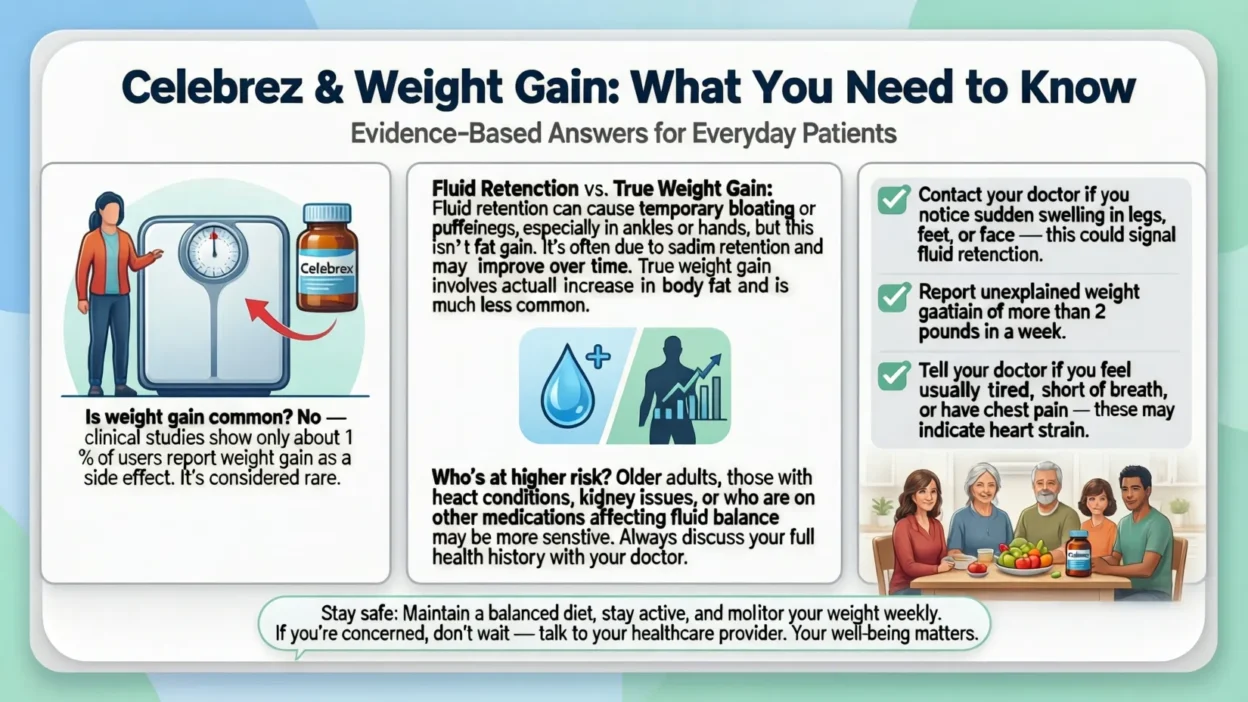
Celebrex (celecoxib) is a widely prescribed medication used to relieve pain and inflammation from conditions such as arthritis, ankylosing spondylitis, and acute joint pain. While it is effective at improving mobility and quality of life, many people taking Celebrex worry about potential side effects especially weight gain. Gaining weight can be frustrating and may raise concerns about long-term health, making it important to separate facts from assumptions.
So, does Celebrex cause weight gain? The short answer is that weight gain is not considered a common direct side effect of Celebrex. However, some people do notice changes on the scale while taking this medication, which can lead to confusion and concern.
These changes are often related to fluid retention, reduced physical activity, or underlying health conditions rather than actual fat gain. In this article, we’ll take a closer look at how Celebrex works, why weight changes may occur, and what you can do to manage them safely and effectively.
What Is Celebrex and How Does It Work?
Celebrex, also known by its generic name celecoxib, is a nonsteroidal anti-inflammatory drug (NSAID) used to reduce pain, inflammation, and stiffness. It is commonly prescribed for conditions such as osteoarthritis, rheumatoid arthritis, ankylosing spondylitis, menstrual pain, and short-term acute pain. Unlike traditional NSAIDs, Celebrex belongs to a specific class called COX-2 inhibitors.
To understand how Celebrex works, it helps to know that pain and inflammation in the body are partly caused by enzymes called cyclooxygenase (COX). There are two main types: COX-1 and COX-2. COX-2 is primarily responsible for inflammation and pain, while COX-1 helps protect the stomach lining and support kidney function. Celebrex selectively blocks the COX-2 enzyme, which allows it to reduce inflammation with a lower risk of stomach irritation compared to non-selective NSAIDs like ibuprofen or naproxen.
Because Celebrex targets inflammation rather than directly affecting metabolism or fat storage, it does not inherently cause weight gain. However, its effects on fluid balance, kidney function, and pain relief can indirectly influence body weight in some individuals, which is why weight-related concerns sometimes arise during treatment.
Common and Rare Side Effects of Celebrex
Like all medications, Celebrex can cause side effects, although not everyone experiences them. Most side effects are mild and tend to improve as the body adjusts to the medication. The most commonly reported side effects of Celebrex include stomach discomfort, indigestion, diarrhea, headache, dizziness, and upper respiratory symptoms such as a runny nose or sore throat. Compared to traditional NSAIDs, Celebrex is generally easier on the stomach, but digestive symptoms can still occur, especially with long-term use.
Less common but more serious side effects are also possible. These include fluid retention (edema), which may cause swelling in the ankles, feet, or hands and can lead to a temporary increase in body weight. Celebrex may also raise blood pressure or affect kidney function in certain individuals, particularly older adults or those with pre-existing kidney or heart conditions.
In rare cases, long-term or high-dose use of Celebrex has been associated with an increased risk of cardiovascular events such as heart attack or stroke. Because of these potential risks, doctors typically prescribe the lowest effective dose for the shortest duration necessary. Understanding these side effects helps explain why some people associate Celebrex with weight changes, even though weight gain itself is not a primary adverse effect.
Does Celebrex Cause Weight Gain? (Direct Answer)
Weight gain is not considered a common or direct side effect of Celebrex. Clinical studies and prescribing information for celecoxib do not list true weight gain—meaning an increase in body fat—as a typical adverse reaction. This means Celebrex does not directly alter metabolism, slow calorie burning, or cause fat storage in the body.
However, some people may notice a change on the scale while taking Celebrex, which can create the impression that the medication causes weight gain. In most cases, this change is linked to temporary fluid retention rather than actual fat gain. Celebrex can affect kidney function and fluid balance in certain individuals, leading to mild swelling or water weight, especially in the legs, ankles, or feet.
It’s also important to distinguish between short-term weight fluctuations and long-term weight gain. A small increase over a short period is more likely related to water retention, while gradual weight gain over months is usually influenced by lifestyle factors such as reduced physical activity, diet changes, or underlying health conditions.
Overall, for the majority of people, Celebrex does not cause significant or permanent weight gain. If noticeable weight changes occur, they should be evaluated in the context of overall health, dosage, duration of use, and other contributing factors rather than attributed to the medication alone.
Why Some People Gain Weight While Taking Celebrex
Although Celebrex does not directly cause weight gain, some individuals notice weight changes during treatment. These changes are usually influenced by indirect factors rather than the medication itself. One of the most common reasons is fluid retention. Celebrex can cause the body to retain water in certain people, leading to swelling in the ankles, feet, or hands and a temporary increase in body weight. This type of weight gain is not related to fat accumulation and often resolves with dose adjustment or discontinuation.
Another contributing factor is reduced physical activity. Many people prescribed Celebrex have chronic pain conditions such as arthritis, which can limit movement. Even when pain improves, activity levels may remain lower than before, slowing calorie burn and contributing to gradual weight gain over time.
Additionally, improved appetite can play a role. When pain and inflammation are better controlled, appetite may return or increase, leading to higher calorie intake without corresponding increases in physical activity. Emotional factors, comfort eating, or changes in routine can further influence eating habits.
Finally, underlying health conditions, age-related metabolic changes, and lifestyle factors can all contribute to weight fluctuations. These combined influences explain why some people associate Celebrex with weight gain, even though the medication itself is not the direct cause.
Celebrex vs Other Pain Medications: Weight Comparison
When considering the risk of weight gain, it’s helpful to compare Celebrex with other common pain medications. Unlike corticosteroids such as prednisone, which are well-known for causing significant weight gain and fluid retention, Celebrex generally has a much lower impact on body weight. Steroids can increase appetite, promote fat storage, and cause water retention, making weight gain a frequent concern during treatment.
Traditional NSAIDs like ibuprofen and naproxen are similar to Celebrex in that they primarily target inflammation. While these drugs can occasionally cause fluid retention, significant weight gain is uncommon. Celebrex, being a COX-2 selective inhibitor, is often preferred for patients who are sensitive to gastrointestinal side effects but still want effective pain control. Its mechanism does not directly influence fat storage or metabolism, which is why true weight gain is rarely reported.
That said, all NSAIDs, including Celebrex, can contribute to temporary water weight in susceptible individuals, particularly those with existing heart, kidney, or liver conditions. Compared to corticosteroids, Celebrex is considered safer in terms of weight-related concerns. Understanding these differences can help patients make informed decisions with their healthcare provider when choosing a pain management strategy.
Who Is More Likely to Notice Weight Changes on Celebrex
While Celebrex itself does not directly cause weight gain, certain groups of people may be more likely to notice changes in their weight during treatment. Older adults are particularly susceptible, as age-related changes in metabolism, kidney function, and fluid balance can make even minor fluid retention more noticeable.
Individuals with pre-existing heart or kidney conditions may also experience water retention while taking Celebrex, leading to temporary weight increases. Swelling in the ankles, feet, or hands is a common sign, and these patients should monitor their weight closely.
People who are sedentary or have limited mobility due to chronic pain or arthritis may see gradual weight gain. Even if Celebrex reduces inflammation and pain, improving movement can take time, and a lower level of daily activity can slow calorie burn, contributing to weight changes.
Additionally, patients taking higher doses or long-term Celebrex therapy may be at slightly higher risk of fluid retention, though this does not usually result in significant fat gain. Finally, lifestyle and diet habits, including calorie intake, sodium consumption, and hydration, can influence weight fluctuations during treatment. Understanding these risk factors helps patients and doctors distinguish between temporary changes and true weight gain.
How to Prevent or Manage Weight Gain While Taking Celebrex
Even though Celebrex rarely causes true weight gain, some individuals may experience temporary fluid retention or gradual weight changes. Fortunately, there are practical strategies to prevent or manage these effects.
1. Monitor Your Weight and Swelling: Keep track of your weight weekly and check for swelling in the ankles, feet, or hands. Early detection of fluid retention allows for timely adjustments, such as discussing dose changes with your doctor.
2. Maintain a Balanced Diet: Reducing sodium intake can help minimize water retention. Focus on whole foods, lean proteins, vegetables, and fruits, while avoiding processed foods high in salt or sugar. Staying hydrated also helps the body regulate fluid balance.
3. Stay Active: Gentle, low-impact exercises like walking, swimming, or cycling can help burn calories and support healthy metabolism without putting stress on painful joints. Strength training and stretching can also improve mobility and reduce the risk of weight gain from inactivity.
4. Follow Medical Advice: Always take Celebrex as prescribed and consult your doctor if you notice unexpected weight changes. Sometimes, minor adjustments to dosage or treatment plans can prevent fluid-related weight fluctuations.
By combining diet, exercise, and monitoring, most people can manage weight effectively while benefiting from Celebrex’s pain-relieving effects.
When to Contact a Doctor
Although Celebrex is generally safe and does not directly cause weight gain, certain signs should prompt a visit to your healthcare provider. Sudden or rapid weight gain—for example, gaining several pounds in a few days—can indicate fluid retention, which may be linked to kidney, heart, or vascular issues.
Noticeable swelling in the legs, ankles, or hands is another reason to seek medical advice. Persistent edema can be uncomfortable and may signal that the body is retaining excess fluid. If left unmonitored, it could put stress on the heart or other organs.
Shortness of breath, fatigue, or decreased urine output while taking Celebrex should be treated seriously, as these may indicate complications related to fluid overload or kidney function.
Even gradual or mild weight changes deserve attention if they are unexplained, persistent, or accompanied by other symptoms such as high blood pressure or digestive issues. Keeping a daily or weekly record of your weight, swelling, and medication doses can help your doctor identify patterns and determine whether adjustments are needed.
Always communicate openly with your healthcare provider. Early detection of fluid retention or other side effects allows for timely intervention, ensuring that you continue to benefit from Celebrex safely without compromising overall health.
Frequently Asked Questions
1. Can Celebrex cause belly fat?
Celebrex does not directly cause fat accumulation, including in the belly. Any perceived weight gain is usually due to temporary fluid retention or lifestyle factors rather than fat storage.
2. Does Celebrex slow metabolism?
No, Celebrex does not affect metabolism. Weight changes seen in some users are more likely linked to reduced activity, changes in appetite, or underlying health conditions.
3. Is weight gain reversible after stopping Celebrex?
Yes. If weight changes were caused by water retention, stopping the medication or adjusting the dose typically resolves the issue. True fat gain unrelated to Celebrex requires diet and exercise management.
4. How long does fluid retention last?
Fluid retention varies per individual. Mild swelling may resolve within days to weeks, especially with dose adjustment, lifestyle changes, or medical guidance.
5. Can switching doses help?
Sometimes. Doctors may reduce the dose or recommend alternative medications if fluid retention is significant. Never adjust your dose without medical advice.
6. Should I worry about weight gain on Celebrex?
For most people, no. Monitoring weight, staying active, and following a healthy diet usually prevent significant changes. Persistent or rapid weight gain should be discussed with a healthcare professional.
Conclusion
Celebrex is an effective medication for managing pain and inflammation, particularly for conditions like arthritis and chronic joint discomfort. While concerns about weight gain are common among users, clinical evidence shows that Celebrex does not directly cause fat gain. Most reported weight changes are linked to temporary fluid retention, reduced physical activity, or underlying health conditions, rather than the medication itself.
For individuals taking Celebrex, maintaining a healthy lifestyle—including a balanced diet, regular low-impact exercise, and monitoring weight—can minimize the risk of unwanted changes. Paying attention to signs such as swelling in the ankles or sudden weight fluctuations helps identify issues early and ensures timely consultation with a healthcare provider.
Ultimately, for the majority of patients, weight gain should not be a reason to avoid Celebrex. Understanding the distinction between water retention and true fat gain, along with following medical guidance, allows people to reap the benefits of pain relief without unnecessary worry. Always communicate openly with your doctor about any side effects, and approach weight changes with awareness rather than alarm. With the right precautions, Celebrex remains a safe and effective option for long-term pain management.

I’m John, the voice behind PeacefulQuotes.com. I craft quotes that spark reflection, inspire calm, and bring a moment of peace to your day.