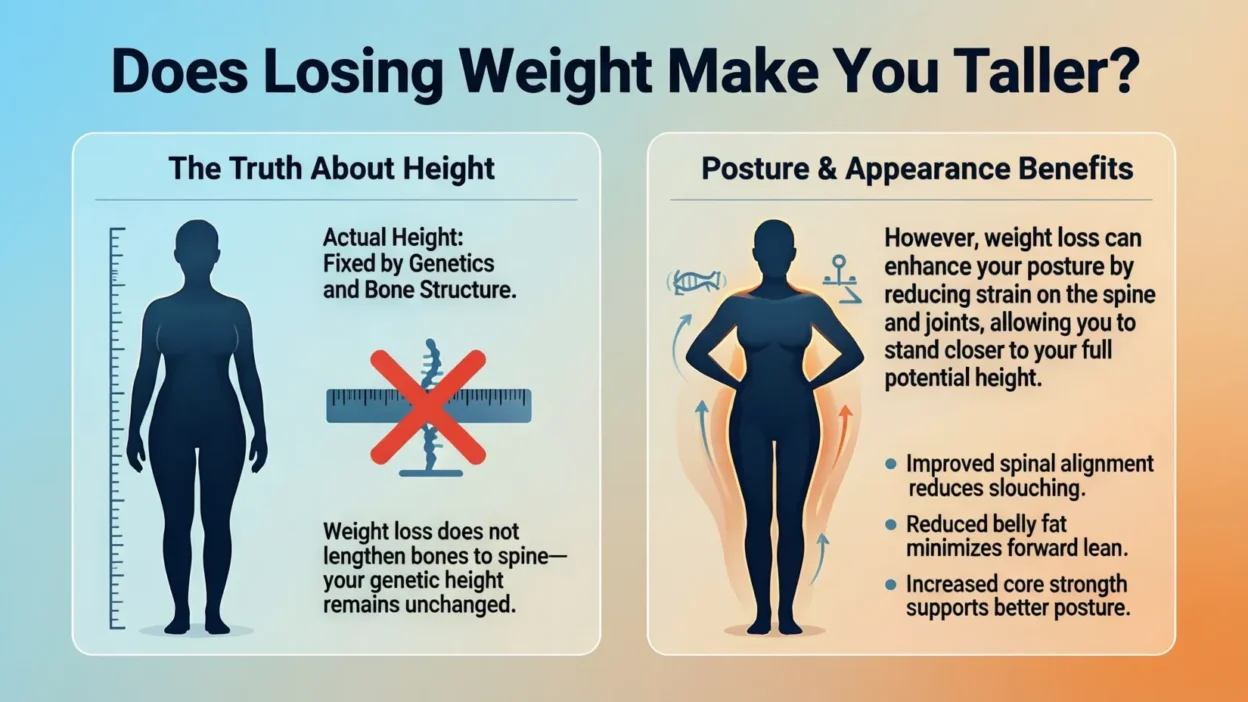
Have you ever wondered if shedding a few pounds could make you taller? While the idea may seem intriguing, it’s one that often comes up when people embark on weight loss journeys. After all, we’ve all seen the transformative effects of weight loss on body shape and posture, so it’s natural to wonder if it could somehow lead to an increase in height. However, the truth is a bit more complex.
While losing weight doesn’t actually make your bones grow taller, it can affect how tall you appear. Factors like improved posture, reduced joint compression, and changes in body composition can all contribute to a more elongated and confident appearance.
In this article, we’ll dive deep into whether losing weight truly affects your height, uncover the science behind it, and explore the ways in which weight loss can alter your overall posture and stature. Let’s separate fact from fiction!
What Determines Height?
Before we explore the relationship between weight loss and height, it’s essential to understand what truly determines how tall you are. Height is largely determined by genetics, which dictate the growth and development of your bones. During childhood and adolescence, the growth plates in your bones remain open, allowing for height increases. However, once you reach your late teens to early twenties, these growth plates close, marking the end of any natural height gain.
While genetics is the primary factor, other elements such as nutrition, physical activity, and overall health during your growing years can influence your height potential. A well-balanced diet rich in vitamins and minerals, particularly calcium and vitamin D, is crucial for bone health. Physical activities, especially weight-bearing exercises, help stimulate bone growth in younger individuals.
That being said, once these growth plates close, there is no way to increase bone length naturally. So, if you’re past this stage of development, your height is essentially set. But, does losing weight impact how tall you appear? The next sections will address how body composition and posture play a significant role in perceived height, even if actual bone length doesn’t change.
Can Weight Loss Actually Make You Taller?
While it’s clear that weight loss cannot physically increase your bone length, it can have a significant impact on how tall you appear. The key to this change lies in the way weight loss affects your body composition and posture. Losing weight can enhance your overall body proportions and improve your posture, which can give the illusion of being taller.
When you carry excess weight, especially around the abdomen and upper body, it often leads to poor posture. Slouching, a forward head posture, and a rounded back can make you appear shorter than you actually are. By losing weight, particularly around the midsection, you may notice a natural improvement in your posture. As your body becomes more balanced and aligned, your stature is enhanced, often making you appear taller.
Additionally, weight loss reduces the strain on your joints, particularly the spine, which can help alleviate compression. This relief may improve your spinal alignment, adding to your overall height perception. While losing weight doesn’t make you grow taller in the traditional sense, it can help you stand taller and look more elongated by improving the way your body carries itself.
Posture and Its Impact on Perceived Height
One of the most significant ways weight loss can make you appear taller is through the improvement of your posture. When you carry excess weight, especially around your stomach and chest, it can put strain on your spine and muscles, leading to poor posture. This can result in a hunched back, rounded shoulders, and a forward head posture, all of which contribute to a shorter appearance.
As you lose weight, particularly from the abdominal area, your body becomes better aligned. With reduced weight, your core muscles can engage more effectively, which often leads to improved posture. Strengthening these muscles through exercise can naturally straighten your back and lift your chest, which helps you stand taller and feel more confident. This better posture can add several visual inches to your height, even though your actual bone length remains unchanged.
Additionally, the weight loss that reduces pressure on the spine can alleviate compression in the vertebrae, allowing your spine to maintain a more natural curve. This helps create a more elongated appearance, further contributing to the illusion of added height.
In short, by simply improving your posture through weight loss, you can look and feel significantly taller.
Decreased Fat and Body Composition Changes
Beyond posture, weight loss can also alter how your body’s proportions are perceived, which may contribute to a taller appearance. When you lose weight, especially in areas like the neck, shoulders, and face, the reduction in fat can make your body look more elongated. In particular, losing fat around the upper body can create a more streamlined, vertical appearance, which can visually add height.
Fat loss also affects the distribution of weight throughout your body. For example, as you lose belly fat, your torso may become more defined, and your overall shape may shift to appear more proportional. This can create a more balanced silhouette, which can enhance the visual effect of height. Conversely, a top-heavy body with excess fat can make you appear more compressed and shorter.
Additionally, lean muscle mass gained through exercise during weight loss can help improve body composition. Lean muscle contributes to better posture and overall body symmetry, which enhances your physical presence. A more toned, muscular body is often associated with an upright, confident posture, contributing to an appearance of increased height.
While weight loss doesn’t increase your actual height, it can certainly make you look taller by improving your body composition and proportions.
The Role of Flexibility and Stretching
While weight loss itself can affect how tall you appear, certain exercises and activities can also enhance your posture and spinal health, making you look even taller. One of the most effective ways to elongate your body is by improving your flexibility, especially through stretching exercises. Regular stretching helps relieve tension in the muscles and joints, which can contribute to better posture and increased mobility.
Stretching exercises that target the spine and muscles around the core, shoulders, and hips can help maintain a more upright position. As you lose weight and incorporate flexibility exercises into your routine, you may notice that your body naturally adopts a taller, more open stance. Activities like yoga and Pilates focus on flexibility and core strength, both of which can contribute to a more aligned spine and better posture.
Moreover, certain stretches—such as spinal decompression exercises—can help alleviate pressure on your vertebrae, allowing them to naturally align and reduce any compression caused by excess weight. This relief can create the appearance of a longer torso and a more elongated figure.
Incorporating stretching into your weight loss journey can be a powerful tool for maximizing height perception and overall body alignment.
How Weight Loss Affects Joint Health
Weight loss not only impacts body composition and posture, but it also plays a crucial role in the health of your joints, especially the spine, hips, and knees. Excess weight puts significant strain on your joints, leading to joint compression, which can make you feel shorter over time. The added pressure on the spine can cause it to compress slightly, affecting your overall height and mobility.
By losing weight, you reduce the stress placed on these joints, particularly the spine. This alleviation of pressure can lead to better spinal alignment, allowing your body to maintain a natural curve and reducing the risk of back pain. As the spine is no longer compressed by excess weight, it can decompress slightly, leading to a taller appearance. In fact, many individuals report feeling more upright and elongated after losing weight, thanks to the reduction in joint stress.
Furthermore, improved joint health can increase your range of motion, allowing you to stand straighter and engage in activities that further enhance your posture. Healthy joints help you maintain a strong, confident stance, which can give the illusion of added height. So, while weight loss won’t add inches to your bones, it certainly supports joint health that promotes a taller, more upright posture.
Psychological Effects of Weight Loss and Height Perception
In addition to physical changes, losing weight can have a profound psychological effect on how you perceive yourself, which in turn can affect how tall you feel. As you shed excess pounds, many individuals experience a boost in confidence and self-esteem, which can make them stand taller in a figurative sense. Feeling better about your body often translates into more positive body language, including improved posture.
When you feel lighter and more in control of your body, you may unconsciously adopt a more upright stance. Confidence often leads to standing taller, with your shoulders back and head held high, making you appear taller. This change in body language can be just as impactful as any physical transformation.
Moreover, weight loss can increase body awareness, helping you recognize areas where posture can improve. As you become more mindful of how your body holds itself, you’re likely to make adjustments that result in a taller appearance. The psychological boost from weight loss doesn’t just make you feel better; it can also lead to more conscious efforts to stand tall, adding to the overall illusion of height.
So, while weight loss doesn’t physically alter your height, the psychological and posture changes can make you appear noticeably taller.
Practical Tips to Appear Taller While Losing Weight
If you’re looking to appear taller as you lose weight, there are several practical strategies you can incorporate into your daily routine to maximize the visual impact. While weight loss alone can help, pairing it with the right habits will ensure that you stand tall and confident.
1. Focus on Posture
One of the simplest ways to appear taller is to improve your posture. Engage your core muscles, keep your shoulders back, and avoid slouching. Make a habit of standing with your spine aligned and your head held high. Over time, this can make a significant difference in how tall you look.
2. Stretch Regularly
Incorporating stretching into your routine can help lengthen your spine and improve flexibility. Yoga and Pilates are excellent choices for enhancing posture and increasing height perception. Focus on exercises that decompress the spine and lengthen your torso, such as the cobra pose or spinal twists.
3. Dress Strategically
Clothing choices can also affect how tall you appear. Wearing vertical stripes, fitted clothing, and monochromatic outfits can create the illusion of height. Avoid baggy clothes, as they can make you look shorter and bulkier.
4. Strengthen Your Core
A strong core is essential for maintaining good posture. Exercises like planks and crunches will help stabilize your body and keep your spine upright, contributing to a taller look.
FAQs
1. Can I grow taller after 25 if I lose weight?
Unfortunately, once you’ve passed your growth years (typically by your early twenties), your bones have stopped growing. While weight loss won’t physically increase your height, it can improve your posture and body proportions, which may give the illusion of added height.
2. How long does it take to see a difference in posture from weight loss?
The timeline for seeing changes in posture depends on several factors, including how much weight you lose and whether you’re strengthening your core. Generally, noticeable improvements in posture can occur within a few weeks of weight loss, especially if you incorporate posture exercises into your routine.
3. Are there any exercises that can help me look taller?
Yes! Exercises that improve flexibility and strengthen your core, such as yoga, Pilates, and stretching, can make a significant difference. Posture-focused exercises like back stretches, spinal decompression, and balance exercises will help you stand taller and feel more confident.
4. Does losing belly fat make you taller?
Losing fat around your belly can improve your posture, particularly by reducing pressure on the spine and core muscles. As you lose belly fat and engage in posture-enhancing exercises, you may notice a more elongated appearance.
Conclusion
In conclusion, while losing weight cannot physically make you taller by increasing your bone length, it can certainly enhance how tall you appear. Factors like improved posture, better body proportions, and reduced joint pressure all contribute to a more elongated and confident appearance. By focusing on posture improvement, incorporating stretching exercises, and maintaining a healthy body composition, you can maximize the visual effects of weight loss and look taller.
It’s important to remember that height is largely determined by genetics, and there’s no way to increase your actual bone length once your growth plates close. However, by losing weight, you can reduce the strain on your spine and joints, which can alleviate compression and help you stand straighter. Additionally, a boost in self-confidence and body awareness can lead to more positive body language, contributing to a taller, more upright stance.
Ultimately, the journey to looking taller through weight loss is not just about the numbers on the scale, but about feeling better in your own body. By combining weight loss with posture correction and regular stretching, you can achieve a more confident, elongated look, even if your height doesn’t change.

I’m Agatha Christie, the voice behind PeacefulQuotes.com. I craft thoughtful words and timeless quotes that bring calm, clarity, and a touch of wisdom to everyday life.