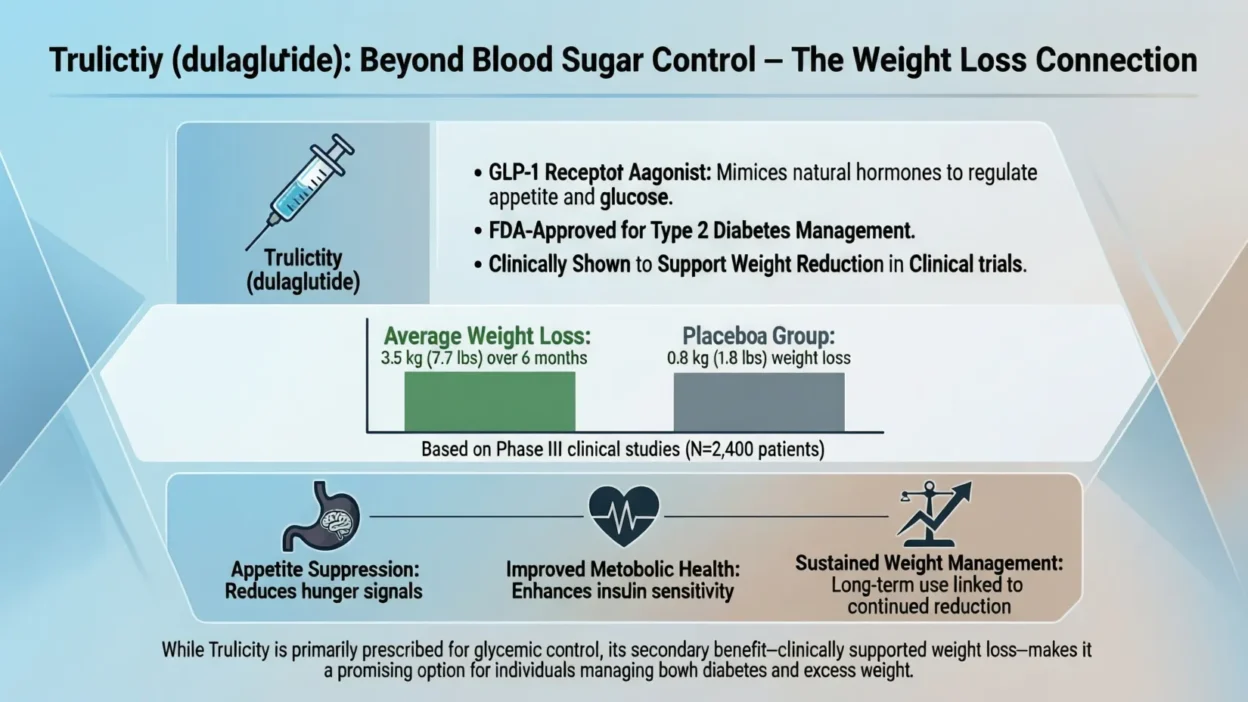
Trulicity (dulaglutide) is a medication primarily prescribed for managing type 2 diabetes by helping control blood sugar levels. However, an interesting secondary effect reported by many patients is weight loss.
But does Trulicity really cause weight loss, or is it merely a side effect for some individuals? This question has sparked much interest, as many are curious about the potential of using Trulicity for weight management, especially in patients who are overweight or heavier .
While Trulicity is not officially approved as a weight loss drug, its impact on appetite and metabolism has raised discussions about its effectiveness in helping individuals shed pounds.
In this article, we will explore the relationship between Trulicity and weight loss, its mechanisms, clinical evidence, and whether it’s a viable option for those looking to lose weight. Let’s dive into the science behind Trulicity and uncover what you need to know before considering it for weight management.
What is Trulicity?
Trulicity (dulaglutide) belongs to a class of medications called GLP-1 receptor agonists. It is primarily prescribed for managing type 2 diabetes, helping to control blood sugar levels. Trulicity mimics the action of a naturally occurring hormone called GLP-1 (glucagon-like peptide-1), which plays a vital role in regulating blood sugar, insulin secretion, and digestion. By enhancing the body’s natural insulin response, Trulicity helps prevent blood sugar spikes after meals, thereby aiding in better glucose control.
Aside from its main function of controlling blood sugar, Trulicity is also linked to several secondary effects, one of which is weight loss. This has piqued the interest of many patients and healthcare professionals alike. When administered once a week via an injection, Trulicity not only helps with blood sugar control but may also lead to a reduction in appetite and food intake. This combination of factors contributes to the gradual and modest weight loss that some individuals experience.
While Trulicity is not FDA-approved specifically for weight loss, its influence on hunger hormones and gastric emptying has made it a subject of interest for those looking to manage their weight. In the next sections, we will explore how Trulicity can potentially lead to weight loss and what clinical research says about this effect.
Does Trulicity Cause Weight Loss?
Trulicity has garnered attention for its potential to aid in weight loss, though it is not specifically designed for this purpose. The weight loss observed by some individuals using Trulicity is primarily a secondary effect of the medication, as it works to regulate blood sugar levels in those with type 2 diabetes. Clinical studies have consistently shown that patients taking Trulicity often experience modest weight loss, typically ranging from 2 to 6 pounds over the course of several months.
One of the reasons behind this weight loss is Trulicity’s effect on appetite regulation. As a GLP-1 receptor agonist, Trulicity helps slow gastric emptying, which means food stays in the stomach longer. This creates a sensation of fullness, reducing the urge to eat between meals. Additionally, Trulicity can alter the balance of hormones that control hunger, such as ghrelin, leading to decreased appetite.
In clinical trials, weight loss was more pronounced in people who combined Trulicity with dietary changes and exercise. However, it’s important to note that the medication’s effects on weight loss are not guaranteed for everyone. Some individuals may not experience any noticeable changes in weight despite using Trulicity, as other factors, such as diet, exercise, and individual metabolism, play significant roles in weight management.
Overall, while Trulicity may help with weight loss for some, it should not be viewed as a weight-loss solution on its own.
How Does Trulicity Cause Weight Loss?
Trulicity’s ability to aid in weight loss can be attributed to several biological mechanisms that affect hunger, digestion, and metabolism. Here are the key ways in which Trulicity may contribute to weight reduction:
1. Appetite Suppression
Trulicity works by mimicking the effects of GLP-1, a hormone that naturally occurs in the body. One of the roles of GLP-1 is to reduce appetite by signaling the brain that you are full. By increasing the levels of GLP-1, Trulicity can help people feel satisfied with smaller meals, leading to reduced calorie intake over time. This is particularly helpful for those who struggle with overeating or have constant food cravings.
2. Slower Gastric Emptying
Trulicity slows down the rate at which food moves from the stomach into the intestines, a process known as gastric emptying. This delay in digestion keeps you feeling fuller for longer, which further reduces hunger and the likelihood of snacking or overeating between meals. This effect is particularly beneficial for those who experience hunger pangs after eating.
3. Improved Insulin Sensitivity
By improving insulin sensitivity, Trulicity helps the body process glucose more effectively. When blood sugar levels are well-regulated, the body is less likely to store excess fat, and metabolism is more efficient. This can also contribute to weight management by reducing fat storage and encouraging the body to burn fat for energy.
Factors Influencing Weight Loss with Trulicity
While Trulicity can contribute to weight loss for some, the extent to which it works varies between individuals. Several factors play a role in determining how effective Trulicity will be for weight management. Here are the key factors that influence weight loss outcomes:
1. Individual Variability
Not everyone will experience weight loss with Trulicity. Genetic factors, lifestyle choices, and overall health can all influence how the body responds to the medication. Some individuals may lose weight more quickly, while others may not see any significant change. This variability is common with medications that affect metabolism and appetite. For example, someone with a faster metabolism or higher physical activity may experience more noticeable weight loss than someone with a slower metabolism.
2. Diet and Exercise
Trulicity is most effective when combined with a healthy diet and regular exercise. Clinical trials have shown that patients who also make lifestyle changes, such as improving their diet and increasing their physical activity, tend to see more significant weight loss. While Trulicity can help reduce appetite, it’s important to maintain a balanced diet and stay active to maximize weight loss and overall health.
3. Duration of Use
The duration of Trulicity use also plays a role in weight loss. Many people begin to see gradual weight loss within the first few weeks or months of treatment. However, it may take several months to experience the full effects. Additionally, maintaining weight loss in the long term requires ongoing lifestyle changes and, in some cases, continued use of the medication.
Is Trulicity a Reliable Weight Loss Solution?
While Trulicity may help some individuals lose weight, it is important to remember that it is not a weight loss medication. Trulicity is FDA-approved for managing type 2 diabetes, and weight loss is considered a secondary benefit for some users. Therefore, it should not be relied upon as a primary weight-loss solution, especially for those without diabetes. Its primary function is to regulate blood sugar levels, and any weight loss that occurs is a byproduct of its action on appetite, gastric emptying, and insulin sensitivity.
Effectiveness and Consistency
The weight loss associated with Trulicity is typically modest and varies from person to person. On average, individuals may lose 2 to 6 pounds over several months. However, some people might not experience any significant weight loss at all. This makes it important to approach Trulicity with realistic expectations. It can be helpful for overweight or heavier diabetic patients, but it is not guaranteed to produce dramatic weight loss results.
Should It Be Used for Weight Loss?
While Trulicity may help people lose weight as a side effect, using it solely for weight loss purposes is not recommended unless prescribed by a doctor. FDA-approved medications specifically for weight loss, such as Wegovy and Saxenda, may offer more consistent results. Additionally, lifestyle changes like diet and exercise should always be considered as the foundation of any healthy weight management strategy.
In conclusion, Trulicity can aid in weight loss for some, but it is not a guaranteed or sustainable solution for everyone.
Possible Side Effects of Trulicity
While Trulicity can be effective for some individuals in helping manage blood sugar and promote modest weight loss, it is important to be aware of the potential side effects. Like all medications, Trulicity can cause both mild and serious side effects, and understanding these risks is crucial before starting treatment.
Common Side Effects
Some of the more common side effects associated with Trulicity are related to its effect on the digestive system. These can include:
- Nausea: Many users report feeling nauseous, especially when starting the medication. This can lead to decreased appetite, which may contribute to weight loss.
- Vomiting: A less common, but possible, side effect.
- Diarrhea: Trulicity can cause gastrointestinal issues, including diarrhea, which can be bothersome for some users.
- Abdominal pain: Some patients experience discomfort or bloating in the stomach area.
These side effects are often temporary and may improve as the body adjusts to the medication. However, if they persist or worsen, it’s important to contact a healthcare provider.
Serious Side Effects
In rare cases, Trulicity can cause more serious side effects, such as:
- Pancreatitis (inflammation of the pancreas): This is a serious condition that can cause severe abdominal pain and may require medical attention.
- Kidney problems: Some users may experience kidney issues, especially if they have pre-existing kidney conditions.
- Thyroid cancer risk: Although rare, there have been concerns about a possible increased risk of thyroid cancer in animals, leading to a cautionary note for human use.
As with any medication, it is crucial to weigh the potential benefits of Trulicity against the risks and discuss any concerns with your healthcare provider.
Who Should Consider Trulicity for Weight Loss?
Trulicity may not be the right solution for everyone when it comes to weight loss. While it can aid in weight reduction for some individuals, it is crucial to understand the specific circumstances under which Trulicity may be most beneficial.
For Diabetic Patients
Trulicity is primarily designed to manage type 2 diabetes, and for diabetic patients, it may provide a dual benefit. Not only can it help control blood sugar levels, but it may also lead to modest weight loss. Overweight or heavier individuals with diabetes often struggle with weight management due to insulin resistance, and Trulicity’s ability to improve insulin sensitivity and reduce appetite can make it a valuable part of their treatment plan. For those who are overweight or heavier and have type 2 diabetes, Trulicity may help improve metabolic health while contributing to weight loss, provided it is used alongside a balanced diet and regular exercise.
For Non-Diabetic Individuals
Trulicity is not FDA-approved for weight loss in non-diabetic individuals, and using it off-label for this purpose can be risky. While some may experience weight loss as a side effect, the risks including gastrointestinal issues, kidney problems, and potential thyroid concerns should not be overlooked. Non-diabetic individuals looking for weight loss solutions should first consider lifestyle changes like diet and exercise, and consult a healthcare provider for safer, FDA-approved weight loss medications, such as Wegovy or Saxenda.
In conclusion, Trulicity can be an effective tool for weight management in diabetic patients but should not be used solely for weight loss in those without diabetes. Always consult a healthcare provider before making any decisions about medication.
Alternative Weight Loss Methods
While Trulicity may help some people manage their weight, it’s important to consider other, more conventional and FDA-approved weight loss methods that are designed specifically for this purpose. These alternatives can offer more predictable results and fewer risks when compared to using Trulicity solely for weight loss.
1. Lifestyle Changes: Diet and Exercise
The most effective and sustainable way to lose weight is through a combination of healthy eating and regular physical activity. Adjusting your diet to include more whole foods like vegetables, fruits, lean proteins, and whole grains can create a calorie deficit, which is key for weight loss. Regular exercise such as aerobic activities, strength training, and high-intensity interval training (HIIT)can help burn calories, improve metabolism, and build muscle, which in turn supports fat loss.
While these lifestyle changes are effective, they require consistency and commitment over time. However, they carry no risk of side effects, unlike medications, and can provide long-term health benefits beyond weight loss, such as improved cardiovascular health and better mental well-being.
2. FDA-Approved Weight Loss Medications
For those who struggle to lose weight through diet and exercise alone, there are FDA-approved weight loss medications that might be more appropriate. Medications like Wegovy (semaglutide) and Saxenda (liraglutide) work similarly to Trulicity by mimicking GLP-1, but they are specifically approved for weight management in non-diabetic individuals.
These medications are more reliable for weight loss compared to Trulicity because they are designed specifically to target appetite and promote fat burning. If you’re considering medication for weight loss, a conversation with your healthcare provider is essential to determine the right option for you.
Ultimately, weight management should always be approached from multiple angles, with medical advice and a sustainable lifestyle at the forefront.
Frequently Asked Questions
1. Does Trulicity cause significant weight loss?
Trulicity may cause modest weight loss in some individuals, particularly those with type 2 diabetes. Weight loss typically ranges from 2 to 6 pounds over several months, depending on factors like diet, exercise, and individual metabolism. However, the results vary, and not everyone will experience weight loss.
2. Can non-diabetic people use Trulicity for weight loss?
Trulicity is not FDA-approved for weight loss in non-diabetic individuals. While it may cause weight loss in some people as a side effect, using Trulicity off-label for weight loss is not recommended without medical supervision. For non-diabetic weight loss, other medications like Wegovy or Saxenda are more appropriate and FDA-approved.
3. How long does it take for Trulicity to show weight loss effects?
It may take several weeks to a few months before you begin to notice weight loss effects from Trulicity. For some, the weight loss is gradual and requires consistent use, along with lifestyle changes like diet and exercise, to see noticeable results.
4. What are the common side effects of Trulicity?
Common side effects include nausea, vomiting, diarrhea, abdominal pain, and reduced appetite. These side effects are usually mild and tend to improve over time. However, if they persist or worsen, consult your doctor.
5. Can Trulicity be used long-term for weight loss?
Trulicity is primarily used for managing type 2 diabetes, and long-term use for weight loss alone is not advised. If weight loss is your goal, a healthcare provider may recommend alternative options specifically designed for weight management. Always discuss long-term use with your doctor.
Conclusion
In conclusion, Trulicity can be an effective tool for managing type 2 diabetes, and for some individuals, it may lead to modest weight loss as a secondary benefit. By improving insulin sensitivity, suppressing appetite, and slowing gastric emptying, Trulicity can help reduce food intake and promote weight loss in those with diabetes. However, it is important to recognize that weight loss results with Trulicity are not guaranteed and can vary significantly between individuals. For some, the weight loss may be minimal, while others may not experience any noticeable change at all.
For those with type 2 diabetes, Trulicity may offer an additional benefit beyond blood sugar control, but it should never be relied upon as the primary method for weight loss. Healthy lifestyle changes, including proper diet and exercise, remain essential components of any weight management strategy, and should be implemented alongside medication for the best results.
If you are considering Trulicity for weight loss, it is crucial to consult your healthcare provider to discuss whether this medication is appropriate for your individual health needs. Non-diabetic individuals looking for weight loss solutions should seek safer, FDA-approved medications, such as Wegovy or Saxenda, or explore lifestyle changes first.
Ultimately, achieving and maintaining a healthy weight is a multi-faceted approach that combines medication (when necessary), proper nutrition, and consistent physical activity for long-term success.

I’m Leo Tolstoy, sharing timeless wisdom on PeacefulQuotes.com. My quotes aim to inspire reflection, inner calm, and thoughtful moments in everyday life.