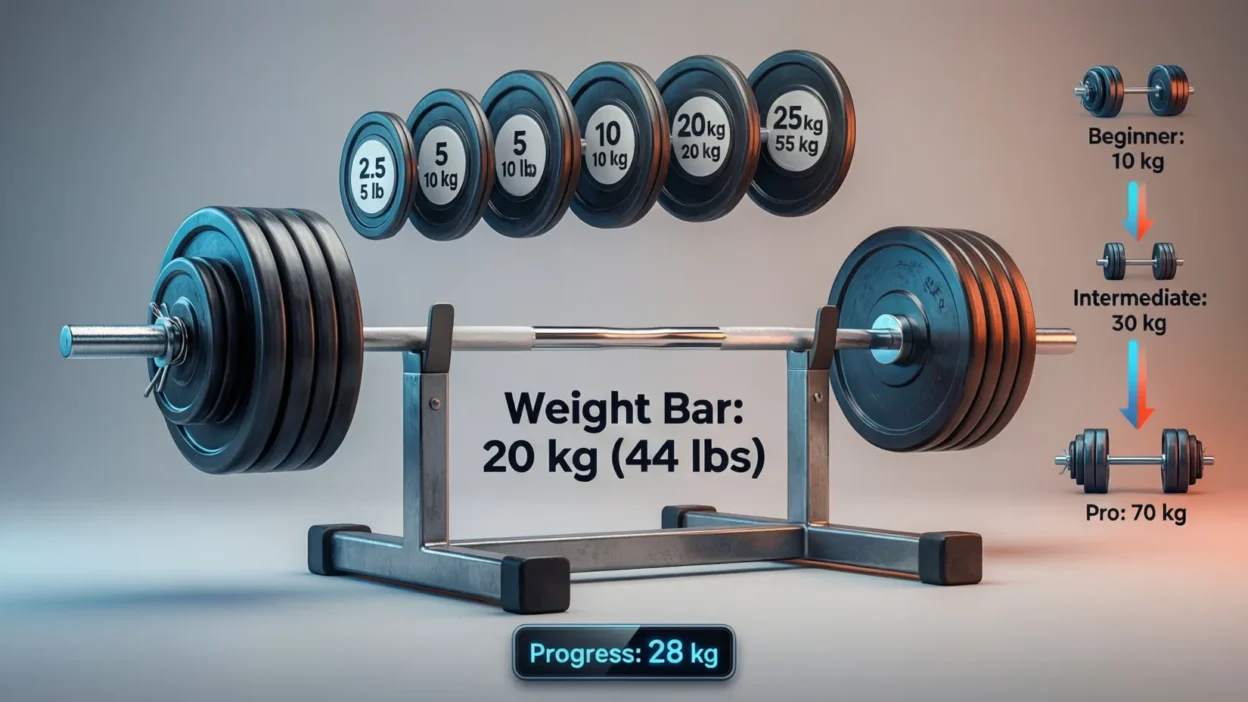
When you step into a gym or set up a home gym, the first piece of equipment you often grab is a barbell. But have you ever paused to ask, “How much does a weight bar actually weigh?” Knowing the answer is more important than it seems.
The weight of the bar itself adds to your total lift, influences your progress, and can even affect your safety during exercises like squats, bench presses, or deadlifts. Weight bars aren’t all created equal standard bars, Olympic bars, and specialty bars each have their own unique weights and dimensions.
Choosing the right bar can make a noticeable difference in your workouts, whether you’re a beginner trying to build strength or an experienced lifter aiming to hit new personal bests. In this guide, we’ll break down the weights of all common bars, helping you lift smarter and safer.
Understanding Weight Bars
A weight bar, often called a barbell, is the backbone of most strength-training routines. At first glance, it may seem like just a simple metal rod, but understanding its structure and weight is crucial for effective and safe lifting. Most weight bars are made of steel, with some specialty bars using aluminum or other composites to reduce weight or increase flexibility. A standard barbell typically consists of three main parts: the shaft (the long central portion you grip), the sleeves (where weight plates are loaded), and the knurling (the textured pattern that improves grip).
The weight of the bar itself is always part of your total lift, so knowing it ensures you’re accurately tracking progress. For example, lifting 100 lbs on a bar that already weighs 45 lbs means you’re actually lifting 145 lbs. Bars also vary in length and diameter, which affects handling and comfort during exercises. Some bars, like Olympic bars, are designed to rotate at the sleeves, allowing smoother lifts for movements such as the clean and jerk or snatch. Understanding these differences lays the foundation for choosing the right bar for your workouts.
Standard Weight Bars
Standard weight bars are the most common type you’ll find in home gyms and some fitness centers. They are simpler and more affordable than Olympic bars, making them ideal for beginners or casual lifters. These bars are typically one solid piece of steel with a uniform diameter and do not have rotating sleeves.
For men, a standard barbell usually weighs around 20 pounds (9 kg). It is generally about 5 to 6 feet long with a diameter of 1 inch. This makes it suitable for basic strength exercises such as bench presses, curls, and overhead presses. Women’s standard bars are lighter, generally weighing around 15 pounds (7 kg), and slightly shorter in length. These lighter bars accommodate smaller hands and help prevent strain while lifting.
While standard bars are convenient and easy to store, they have limitations. Because the sleeves don’t rotate, exercises like deadlifts or Olympic lifts can be harder on the wrists and forearms. Additionally, they usually support less weight than Olympic bars, limiting progress for heavy lifting. Nevertheless, for beginners or home gym users focusing on basic strength training, standard bars remain a practical and accessible option.
Olympic Bars
Olympic bars are the gold standard in gyms and competitive weightlifting. Unlike standard bars, they are designed with rotating sleeves that allow the weights to spin, reducing stress on your wrists and making lifts smoother and safer, especially for dynamic movements like the clean and jerk or snatch.
A men’s Olympic bar typically weighs 44 pounds (20 kg). It measures about 7 feet (2.2 meters) in length and has a 28–29 mm shaft diameter, providing a solid grip for heavier lifts. These bars are built to handle high weight loads, often supporting over 1,500 pounds, making them ideal for serious lifters and professional gyms.
The women’s Olympic bar, on the other hand, is lighter, weighing 33 pounds (15 kg). It is slightly shorter, around 6.5 feet (2 meters), with a smaller diameter of 25 mm. This design accommodates smaller hands and ensures proper technique without compromising safety or performance.
Olympic bars are versatile, supporting a wide range of exercises, including squats, bench presses, deadlifts, and overhead lifts. Their durability, flexibility, and standardized dimensions make them the preferred choice for athletes and fitness enthusiasts looking to track progress accurately and safely over time. Understanding the difference between standard and Olympic bars is crucial before investing in a home gym or joining a professional facility.
Specialty Bars
Beyond standard and Olympic bars, there are several specialty bars designed to target specific muscles, improve lifting mechanics, or reduce strain on joints. These bars vary widely in weight, shape, and function, making them essential tools for both advanced lifters and those addressing specific fitness goals.
The EZ curl bar is popular for arm workouts. Its angled design reduces wrist strain during bicep curls and tricep extensions. EZ curl bars typically weigh 15–25 pounds (7–11 kg), depending on size and material.
The trap bar, also called a hex bar, surrounds the lifter and is commonly used for deadlifts. It shifts the weight closer to the body, reducing stress on the lower back. Trap bars usually weigh 45–55 pounds (20–25 kg).
The safety squat bar is a cambered bar with handles that sit in front of the shoulders. It is heavier than a standard bar, weighing around 55–65 pounds (25–30 kg), and helps lifters maintain proper posture while squatting.
Other specialty bars, such as cambered bars, Swiss bars, and strongman/axle bars, vary in weight and design but serve similar purposes: improving grip, reducing joint strain, or challenging muscles differently. Knowing these options allows lifters to diversify workouts and select the right bar for their goals.
Factors That Affect Bar Weight
Not all weight bars are created equal, and several factors influence their weight and performance. Understanding these factors helps you choose the right bar for your workouts and ensures accurate tracking of your lifting progress.
1. Material: Most bars are made from steel, which is durable and heavy. Some specialty or home-gym bars use aluminum or composite materials, reducing weight for easier handling. High-quality steel bars may also have coatings, like chrome or zinc, which slightly add to the overall weight.
2. Length and Diameter: Longer bars generally weigh more due to the additional material. For example, a men’s Olympic bar is longer and thicker than a women’s bar, resulting in a higher weight. The shaft diameter affects grip comfort and handling; thicker bars can feel heavier even if the weight is the same.
3. Sleeves and Knurling: Rotating sleeves on Olympic bars add components that increase weight slightly but improve lift mechanics. Knurling, the textured grip, doesn’t add much weight but influences how heavy the bar feels in your hands.
4. Intended Use: Bars designed for powerlifting, Olympic lifting, or specialty exercises often differ in weight and flexibility. Selecting a bar that matches your training goals ensures optimal performance and safety.
How to Measure Bar Weight Accurately
Knowing the exact weight of your bar is essential for tracking progress and lifting safely. While many bars come with manufacturer specifications, not all are accurate, and older or home-gym bars may differ slightly. Fortunately, there are simple ways to measure a bar’s weight accurately.
1. Use a Calibrated Scale: The easiest method is to place the bar on a calibrated bathroom or gym scale. Make sure the bar is centered and balanced, and note the reading. For longer bars, you may need a platform scale to accommodate the full length.
2. Check Manufacturer Specifications: Most bars come with printed or online specifications. Olympic men’s bars typically weigh 44 lbs (20 kg), while women’s bars weigh 33 lbs (15 kg). Standard bars usually weigh 20 lbs (9 kg) for men and 15 lbs (7 kg) for women. Always verify these numbers if precision is important for your training.
3. Estimate for Unknown Bars: If you’re unsure of a bar’s origin or type, compare it visually to known bars or use weight charts for guidance. Combining estimation with actual weighing ensures accuracy.
Measuring your bar accurately helps you calculate total lifting weight, track progress reliably, and prevent overloading, especially in strength-focused or competitive training.
Choosing the Right Bar for Your Workout
Selecting the right bar for your workout depends on your experience level, fitness goals, and the exercises you perform. Using the correct bar ensures safety, proper technique, and maximum effectiveness.
For beginners, a standard bar or a lighter Olympic bar is usually the best choice. These bars are easier to handle, affordable, and ideal for learning form on basic lifts like bench presses, curls, and overhead presses. Starting with a manageable bar also reduces the risk of injury.
Intermediate and advanced lifters benefit from heavier or specialty bars. Men’s Olympic bars (44 lbs/20 kg) and women’s Olympic bars (33 lbs/15 kg) are standard in gyms, supporting heavier lifts such as squats, deadlifts, and Olympic movements. Specialty bars like trap bars, safety squat bars, and EZ curl bars allow targeted training and help prevent strain on joints, making them excellent tools for focused workouts.
Other considerations include grip diameter, bar length, and whether the sleeves rotate. Rotating sleeves reduce wrist strain during dynamic lifts, while thicker shafts improve grip strength. Always match the bar to your lifting environment: home gym users may prioritize compact, lighter bars, while commercial gym lifters can use heavier, competition-standard bars. Choosing wisely ensures you lift safely, efficiently, and effectively.
Common Myths About Bar Weights
Weight bars are simple in design, but several misconceptions about their weight and use persist among lifters. Debunking these myths can help you lift smarter, avoid injury, and track your progress accurately.
Myth 1: All bars weigh the same.
This is false. Standard bars, Olympic bars, and specialty bars all have different weights. For example, a men’s Olympic bar weighs 44 lbs (20 kg), while a women’s Olympic bar weighs 33 lbs (15 kg). Standard bars are lighter, and specialty bars vary depending on design and purpose. Assuming all bars are equal can lead to miscalculations in total lift weight.
Myth 2: Women’s bars are just lighter for convenience.
Women’s bars are designed with smaller diameters and lighter weight to accommodate smaller hands and optimize lifting mechanics. This is not about convenience—it’s about ergonomics and safety, allowing proper form during lifts.
Myth 3: Specialty bars are unnecessary.
Many beginners believe EZ curl bars, trap bars, or safety squat bars are optional. In reality, these bars target specific muscles, improve lifting technique, and reduce joint strain, making them valuable tools for both beginners and advanced lifters.
Understanding these myths ensures you select the right bar and lift safely and effectively, maximizing your training results.
FAQs About Weight Bar Weights
1. How much does a standard barbell weigh?
A standard men’s barbell usually weighs 20 lbs (9 kg), while a women’s standard barbell weighs around 15 lbs (7 kg). These are common in home gyms and are ideal for basic strength training.
2. How much does an Olympic barbell weigh?
A men’s Olympic bar typically weighs 44 lbs (20 kg), and a women’s Olympic bar weighs 33 lbs (15 kg). Olympic bars are longer, have rotating sleeves, and are designed for heavy lifting and competitive exercises.
3. Can I use a men’s bar for women’s exercises?
Yes, you can. However, men’s bars are heavier and thicker, which may be harder to grip and lift comfortably. Women’s Olympic bars are lighter and have smaller diameters to optimize lifting mechanics.
4. What is an EZ curl bar, and how much does it weigh?
An EZ curl bar is angled to reduce wrist strain during curls and triceps exercises. It typically weighs 15–25 lbs (7–11 kg).
5. How do I know the weight of an unknown bar?
You can measure it using a calibrated scale or compare it to bars of known weight. Manufacturer specifications or online weight charts can also provide guidance.
Conclusion
Understanding how much a weight bar weighs is essential for anyone serious about strength training, whether you’re a beginner or an advanced lifter. The type of bar you choose—standard, Olympic, or specialty—directly affects your lifts, safety, and overall progress. Standard bars are ideal for home gyms and basic exercises, while Olympic bars provide durability, rotating sleeves, and support for heavy lifting. Specialty bars, like EZ curl bars, trap bars, and safety squat bars, allow for targeted workouts, reduce joint strain, and improve lifting mechanics.
Factors such as material, length, diameter, and sleeve rotation all influence the bar’s weight and feel, making it important to select the right bar for your body and goals. Measuring your bar accurately, whether with a scale or by checking manufacturer specifications, ensures you track your lifting totals correctly and avoid injury.
By knowing the weights of different bars and understanding their uses, you can train smarter, lift safer, and maximize results. Take the time to choose a bar that fits your needs, whether for a home gym setup or a commercial gym, and use it effectively to reach your strength and fitness goals.

I’m John, the voice behind PeacefulQuotes.com. I craft quotes that spark reflection, inspire calm, and bring a moment of peace to your day.