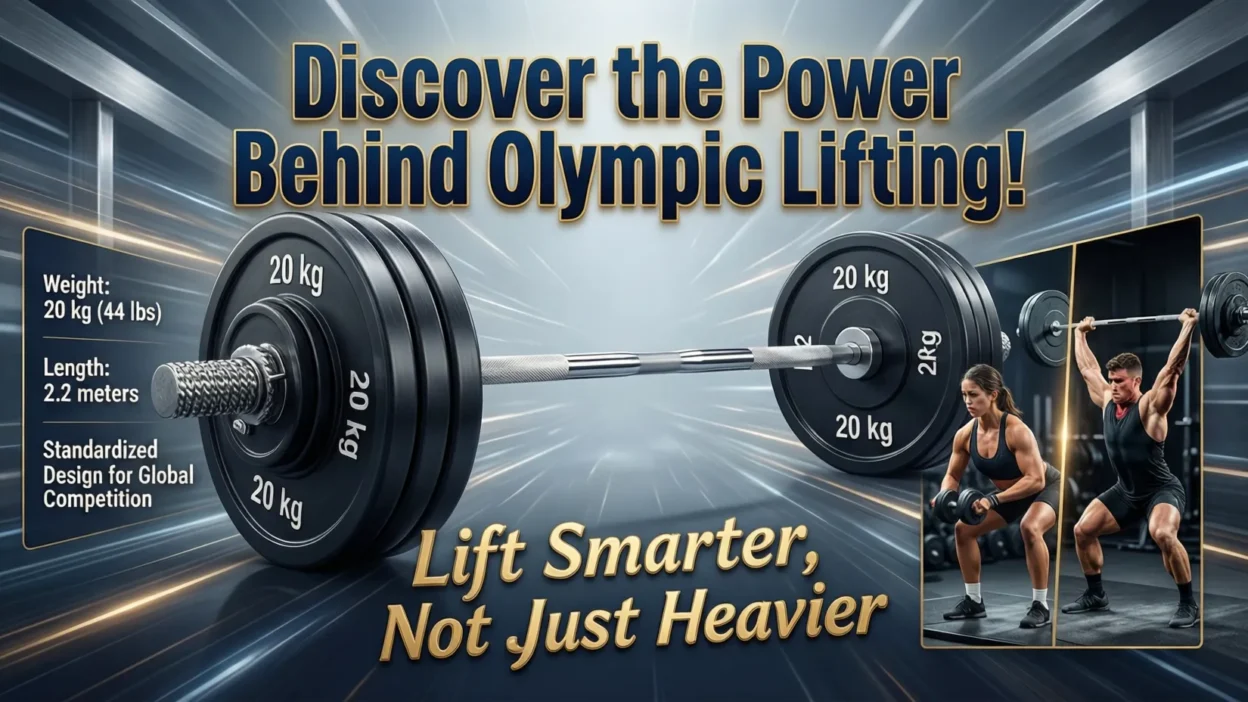
When it comes to strength training, weightlifting, or Olympic lifting, understanding the equipment you use is just as important as perfecting your technique. One of the most essential pieces of equipment in any gym is the Olympic barbell a tool that may look simple but plays a crucial role in your performance and safety.
Many beginners and even seasoned lifters often ask: “How much does an Olympic barbell weigh?” Knowing the exact weight is vital for proper load calculation, progression, and avoiding injuries.
In this comprehensive guide, we’ll break down the official weights for men’s and women’s Olympic barbells, explore variations for training and competition, and provide tips for selecting the right bar for your lifting goals.
Whether you’re a beginner curious about the equipment or an experienced lifter aiming to optimize your training, this article will give you all the answers you need about Olympic barbell weight.
What is an Olympic Barbell?
An Olympic barbell is a specialized type of barbell designed for Olympic weightlifting and competitive lifting. Unlike standard barbells found in many gyms, Olympic barbells are engineered to meet strict specifications for weight, length, diameter, and flexibility. This ensures consistent performance and safety during heavy lifts like the snatch, clean and jerk, squats, and deadlifts.
One of the most noticeable differences between an Olympic and a standard barbell is the sleeve design. Olympic bars have rotating sleeves, which allow the weight plates to spin independently of the shaft. This rotation reduces torque on the lifter’s wrists and shoulders, particularly during explosive Olympic lifts. Standard barbells, on the other hand, have fixed sleeves, making them less suitable for dynamic movements.
Olympic barbells also differ in diameter and length. Men’s Olympic barbells are typically 28–29 mm thick and 7.2 feet long, while women’s bars are slightly thinner at 25 mm and 6.6 feet long. The knurling—the textured grip pattern on the shaft—varies depending on the bar’s purpose, with powerlifting bars often featuring more aggressive knurling for grip.
Overall, the Olympic barbell is designed to balance strength, flexibility, and control, making it the standard choice for serious lifters worldwide. Understanding its features is the first step toward using it safely and effectively in your training.
Standard Olympic Barbell Weights
One of the most common questions in weightlifting is: “How much does an Olympic barbell weigh?” The answer depends on whether the bar is designed for men or women, as well as its intended use.
Men’s Olympic Barbell:
The standard men’s Olympic barbell weighs 20 kilograms (44 pounds). It measures approximately 7.2 feet (2.2 meters) in length with a shaft diameter of 28–29 mm. This bar is used in nearly all competitive weightlifting events for men, including the snatch, clean and jerk, and various strength training exercises.
Women’s Olympic Barbell:
The women’s Olympic barbell is slightly lighter, weighing 15 kilograms (33 pounds). Its length is shorter at 6.6 feet (2 meters), with a diameter of 25 mm. This design accommodates female lifters while maintaining the same rotation and flexibility standards as the men’s bar.
Quick Comparison Table:
| Bar Type | Weight | Length | Diameter |
| Men’s Olympic Bar | 20 kg / 44 lbs | 7.2 ft / 2.2 m | 28–29 mm |
| Women’s Olympic Bar | 15 kg / 33 lbs | 6.6 ft / 2 m | 25 mm |
Knowing these standard weights is essential for planning your workouts, calculating lifting loads, and tracking progress accurately. Whether you are a beginner or an advanced lifter, using the correct Olympic barbell ensures safety and consistency in every lift.
Variations of Olympic Barbells
While standard men’s and women’s Olympic barbells are widely used, there are several variations of Olympic barbells designed for different training purposes, lifting styles, and lifter levels. Understanding these options can help you choose the right bar for your goals.
Training vs. Competition Bars:
Training bars are built for durability and daily use. They may have slightly less whip (flex) compared to competition bars, making them ideal for strength training at home or in the gym. Competition bars, certified by organizations like the International Weightlifting Federation (IWF), meet strict specifications for weight, length, whip, and sleeve rotation. They are used in official events and provide optimal performance for Olympic lifts.
Specialty Bars:
Certain bars are designed for specific lifts. Powerlifting bars, for example, are stiffer to handle heavy squats and bench presses. Deadlift bars are longer and more flexible to allow for a smoother lift off the floor. Technique bars are lighter versions of competition bars, perfect for beginners learning Olympic lifts.
Youth & Junior Bars:
Bars for younger lifters are lighter, shorter, and thinner, usually ranging from 5 kg to 15 kg. They help children and teens practice proper form safely before progressing to full-sized Olympic bars.
By understanding these variations, you can select a barbell that matches your training style, strength level, and lifting goals, ensuring both safety and progress in every session.
Olympic Barbell Components
An Olympic barbell may look simple, but it’s made up of several carefully engineered components that impact performance, safety, and longevity. Understanding these parts is essential for choosing the right bar and maintaining it properly.
1. Shaft:
The shaft is the long central portion of the barbell. Its diameter and flexibility, often called “whip,” vary depending on the bar’s purpose. Olympic weightlifting bars typically have a moderate whip to assist in explosive lifts like the snatch and clean & jerk. Powerlifting bars are stiffer for heavy squats and bench presses.
2. Sleeves:
The sleeves are the rotating ends of the bar where weight plates are loaded. Rotation is enabled by bushings or bearings, which reduce torque on the lifter’s wrists and shoulders. High-quality competition bars usually use precision bearings for smoother spin, while training bars may use bushings for durability.
3. Knurling:
Knurling is the textured pattern etched into the shaft to improve grip. Some bars have center knurling to stabilize the bar during squats, while others omit it to prevent discomfort during Olympic lifts. Aggressive knurling provides a firmer grip, especially for heavy lifts.
4. Collars/End Caps:
Collars or end caps hold the sleeves in place and prevent plates from sliding off. They also protect the bar from damage and reduce wear over time.
Each component works together to ensure a barbell performs safely, consistently, and efficiently, whether you’re training at home, in a commercial gym, or competing at a high level.
Weight Tolerances and Standards
Olympic barbells are built to meet strict standards to ensure fairness and safety in lifting, especially in competitions. Organizations like the International Weightlifting Federation (IWF) define these specifications, including exact weights, lengths, diameters, and tolerances. Understanding these standards is crucial for lifters who want accuracy and consistency in training.
Men’s and Women’s Bars:
The official weight for a men’s Olympic barbell is 20 kg (44 lbs), while the women’s barbell weighs 15 kg (33 lbs). However, slight variations are allowed due to manufacturing tolerances. Typically, bars can vary by ±0.1–0.2 kg and still be considered within regulation. This small range ensures the bar is precise enough for training and competition without compromising performance.
Competition Standards:
Competition bars must meet additional specifications, including shaft whip, sleeve rotation, and knurling patterns. Men’s bars are 28–29 mm in diameter, while women’s bars are 25 mm. Sleeve diameter, rotation speed, and overall bar length are also strictly regulated to provide uniform performance for all athletes.
Checking Your Barbell:
For gym lifters, it’s helpful to weigh your bar periodically using a calibrated scale. This ensures your lifting calculations remain accurate and helps prevent overloading. For serious training or competition preparation, using a bar that adheres to official standards ensures consistency and safety across all lifts.
Understanding these tolerances and standards allows lifters to train effectively, whether at home or in a competitive setting, while ensuring each lift is precise and reliable.
How Olympic Barbell Weight Affects Training
The weight of an Olympic barbell plays a critical role in training, whether you are a beginner or an advanced lifter. Understanding the bar’s weight is essential for accurate load calculation, proper progression, and safe lifting.
When planning your workouts, you need to account for the barbell’s weight in every lift. For example, if you’re performing a bench press with 50 kg on each side using a men’s Olympic bar (20 kg), the total weight lifted is 120 kg—not just the plates. Ignoring the bar’s weight can lead to inaccurate progression tracking and affect your strength gains.
The bar’s weight also influences technique. Lighter bars, such as women’s or training bars, allow beginners to focus on form without excessive strain. Competition bars, with their specific whip and rotation, can enhance performance in Olympic lifts like the snatch or clean and jerk.
Additionally, knowing the bar weight is important for periodization and programming. Coaches often calculate percentages of a lifter’s maximum to plan sets and reps, which requires precise total load measurements.
Ultimately, whether you are performing squats, deadlifts, or Olympic lifts, including the barbell’s weight in your calculations ensures consistent, safe, and effective training, allowing you to progress steadily and avoid injuries.
Choosing the Right Olympic Barbell
Selecting the right Olympic barbell is essential for maximizing performance, safety, and longevity in your training. With various types, weights, and materials available, knowing what to look for can make a significant difference.
1. Training Goals:
Your lifting goals should dictate your choice. If you’re focused on Olympic lifts like the snatch or clean and jerk, a bar with proper whip and smooth sleeve rotation is ideal. For powerlifting, a stiffer bar designed for heavy squats, deadlifts, and bench presses is preferable.
2. Budget and Quality:
High-quality bars last longer and provide a better lifting experience, but they come at a higher cost. Training bars with bushings are affordable and durable, while competition-grade bars with bearings offer smoother spins for Olympic lifts. Assess your budget and prioritize bars that balance performance and durability.
3. Barbell Specifications:
Check the weight, length, and diameter to match your needs. Men’s and women’s bars differ in size, and youth bars are shorter and lighter. Consider knurling type, sleeve rotation, and tensile strength for added performance and safety.
4. Additional Considerations:
Some lifters prefer specialty bars for squats, deadlifts, or technique training. Maintenance is also important; bars that resist rust and wear reduce long-term costs.
Choosing the right Olympic bar ensures you lift safely, progress consistently, and get the most out of every training session.
Common Myths About Olympic Barbells
Olympic barbells are essential tools for serious lifters, but several misconceptions can confuse beginners and even experienced athletes. Let’s address some of the most common myths.
Myth 1: “All barbells weigh 20 kg.”
While men’s Olympic bars do weigh 20 kg and women’s bars weigh 15 kg, not all barbells in gyms follow this standard. Training bars, youth bars, and specialty bars often have different weights. Always check your bar before calculating loads to ensure accuracy.
Myth 2: “Women should only lift the women’s bar.”
While women’s Olympic bars are lighter and slightly shorter, this doesn’t mean female lifters can’t use a men’s bar. Many women use standard 20 kg bars safely, especially as strength and technique improve. Choosing the right bar depends on comfort, skill level, and lifting goals, not just gender.
Myth 3: “Training bars aren’t necessary.”
Some beginners think any barbell will do. In reality, training bars are designed to withstand frequent use, provide appropriate whip, and allow safe learning of technique. Using the wrong bar can increase injury risk and limit progress.
Myth 4: “Barbell weight doesn’t affect technique.”
Ignoring the bar’s weight can lead to improper load calculation and poor form, particularly in Olympic lifts. Even a 15–20 kg difference can impact performance and safety.
FAQs About Olympic Barbell Weight
1. How much does an Olympic barbell weigh?
A men’s Olympic barbell weighs 20 kg (44 lbs), while a women’s barbell weighs 15 kg (33 lbs). Training, youth, or specialty bars may have different weights.
2. What is the difference between an Olympic bar and a standard barbell?
Olympic barbells have rotating sleeves, specific lengths, diameters, and whip, making them ideal for Olympic lifts. Standard barbells are usually shorter, stiffer, and have fixed sleeves.
3. Can women use a men’s Olympic barbell?
Yes. Women can safely use a 20 kg bar, depending on strength and skill level. Women’s bars are lighter and shorter, but the choice depends on comfort and training goals.
4. How do I know if my barbell is the correct weight?
Use a calibrated scale to weigh your bar. Competition bars must meet IWF standards, but gym or training bars may vary slightly.
5. Are there bars for beginners or youth lifters?
Yes. Youth and technique bars are lighter (5–15 kg), shorter, and thinner, helping beginners practice proper form safely.
6. How does barbell weight affect my lifts?
Bar weight must be included in your total load calculation. Ignoring it can lead to inaccurate progression and affect technique, especially in Olympic lifts.
These FAQs cover the most common questions, helping lifters understand Olympic barbell weights and choose the right bar safely and effectively.
Conclusion
Understanding the weight and specifications of an Olympic barbell is essential for anyone serious about lifting, whether you are a beginner or an experienced athlete. A men’s Olympic barbell weighs 20 kg (44 lbs), while a women’s barbell weighs 15 kg (33 lbs), and there are also specialized training and youth bars designed for different purposes. Knowing these weights allows you to accurately calculate total loads, plan your workouts, and track progress safely.
Beyond weight, it’s important to understand the barbell’s components, including the shaft, sleeves, and knurling, as well as variations like training bars, competition bars, and specialty bars. Each element affects performance, technique, and safety, especially in Olympic lifts such as the snatch and clean & jerk. Proper selection and maintenance of your barbell also play a key role in longevity and consistency, preventing damage and ensuring smooth rotation over time.
By debunking common myths—like “all bars weigh 20 kg” or “women should only use women’s bars”—you can make informed choices and lift with confidence. Whether your goal is strength training, Olympic weightlifting, or competition, selecting the right barbell, understanding its weight, and including it in your load calculations will optimize your training and reduce injury risk.
Equip yourself with the right knowledge and barbell, and every lift will be safer, more effective, and more rewarding.

I’m Leo Tolstoy, sharing timeless wisdom on PeacefulQuotes.com. My quotes aim to inspire reflection, inner calm, and thoughtful moments in everyday life.