Polycystic Ovary Syndrome (PCOS) is a common hormonal disorder that affects millions of women globally. One of the most frustrating aspects of PCOS is the difficulty many women face when trying to lose weight.
This condition often leads to insulin resistance, hormonal imbalances, and increased inflammation, all of which can make weight management more challenging. Despite efforts to maintain a healthy diet and regular exercise routine, the struggle with weight loss persists for many.
Fortunately, certain supplements have shown promise in supporting weight loss for those dealing with PCOS. These supplements can help improve insulin sensitivity, regulate hormones, and reduce inflammation, offering additional support alongside diet and exercise. In this article, we’ll explore the most effective supplements for weight loss in PCOS, how they work, and how they can assist women in managing their weight while addressing the root causes of the condition.
Challenges of Weight Loss in PCOS
For women with PCOS, losing weight is often an uphill battle. The condition is closely linked to insulin resistance, which affects the body’s ability to process glucose effectively. As a result, the body stores excess glucose as fat, making it harder to shed pounds. Insulin resistance can also increase cravings for sugary and carb-rich foods, which further contributes to weight gain.
Additionally, women with PCOS often experience hormonal imbalances, including elevated levels of androgens (male hormones), which can lead to increased fat storage, especially around the abdominal area. This is compounded by the fact that PCOS can also disrupt thyroid function, slowing down metabolism and making weight loss even more challenging.
The combination of insulin resistance, hormonal fluctuations, and a slower metabolism means that traditional weight loss methods may not always be effective for women with PCOS. However, with the right combination of diet, exercise, and targeted supplements, it’s possible to address these underlying issues and promote healthier weight management. In this article, we’ll dive into the best supplements that can help manage insulin resistance, balance hormones, and enhance weight loss efforts for women struggling with PCOS.
Understanding the Science Behind PCOS and Weight Gain
PCOS is more than just a reproductive disorder; it affects the body’s metabolism, making weight loss difficult. One of the primary culprits behind PCOS-related weight gain is insulin resistance. In a healthy body, insulin helps cells absorb glucose from the bloodstream for energy. However, in women with PCOS, insulin doesn’t function as efficiently, leading to higher blood sugar levels. As a result, the body produces even more insulin, which in turn encourages the storage of fat, particularly around the abdominal area.
This chronic insulin resistance not only promotes weight gain but can also lead to other metabolic issues like diabetes and high blood pressure. The hormonal imbalances seen in PCOS further complicate the issue. Elevated levels of androgens (male hormones like testosterone) in PCOS can trigger increased fat storage, acne, and excess hair growth. These hormonal fluctuations make it harder to lose weight, even with a balanced diet and exercise.
Additionally, many women with PCOS suffer from thyroid dysfunction, which slows down the metabolism, making weight loss even more challenging. Understanding these underlying issues is essential in choosing the right approach to manage weight, which includes the use of targeted supplements to support insulin sensitivity, hormonal balance, and fat metabolism.
Top Supplements for Weight Loss in PCOS
When it comes to managing weight with PCOS, certain supplements can play a crucial role in addressing underlying metabolic and hormonal issues. These supplements help regulate insulin levels, reduce inflammation, and support fat loss. Let’s explore some of the most effective options.
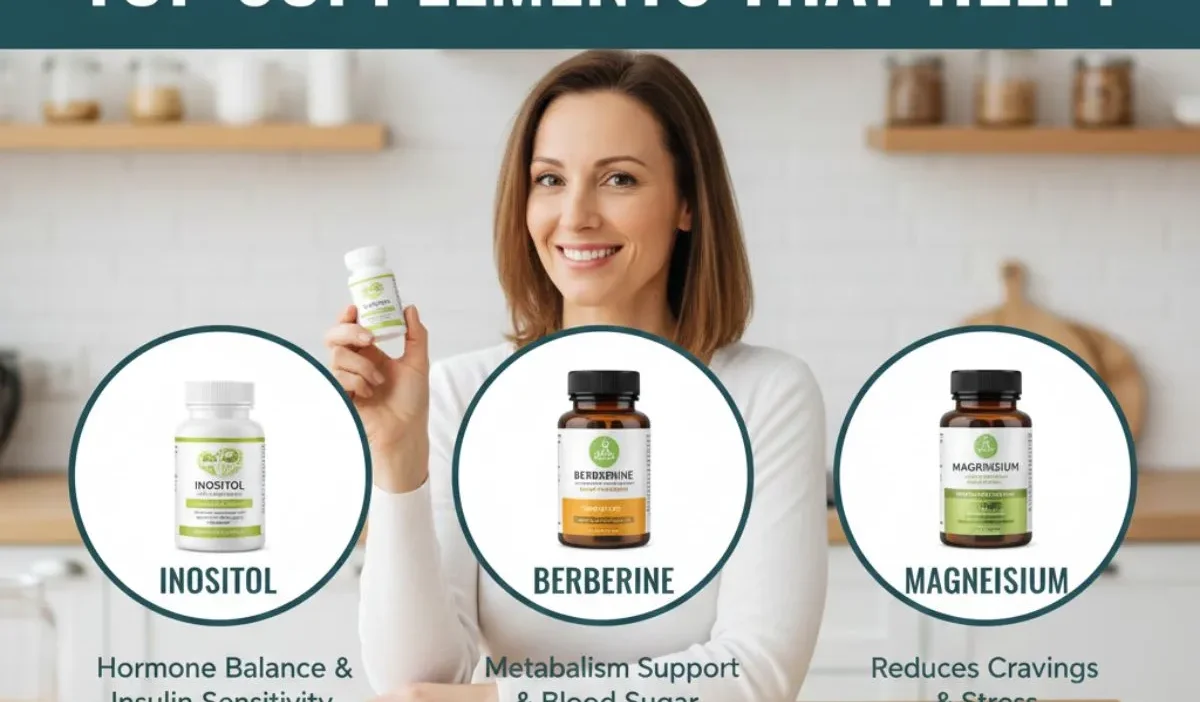
1. Inositol (Myoinositol and D-Chiro Inositol)
Inositol is a naturally occurring compound that plays a role in improving insulin sensitivity. It’s especially effective in reducing the symptoms of PCOS by regulating insulin levels and supporting ovarian function. Studies have shown that Myoinositol and D-Chiro Inositol can help women with PCOS lose weight, improve egg quality, and restore hormonal balance. A common dosage is 2g of Myoinositol and 1g of D-Chiro Inositol daily.
2. Berberine
Berberine is a plant-based compound known for its ability to improve insulin sensitivity and regulate blood sugar levels. It works similarly to Metformin (a medication often prescribed for PCOS) by helping the body respond more effectively to insulin. Berberine can support weight loss by reducing fat storage and improving metabolism. A typical dosage is 500mg 2-3 times a day.
3. Omega-3 Fatty Acids (Fish Oil)
Omega-3s are essential fatty acids that help reduce inflammation, improve insulin sensitivity, and support metabolic function. Supplementing with Omega-3 can help reduce abdominal fat, which is often a challenge in PCOS.
Additional Supplements for Weight Loss in PCOS
4. Vitamin D
Vitamin D is crucial for hormone regulation, and low levels are common in women with PCOS. Studies suggest that adequate Vitamin D levels may improve insulin sensitivity, support fat loss, and reduce the symptoms of PCOS. Supplementing with Vitamin D can also help balance hormones, improve ovulation, and lower inflammation. The recommended dosage varies, but a typical range is 1,000 to 2,000 IU daily, depending on individual needs and blood levels.
5. Chromium
Chromium is a trace mineral that plays a key role in regulating blood sugar and improving insulin sensitivity. It helps the body process glucose more effectively, reducing cravings for sugary foods, which is especially beneficial for those with PCOS. Chromium supplementation may also support fat metabolism and weight loss. A standard dose is 200–1,000 mcg daily, though it’s important to consult a healthcare provider before starting supplementation.
6. Green Tea Extract (EGCG)
Green Tea Extract, particularly its active component EGCG (epigallocatechin gallate), has been shown to boost metabolism and promote fat burning. It helps increase thermogenesis, which is the process of heat production in the body, ultimately aiding in weight loss. Green Tea Extract also supports improved insulin sensitivity, making it a great addition to a PCOS weight loss strategy.
Lifestyle Changes to Enhance Weight Loss with PCOS
While supplements can provide valuable support, lifestyle changes are equally crucial for managing PCOS-related weight gain. Here are some strategies that can enhance your weight loss efforts:
1. Dietary Modifications
A well-balanced diet plays a pivotal role in managing PCOS. Focus on a low-glycemic index (GI) diet to help regulate blood sugar levels and improve insulin sensitivity. Foods like whole grains, leafy vegetables, lean proteins, and healthy fats can stabilize insulin levels and prevent fat storage. Additionally, anti-inflammatory foods such as turmeric, berries, and omega-3-rich foods can help reduce the chronic inflammation associated with PCOS.
2. Regular Exercise
Physical activity is essential for managing insulin resistance and promoting fat loss in PCOS. A combination of cardio (e.g., walking, jogging) and strength training (e.g., weightlifting) can improve insulin sensitivity and increase metabolism. Aiming for at least 150 minutes of moderate-intensity exercise per week can yield significant health benefits, including weight loss.
3. Sleep and Stress Management
Sleep and stress levels directly impact hormonal balance. Poor sleep and chronic stress can elevate cortisol levels, which may increase fat storage, especially around the belly. Aim for 7–8 hours of quality sleep per night and practice stress-reduction techniques like meditation or yoga.
How to Safely Incorporate Supplements into Your Routine
Incorporating supplements into your daily routine can be highly beneficial for managing PCOS, but it’s important to do so safely and effectively. Here are some tips for ensuring that you’re using supplements in the best way possible:
1. Consult Your Healthcare Provider
Before adding any supplement to your routine, it’s crucial to consult with your healthcare provider, especially if you have underlying medical conditions or are taking other medications. Your doctor can help you identify which supplements are most appropriate for your specific needs and guide you on safe dosages. This is particularly important for supplements like berberine or vitamin D, which can interact with medications.
2. Start Slowly and Monitor Results
When introducing a new supplement, start with a lower dose and gradually increase it to assess your tolerance. Keeping track of any changes in your symptoms or side effects can help you understand whether the supplement is effective and whether you need to adjust your dosage. It’s also important to note that supplements may take time to show noticeable results, so be patient.
3. Avoid Over-Supplementing
While supplements can aid in managing PCOS, more is not always better. Stick to the recommended dosages and avoid the temptation to combine too many supplements at once. Over-supplementation can lead to adverse effects, so moderation is key.
Potential Side Effects of Supplements
While supplements can provide significant benefits for managing PCOS and supporting weight loss, it’s important to be aware of potential side effects. Not all supplements are suitable for everyone, and some may cause adverse reactions. Here’s a look at the common side effects associated with the supplements mentioned:
1. Inositol
Inositol is generally well-tolerated, but some women may experience mild digestive issues such as bloating, gas, or diarrhea, particularly when starting at higher doses. To minimize side effects, it’s advisable to start with a lower dose and gradually increase.
2. Berberine
Berberine may cause gastrointestinal issues, including diarrhea, constipation, or upset stomach, especially when taken in large doses. It’s recommended to take it with meals to reduce digestive discomfort. If side effects persist, consider reducing the dosage or discontinuing use.
3. Vitamin D
Excessive Vitamin D intake can lead to toxicity, which may cause nausea, vomiting, weakness, and kidney problems. It’s essential to get a blood test to determine your Vitamin D levels before supplementing, as the right dosage varies depending on individual needs.
4. Chromium
While chromium is generally safe, high doses can cause headaches, dizziness, or skin rashes. It’s important to stick to the recommended dosage to avoid these side effects.
Being mindful of side effects and consulting a healthcare provider can help ensure safe supplementation.
Frequently Asked Questions
1. Can supplements alone help me lose weight with PCOS?
While supplements can support weight loss by improving insulin sensitivity and balancing hormones, they should be combined with a healthy diet and regular exercise for the best results. Supplements work most effectively as part of an overall lifestyle approach.
2. How long will it take to see results with PCOS supplements?
The timeframe for seeing results varies from person to person, depending on factors like the severity of PCOS symptoms, lifestyle habits, and the type of supplements used. It can take anywhere from a few weeks to a few months to notice significant improvements, so patience is key.
3. Are PCOS weight loss supplements safe to use long-term?
Many PCOS supplements, like inositol, omega-3s, and vitamin D, are safe for long-term use when taken as directed. However, it’s essential to regularly check with your healthcare provider to ensure they remain effective and safe for you over time.
4. Can I take PCOS supplements if I am pregnant or breastfeeding?
Pregnant or breastfeeding women should always consult a doctor before taking any supplements. Some supplements, such as berberine, are not recommended during pregnancy.
5. How do I know which supplements are best for me?
Consulting with a healthcare provider is the best way to determine which supplements will work best for your specific symptoms and needs. Blood tests can also help identify deficiencies that certain supplements might address.
Conclusion
Managing weight with PCOS can be a challenging and ongoing journey, but the right combination of lifestyle changes and supplements can provide significant support. While diet and exercise remain crucial elements for weight loss, certain supplements can help address the root causes of weight gain in PCOS, such as insulin resistance, hormonal imbalances, and inflammation. Inositol, berberine, vitamin D, omega-3 fatty acids, and chromium are among the most effective supplements that can aid in managing PCOS symptoms and supporting weight loss efforts.
However, it’s important to remember that supplements should not be seen as a quick fix but as part of a holistic approach to managing PCOS. Regular consultations with your healthcare provider, along with monitoring your symptoms and progress, will ensure that you are on the right path.
By combining targeted supplements with a healthy, balanced diet, regular exercise, proper sleep, and stress management, women with PCOS can take control of their health and achieve sustainable weight loss. While PCOS may present unique challenges, understanding the science behind the condition and knowing which supplements can help can make all the difference in achieving your wellness goals.

I’m Agatha Christie, the voice behind PeacefulQuotes.com. I craft thoughtful words and timeless quotes that bring calm, clarity, and a touch of wisdom to everyday life.