Hitting a weight loss plateau can feel incredibly discouraging. You’re eating carefully, exercising consistently, and doing everything “right,” yet the scale refuses to move. This sudden stall often makes people question their efforts or assume their body has stopped responding altogether.
The truth is, a plateau in weight loss is not only common it’s a normal biological response to ongoing fat loss. As your body adapts to fewer calories and increased activity, it becomes more efficient, slowing progress as a way to protect itself.
Unfortunately, the scale alone doesn’t always reflect what’s really happening inside your body. Muscle gain, water retention, hormonal shifts, and lifestyle factors can all mask fat loss.
Understanding why weight loss plateaus happen is the first step toward breaking through them. In this guide, we’ll explore the science behind weight loss stalls, uncover hidden causes, and share proven strategies to help you restart progress safely and sustainably without extreme dieting or burnout.
Understanding the Science Behind a Weight Loss Plateau
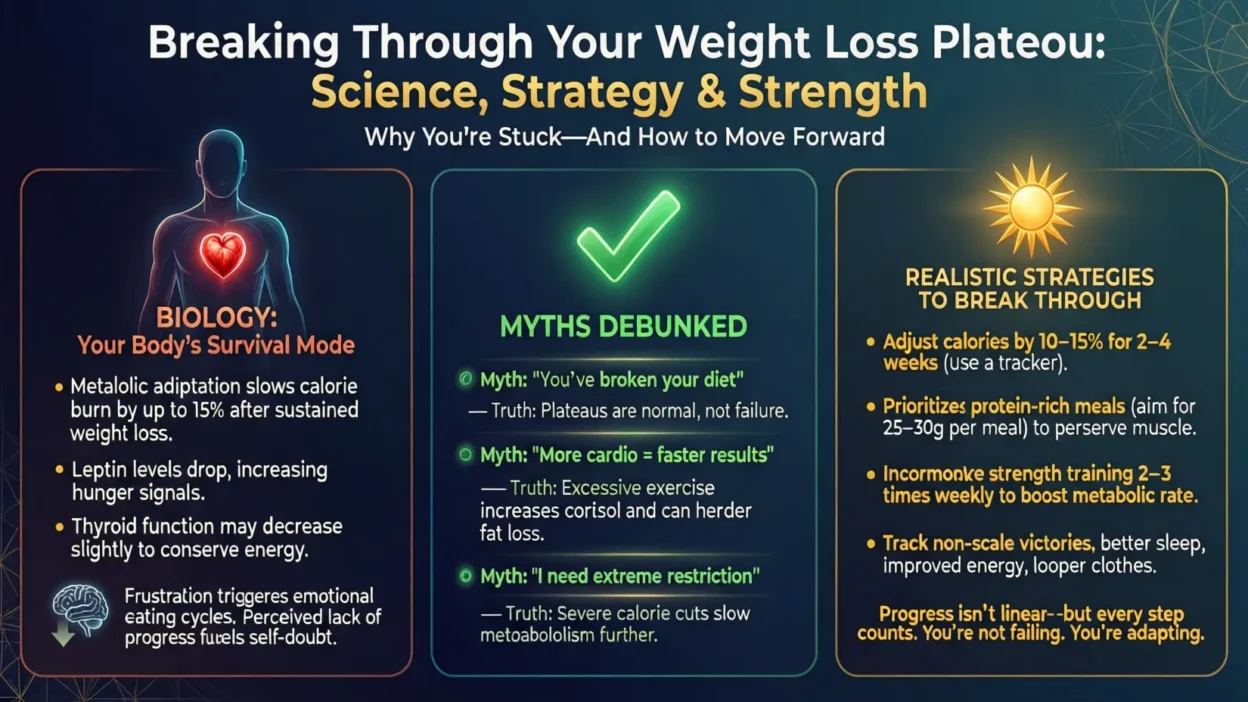
A weight loss plateau occurs when your body adapts to the changes you’ve made in diet and exercise. In the early stages of weight loss, reducing calories and increasing activity creates a clear energy deficit, leading to noticeable progress. However, as you lose weight, your body requires fewer calories to function. This process, known as metabolic adaptation, causes your metabolism to slow down in order to conserve energy. As a result, the same calorie intake and workout routine that once worked may no longer produce results.
Another contributing factor is the body’s natural survival mechanism. When calories remain low for an extended period, hormones that regulate hunger and fullness begin to shift. Levels of leptin, the hormone responsible for satiety, decrease, while ghrelin, the hunger hormone, increases. This makes it harder to stay in a calorie deficit and easier to overeat without realizing it. Additionally, your body may subconsciously reduce daily movement, such as walking or fidgeting, further lowering calorie burn. These physiological changes explain why weight loss often slows or stalls despite continued effort—and why plateaus are a normal, expected part of the fat loss journey.
Hidden Lifestyle Factors That Can Stall Weight Loss
Even when your diet and workouts seem consistent, everyday lifestyle habits can quietly contribute to a weight loss plateau. One of the most common issues is calorie creep—small increases in portion sizes, extra snacks, or liquid calories that add up over time. Foods labeled as “healthy,” such as nuts, smoothies, or dressings, are often calorie-dense and easy to underestimate.
Another overlooked factor is a reduction in non-exercise activity thermogenesis (NEAT). As your body adapts to a calorie deficit, you may unconsciously move less throughout the day—taking fewer steps, sitting more, or skipping casual movement. This decrease in daily activity can significantly reduce overall calorie burn, even if your formal workouts remain unchanged.
Sleep and stress also play a major role. Chronic sleep deprivation disrupts hormones that control appetite and blood sugar, increasing cravings and slowing fat loss. High stress levels elevate cortisol, a hormone linked to fat storage, particularly around the abdominal area. When combined, poor sleep and ongoing stress can make it extremely difficult to push past a plateau. Addressing these lifestyle factors is often the missing piece needed to restart progress and support long-term, sustainable weight loss.
Exercise Mistakes That Lead to a Weight Loss Plateau
Exercise is a powerful tool for fat loss, but certain training mistakes can contribute to a weight loss plateau. One of the most common issues is performing the same workouts for too long. When your body becomes accustomed to a routine, it adapts by using less energy to complete it. Over time, this reduces the calorie-burning impact of your workouts, slowing progress even if you’re exercising regularly.
Another mistake is relying too heavily on cardio while neglecting strength training. Although cardio burns calories, excessive amounts—especially when paired with low calorie intake—can lead to muscle loss. Since muscle tissue helps maintain a higher metabolism, losing it can further reduce your calorie needs and stall fat loss. Without enough resistance training, your body may become smaller but not leaner.
Lack of progressive overload is another key factor. Muscles need increasing challenges to grow stronger and continue adapting. This means gradually increasing weights, reps, or intensity over time. Without progression, workouts become maintenance rather than fat-loss drivers. Incorporating strength training, varying workout intensity, and allowing proper recovery can help reignite results and push past stubborn weight loss plateaus.
Scale Weight vs. Real Progress: Why the Number Can Be Misleading
Many people rely solely on the scale to track weight loss, but this can be misleading during a plateau. Muscle gain, water retention, and hormonal fluctuations can all mask actual fat loss, making it seem like progress has stopped even when your body composition is improving. For example, if you are adding muscle through strength training while losing fat, the scale may remain stable while your body becomes leaner and firmer.
Water retention is another factor that can temporarily inflate the number on the scale. Sodium intake, intense workouts, and hormonal changes—particularly in women—can cause the body to hold water, hiding fat loss. Similarly, inflammation from high-intensity training or minor injuries can also lead to short-term weight fluctuations.
To get a clearer picture of progress, it’s important to use multiple tracking methods. Measurements of the waist, hips, and other key areas provide insight into fat loss that the scale might miss. Progress photos offer visual evidence of body changes, and tracking strength and endurance improvements highlights gains in muscle and fitness. By looking beyond the scale, you can better understand your progress, stay motivated, and make informed adjustments to break through plateaus effectively.
Psychological & Behavioral Causes of a Weight Loss Plateau
A weight loss plateau isn’t always about biology or exercise—your mindset and habits play a huge role. One common factor is diet fatigue. Sticking to a restrictive eating plan for weeks or months can lead to mental exhaustion, increasing cravings and the likelihood of small, unnoticed lapses. Over time, these minor indulgences can cancel out the calorie deficit needed to continue losing weight.
Another contributor is all-or-nothing thinking. People often believe that missing a workout or eating slightly more means failure, which can lead to guilt-driven overeating or skipping meals entirely. This mindset creates cycles of restriction and overindulgence, making it harder for the body to stay in a sustainable calorie deficit.
Motivation is also tricky—while it’s essential to get started, relying solely on motivation can backfire. Motivation naturally fluctuates, and when it dips, inconsistent effort can stall progress. Developing discipline and habits ensures that healthy eating and regular exercise continue even when motivation wanes.
Addressing psychological and behavioral factors is just as important as tweaking calories or workouts. By creating sustainable routines, setting realistic expectations, and practicing mindful eating, you can prevent mental burnout and overcome plateaus without extreme dieting or stress.
How Long a Weight Loss Plateau Lasts and When to Take Action
Weight loss plateaus are a normal part of any fat-loss journey, and their duration can vary widely depending on factors like diet, exercise, and metabolism. Typically, a plateau can last anywhere from 2 to 6 weeks, though some people may experience shorter or longer stalls. Understanding that a temporary halt in scale movement doesn’t mean failure is crucial for maintaining motivation.
During a plateau, your body is adjusting to a lower calorie intake and increased activity. Hormonal changes, reduced metabolism, and subconscious decreases in daily movement all contribute to the stall. It’s important to give your body time to adapt rather than making drastic, unsustainable changes immediately.
However, there are signs that indicate it’s time to take deliberate action. If the scale hasn’t budged for more than six weeks, measurements aren’t improving, and workouts feel stagnant, you may need to adjust your approach. This could include recalculating calories, modifying your training routine, or improving sleep and stress management.
The key is to balance patience with strategy. By understanding the natural length of a plateau and recognizing when adjustments are necessary, you can overcome stalls safely, preserve muscle, and continue progressing toward your weight loss goals.
Proven Strategies to Break a Weight Loss Plateau
Breaking through a weight loss plateau requires a combination of nutrition, exercise, and lifestyle adjustments. One of the first steps is to recalculate your daily calories. As you lose weight, your body burns fewer calories at rest, so what once was a deficit may no longer be sufficient. Adjusting your intake based on your current weight can reignite progress.
Increasing protein and fiber intake is another effective strategy. Protein helps preserve muscle during fat loss and boosts satiety, while fiber-rich foods keep you full longer, making it easier to stay within your calorie target.
On the exercise side, changing your workout routine can make a significant difference. Incorporate strength training or high-intensity interval training (HIIT) to challenge your muscles, burn more calories, and prevent adaptation. Progressive overload—gradually increasing weights or intensity—ensures your workouts continue to stimulate fat loss.
Lifestyle factors are equally important. Prioritize quality sleep and manage stress, as poor rest and high cortisol levels can hinder fat loss. Additionally, consider increasing daily movement outside the gym, such as walking, stretching, or active chores, to boost overall calorie expenditure. By combining these strategies, you can overcome plateaus safely and sustainably.
Common Myths About Weight Loss Plateaus
Weight loss plateaus are often misunderstood, leading to frustration and ineffective strategies. One widespread myth is that you need to eat drastically less to keep losing weight. While reducing calories slightly can help, extreme restriction can backfire, slowing metabolism, increasing hunger, and causing muscle loss—ultimately prolonging the plateau.
Another common misconception is that more cardio always equals more fat loss. While cardio burns calories, excessive cardio without strength training can lead to muscle loss, reducing metabolism and making it harder to continue losing fat. A balanced routine that includes both resistance training and cardio is more effective for sustainable results.
Some believe that supplements or fad products can “break” a plateau. In reality, no pill, powder, or drink can replace proper nutrition, exercise, and lifestyle habits. Relying on these products often leads to disappointment and wasted money.
Finally, many people think that a plateau means their diet has stopped working. In truth, a plateau is a natural adaptation by the body to conserve energy, not a sign of failure. Understanding these myths helps you approach plateaus strategically, using science-backed methods rather than extreme or short-term solutions, keeping your progress consistent and sustainable.
Special Considerations: Women, Age, and Medical Factors
Weight loss plateaus can affect different people in unique ways, depending on gender, age, and health conditions. For women, hormonal fluctuations play a significant role. The menstrual cycle, pregnancy, or menopause can influence water retention, appetite, and fat storage, making plateaus more noticeable. Understanding these hormonal patterns can help women manage expectations and adjust nutrition and training accordingly.
Age is another factor. As we get older, metabolism naturally slows and muscle mass tends to decrease, both of which make continued fat loss more challenging. Older adults may need to focus on resistance training and protein intake to preserve lean muscle while maintaining a calorie deficit.
Medical conditions and medications can also contribute to stalled weight loss. Thyroid disorders, insulin resistance, polycystic ovary syndrome (PCOS), and certain prescription drugs can all affect metabolism and appetite. In such cases, consulting a healthcare professional is important to identify underlying issues and create a safe, effective weight loss plan.
By acknowledging these special considerations, individuals can approach plateaus with realistic expectations, adjust strategies to their unique circumstances, and avoid frustration or counterproductive methods, ensuring consistent and sustainable progress.
Preventing Future Plateaus and Maintaining Sustainable Fat Loss
Once you break through a weight loss plateau, the goal shifts to preventing future stalls and maintaining progress long-term. One of the most effective strategies is periodizing your diet and workouts. This means cycling calories, adjusting macronutrients, and varying exercise intensity to prevent your body from fully adapting to a routine. Periodic “diet breaks” or short maintenance phases can help reset metabolism and reduce cravings without compromising long-term results.
Building muscle through strength training is also critical. Muscle tissue burns more calories at rest than fat, helping maintain a higher metabolism and making plateaus less likely. Incorporating progressive overload ensures your body continues to adapt and burn energy efficiently.
Lifestyle habits play a major role in sustainable fat loss. Prioritizing quality sleep, managing stress, and staying active outside of workouts supports hormone balance and consistent calorie burn. Equally important is developing a long-term mindset, focusing on habits rather than short-term results. Tracking progress through measurements, strength gains, and photos, rather than solely relying on the scale, keeps motivation high and provides a more accurate picture of success.
By combining strategic nutrition, exercise, and lifestyle management, you can minimize plateaus, maintain fat loss, and achieve a healthy, sustainable body composition.
Frequently Asked Questions About Weight Loss Plateaus
1. How long does a weight loss plateau usually last?
Most plateaus last between 2 to 6 weeks, though some may be shorter or longer depending on diet, exercise, and metabolism. Patience is key, as temporary stalls are a normal part of fat loss.
2. Why am I eating less but not losing weight?
As you lose weight, your body burns fewer calories at rest due to metabolic adaptation. Hormonal changes, reduced daily activity, and muscle loss can also prevent continued fat loss despite eating in a calorie deficit.
3. Can exercise alone break a plateau?
Exercise helps, but it’s most effective when combined with proper nutrition. Strength training and HIIT can boost calorie burn and maintain muscle mass, but diet adjustments are usually necessary to restart progress.
4. Are weight loss plateaus permanent?
No. Plateaus are usually temporary. Adjusting calories, varying workouts, increasing NEAT, and managing stress and sleep can help overcome them.
5. Should I focus only on the scale?
No. The scale can be misleading due to muscle gain, water retention, and hormonal changes. Use measurements, progress photos, and fitness improvements for a more accurate picture of progress.
Conclusion: Embracing Plateaus as Part of Your Weight Loss Journey
Hitting a weight loss plateau can feel frustrating, but it’s important to remember that plateaus are a normal and natural part of the fat loss process. They indicate that your body is adapting to your efforts—a sign that you’ve already made meaningful progress. Rather than seeing a plateau as failure, view it as an opportunity to reassess your approach, adjust strategies, and strengthen your habits.
Breaking through a plateau requires a combination of smart nutrition, varied exercise, and lifestyle adjustments. Recalculating calories, increasing protein intake, changing your workout routine, managing stress, and prioritizing sleep are all proven methods to restart progress safely. Beyond the scale, tracking body composition, measurements, and strength improvements provides a more complete picture of success.
Sustainable weight loss is not about quick fixes or extreme diets—it’s about building consistent habits that work for your body and lifestyle. By understanding the causes of plateaus, staying patient, and applying targeted strategies, you can overcome stalls, continue progressing, and maintain a healthy, long-term body composition. Remember: consistency, adaptability, and patience are your best tools for lasting fat loss success.

I’m Agatha Christie, the voice behind PeacefulQuotes.com. I craft thoughtful words and timeless quotes that bring calm, clarity, and a touch of wisdom to everyday life.