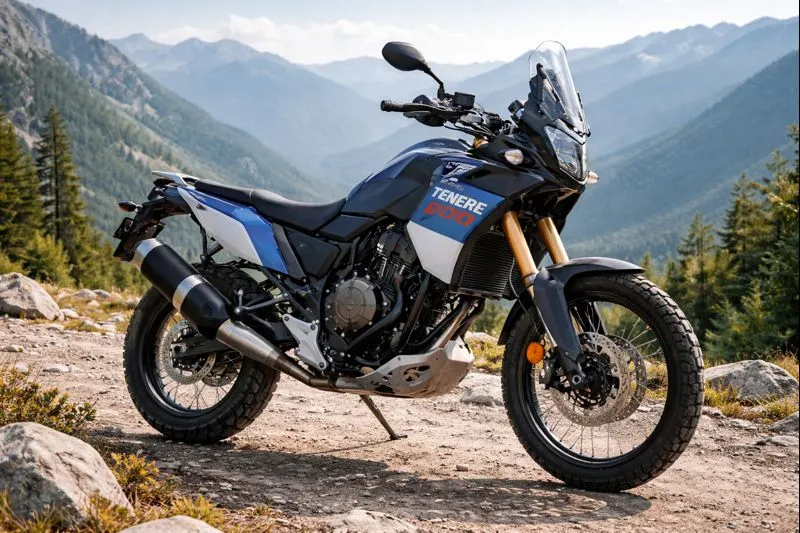
The Yamaha Tenere 700 is one of the most talked-about adventure motorcycles in its class, and much of that discussion revolves around one thing: weight. Riders often ask whether the Tenere 700 is too heavy for off-road riding, how it feels compared to its competitors, and whether the numbers on paper truly reflect its real-world performance.
Weight plays a critical role in how a motorcycle handles, how easy it is to control on difficult terrain, and how confident a rider feels both on and off the road. While specifications can make the Tenere 700 seem heavy at first glance, many owners argue that it feels much lighter once you start riding.
This article takes a deep dive into the Tenere 700’s weight from every angle, including official specifications, real-world experience, comparisons with other adventure bikes, and practical ways to reduce weight. By the end, you will clearly understand whether the Tenere 700’s weight is a strength or a limitation.
What Does “Weight” Really Mean in Motorcycles
When discussing the Tenere 700 weight, it is important to understand that motorcycle weight is not a single fixed number. Manufacturers use different terms to describe weight, and each one represents a different riding condition. The most common are dry weight, wet weight, and ready-to-ride weight. Dry weight refers to the motorcycle without any fluids such as fuel, engine oil, coolant, or brake fluid. While this number looks attractive on paper, it is rarely useful for real-world riders because no one rides a completely dry motorcycle.
Wet weight, also known as curb weight, includes all necessary fluids and a full fuel tank. This is the most realistic figure when judging how heavy a bike actually feels during everyday riding. For adventure motorcycles like the Tenere 700, wet weight is far more important than dry weight because these bikes are designed to be ridden long distances with full fuel and gear.
Ready-to-ride weight goes one step further by including accessories such as crash bars, skid plates, luggage racks, and sometimes even riding luggage. This is the weight most riders truly experience on trails and highways.
Understanding these differences helps explain why the Tenere 700 weight can seem confusing. A bike may look light in official specifications but feel much heavier once fully fueled and equipped. For practical riding and comparisons, wet and real-world weight are what matter most.
Official Tenere 700 Weight Specifications
The Yamaha Tenere 700 has weight figures that place it firmly in the middleweight adventure motorcycle category. According to Yamaha, the dry weight of the Tenere 700 is approximately 187 kg (412 lbs). This number represents the bike without fuel, oil, coolant, or other operating fluids. While dry weight is often used for marketing, it does not reflect how the motorcycle will actually feel in real riding conditions.
The more important figure is the wet or curb weight. The Tenere 700 has a wet weight of about 205 kg (452 lbs). This includes all fluids and a full fuel tank, making it a far more realistic number for everyday riding. For most riders, this is the weight that matters when maneuvering the bike, riding off-road, or picking it up after a fall.
The Tenere 700 is equipped with a 16-liter fuel tank, and fuel alone adds a noticeable amount of weight. When combined with engine oil, coolant, brake fluid, and other essential liquids, the total weight increases significantly compared to the dry specification.
In real-world adventure riding, most Tenere 700s are not left in stock form. Once crash bars, skid plates, luggage racks, and navigation equipment are added, the bike’s weight can easily rise by another 10 to 20 kg. This means a fully equipped Tenere 700 can approach or exceed 220 kg. Understanding these numbers helps riders set realistic expectations about how the bike will perform in different conditions.
Real-World Weight vs Paper Weight
The difference between paper weight and real-world weight is where many riders truly begin to understand the Tenere 700. On a specification sheet, the numbers may seem manageable, but once the bike is on the trail or fully packed for an adventure, it can feel noticeably heavier. This is because real-world riding conditions always add more weight than what manufacturers list. Fuel, tools, water, riding gear, and accessories all contribute to the actual mass you are controlling.
Another major factor is how weight is distributed. A motorcycle with a low center of gravity and balanced design will often feel lighter than its actual weight. The Tenere 700 benefits from a slim body profile and a well-centered engine layout, which helps it feel more agile than its numbers suggest. This is why many riders report that it is easier to handle than heavier-looking adventure bikes.
Terrain also plays a huge role in how weight is perceived. On smooth pavement, the Tenere 700 feels stable and planted. On gravel or dirt roads, its balance makes it predictable and confidence inspiring. However, in deep sand, mud, or technical trails, the weight becomes more noticeable, especially for less experienced riders.
Rider strength and experience matter as well. A skilled rider can manage a heavier motorcycle more easily, while beginners may feel overwhelmed by the same weight. Ultimately, real-world weight is not just about numbers—it is about balance, design, terrain, and rider capability working together.
What Adds Extra Weight to the Tenere 700
The stock Tenere 700 weight is only the starting point. In real adventure riding, most bikes quickly become heavier due to added equipment and accessories. One of the biggest contributors is fuel. With a 16-liter tank, a full load of fuel alone adds several kilograms, and this weight sits high on the bike, making it more noticeable during slow-speed riding and off-road maneuvers.
Fluids are another constant factor. Engine oil, coolant, brake fluid, and fork oil all add up, even though they are often ignored when riders think about weight. These are essential and unavoidable, but they help explain why wet weight is always much higher than dry weight.
Protective accessories add significant mass. Crash bars, skid plates, hand guards, and engine guards are popular upgrades for adventure riding, but they can easily add 5 to 10 kg. While they increase safety and durability, they also make the bike heavier and slightly harder to manage off-road.
Luggage systems are another major contributor. Steel luggage racks, hard panniers, and top boxes can add a surprising amount of weight even before any gear is loaded. Hard luggage is especially heavy compared to soft bags.
Finally, extra accessories such as auxiliary lights, GPS mounts, phone holders, and larger windscreens slowly increase the overall mass. Individually these items seem minor, but together they significantly change how heavy the Tenere 700 feels in real-world conditions.
Tenere 700 Weight Compared to Competitors
When comparing the Tenere 700 weight to other adventure motorcycles in its class, it becomes clear that Yamaha has positioned it right in the middle of the segment. It is neither the lightest nor the heaviest, which makes it a balanced option for riders who want both off-road capability and long-distance comfort.
For example, the KTM 790 Adventure and KTM 890 Adventure are slightly lighter on paper, especially in their more off-road-focused versions. These bikes are designed with performance and aggressive riding in mind, often using lighter components and a more race-oriented setup. However, this sometimes comes at the cost of long-term durability and simplicity.
On the heavier side, bikes like the Honda Africa Twin and BMW F850GS carry more weight due to larger engines, additional electronics, and a stronger focus on touring comfort. While they offer excellent highway performance and stability, their extra mass can be challenging in technical off-road conditions.
The Suzuki V-Strom 800DE sits close to the Tenere 700 in terms of weight, but it leans more toward road performance with occasional off-road use. In contrast, the Tenere 700 is designed with a stronger off-road bias, making its weight feel more manageable on dirt and gravel.
What makes the Tenere 700 stand out is how effectively it uses its weight. Its slim profile, simple construction, and excellent balance allow it to compete with lighter bikes off-road while remaining more manageable than heavier adventure tourers.
How Weight Affects Off-Road Performance
Weight has a major influence on how the Tenere 700 behaves off-road, especially when conditions become challenging. On gravel roads and hard-packed dirt, its weight actually becomes an advantage. The bike feels stable, planted, and predictable, allowing riders to maintain control even at higher speeds. The suspension and balance work together to keep the motorcycle composed over uneven surfaces.
However, as terrain becomes more technical, the weight starts to play a bigger role. In deep sand, mud, or rocky trails, a heavier bike requires more effort to control. Direction changes take more energy, and mistakes are harder to correct. Riders must be more deliberate with throttle, clutch, and body positioning to keep the Tenere 700 moving smoothly.
Picking up the bike after a fall is another important consideration. At over 200 kg in real-world conditions, lifting the Tenere 700 can be physically demanding, especially on uneven ground. This is where rider fitness and proper lifting technique become essential.
Weight also affects fatigue. A heavier motorcycle requires more physical input over long off-road sessions. Steering, balancing, and managing traction all demand more effort, which can tire a rider faster than on a lighter dual-sport bike.
Despite this, the Tenere 700 performs impressively for its weight class. Its excellent weight distribution, narrow frame, and predictable power delivery help mask its mass. For a middleweight adventure bike, it offers a strong balance between stability and off-road capability.
How Weight Affects On-Road Performance
On the road, the Tenere 700’s weight becomes one of its strongest advantages rather than a drawback. A heavier motorcycle generally feels more stable at highway speeds, and the Tenere 700 is no exception. Its solid mass helps it stay planted, reducing the effects of strong winds, passing trucks, and uneven pavement. This stability makes long-distance touring more comfortable and less tiring for the rider.
The weight also contributes to confident cornering. The Tenere 700 feels predictable when leaning into turns, offering a planted and secure sensation. While it is not a lightweight sport bike, its balance allows it to transition smoothly from one corner to another. Once set into a turn, the bike holds its line well and feels reassuring, especially on twisty mountain roads.
Braking performance is another area where weight plays a role. A heavier bike requires strong and controlled braking, and the Tenere 700’s braking system is designed to handle its mass effectively. The added weight increases stopping distances slightly compared to lighter bikes, but it also improves front-end grip, making braking feel stable and controlled.
At slower speeds, such as in city traffic or parking lots, the weight is more noticeable. Tight turns and low-speed maneuvers require careful balance and throttle control. However, the Tenere 700’s narrow design and smooth power delivery help make these situations manageable. Overall, its weight creates a perfect balance between stability, comfort, and control on paved roads.
Why the Tenere 700 Feels Lighter Than Its Weight
One of the most interesting things about the Tenere 700 is that many riders say it feels lighter than its actual weight. This is largely due to Yamaha’s smart design and excellent weight distribution. Instead of concentrating mass high on the bike, the Tenere 700 keeps much of its weight centralized and low, which makes it easier to balance and control, especially at slow speeds and off-road.
The slim body design also plays a huge role. The narrow fuel tank and seat area allow riders to grip the bike more easily with their legs, improving control and confidence. When a motorcycle feels narrow, it naturally feels more manageable, even if the scale says otherwise. This is particularly noticeable when standing on the pegs during off-road riding, where body positioning becomes more intuitive.
Another factor is the engine layout. The parallel-twin engine is compact and well-positioned, helping maintain a balanced center of gravity. This makes turning, leaning, and correcting mistakes much easier than on bulkier adventure bikes.
Suspension setup also contributes to the lighter feel. The Tenere 700’s long-travel suspension absorbs bumps and uneven terrain effectively, preventing harsh reactions that can make a bike feel heavier and harder to control. Instead, it remains composed and predictable.
Finally, the smooth and linear power delivery of the engine prevents sudden weight shifts that can unsettle the bike. Combined, these elements create a motorcycle that feels agile and responsive, making the Tenere 700 seem lighter than its actual numbers suggest.
Is the Tenere 700 Too Heavy for Beginners
Whether the Tenere 700 is too heavy for beginners depends largely on the rider’s background, confidence, and intended use. For someone completely new to motorcycling, the Tenere 700 may feel intimidating due to its size, height, and weight. At over 200 kg in real-world conditions, it requires good balance and basic riding skills to handle safely, especially at low speeds or on uneven surfaces. Beginners may find smaller dual-sport or lightweight adventure bikes easier to learn on.
However, for riders who already have some street or off-road experience, the Tenere 700 can be a very reasonable step into the adventure category. Its predictable power delivery, smooth throttle response, and balanced chassis make it forgiving compared to more aggressive performance-oriented bikes. The engine does not feel overwhelming, which helps new adventure riders build confidence gradually.
Seat height is another factor that affects how heavy the bike feels. Shorter riders may struggle to put both feet flat on the ground, which can make the weight feel more difficult to manage when stopping or maneuvering slowly. In these situations, lowering kits or seat modifications can make a big difference.
Off-road, beginners will notice the weight more clearly. Tight trails, steep climbs, and deep sand can be challenging, and picking up the bike after a fall requires physical effort. That said, many riders successfully learn on the Tenere 700 by starting with easier terrain and progressing slowly.
In summary, the Tenere 700 is not ideal for absolute beginners, but for riders with basic skills and a willingness to learn, it can be a very capable and rewarding adventure motorcycle.
FAQs
How heavy is the Tenere 700 fully fueled?
The Tenere 700 has a wet weight of around 205 kg (452 lbs). This includes a full 16-liter fuel tank and all necessary fluids. Once accessories like crash bars or luggage racks are added, the real-world weight usually increases to around 215–225 kg.
Is the Tenere 700 too heavy for off-road riding?
For most adventure riders, no. While it is heavier than a dual-sport bike, it is light for an adventure motorcycle. Its balance, slim design, and good suspension make it very capable on gravel, dirt roads, and moderate trails. Technical terrain will demand more skill and strength.
Can the Tenere 700 weight be reduced?
Yes. Weight can be reduced by installing a lighter exhaust, using a lithium battery, removing unnecessary accessories, and choosing soft luggage instead of hard panniers. These changes can save several kilograms.
Does the Tenere 700 feel heavy while riding?
Surprisingly, many riders say it feels lighter than its actual weight. Good weight distribution and a narrow design make it easy to handle once moving.
Is the Tenere 700 heavier than its competitors?
It sits in the middle of the class. It is lighter than bikes like the Africa Twin and BMW F850GS, but slightly heavier than KTM’s more performance-focused models.
Is picking up the Tenere 700 difficult?
It can be challenging, especially off-road. Learning proper lifting techniques and riding with a partner is recommended for safety.
Conclusion
The Tenere 700 weight is often seen as a concern at first, but when viewed in the context of its class and real-world performance, it becomes one of its strengths rather than a weakness. On paper, its numbers place it firmly in the middleweight adventure category, but in practice, its balance, slim design, and intelligent engineering make it feel lighter and more manageable than many riders expect.
For off-road riding, the Tenere 700 offers an impressive mix of stability and control. While it cannot match the agility of lightweight dual-sport bikes, it performs exceptionally well for an adventure motorcycle, especially on gravel, dirt roads, and moderate trails. On the road, its weight improves comfort, stability, and confidence, making it a reliable companion for long-distance travel and daily riding alike.
The key takeaway is that weight alone does not define how a motorcycle performs. Distribution, design, suspension, and rider skill all play major roles. The Tenere 700 proves that a well-balanced bike can overcome the disadvantages usually associated with higher weight.
For beginners with no riding experience, it may feel demanding. But for riders with basic skills and a desire to explore both on and off-road environments, the Tenere 700 is a highly capable and rewarding choice. With thoughtful setup and a few smart modifications, its weight can be managed effectively, turning it into a versatile machine ready for almost any adventure.

I’m Leo Tolstoy, sharing timeless wisdom on PeacefulQuotes.com. My quotes aim to inspire reflection, inner calm, and thoughtful moments in everyday life.