Have you ever wondered if something as small as a drop of ink could carry weight—not just in grams, but in meaning and impact? At first glance, ink seems insignificant, easily overlooked as it flows from pen to paper or prints from a cartridge.
Yet, despite its physical lightness, ink has shaped civilizations, preserved knowledge, and influenced human culture for thousands of years. From the earliest Egyptian papyrus scrolls to modern-day printers, the “weight of ink” has been both literal and symbolic.
Scientifically, ink has measurable mass and density, affecting how it spreads and prints. Metaphorically, every stroke written in ink carries responsibility, emotion, and power think of historic treaties, literature, or even a heartfelt letter.
This article dives into the fascinating world of ink, exploring its scientific properties, historical significance, cultural symbolism, and the remarkable ways it continues to impact our lives today.
The Science of Ink
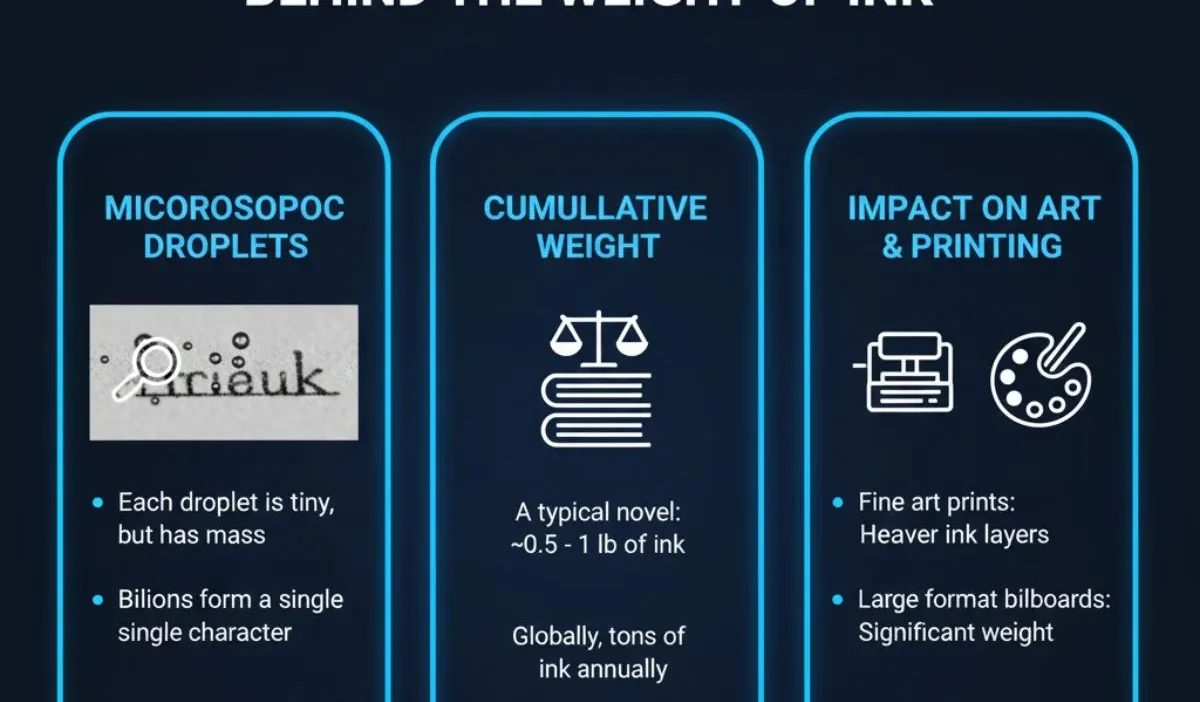
Ink may seem simple, but its composition is a carefully balanced mixture of pigments, dyes, solvents, and additives that give it color, consistency, and durability. The exact ingredients vary depending on the type: fountain pen ink is water-based and smooth-flowing, gel ink is thick and vibrant, while printer ink combines pigments and liquids to create precise, consistent prints. Even though each drop is tiny, it has measurable weight. For example, a standard printer cartridge holds about 10–12 grams of ink, enough to print hundreds of pages. A single drop of ink, by contrast, weighs only a fraction of a gram, yet its impact can be immense when multiplied over thousands of uses.
The density of ink affects how it spreads on paper, how it dries, and even how colors appear. Historically, ink formulas were carefully guarded secrets, with alchemists and scribes experimenting for the perfect blend. Modern inks are engineered for efficiency, longevity, and environmental safety, but the fundamental principle remains the same: ink must flow, adhere, and leave a mark. Understanding the science of ink not only explains its physical weight but also highlights how something so light can carry such precision, creativity, and purpose.
Historical Significance of Ink
Ink has been a silent witness to human history, carrying knowledge, culture, and authority across centuries. Ancient civilizations relied on ink to record their most important ideas. Egyptians used soot and plant-based inks on papyrus scrolls, preserving records of their society, religion, and trade. In China, ink sticks made from soot and animal glue became essential tools for calligraphy, literature, and official documentation. Similarly, medieval Europe saw monks painstakingly illuminate manuscripts with ink, creating works that were as beautiful as they were informative.
The invention of the printing press in the 15th century transformed ink’s role entirely. Gutenberg’s press allowed books, newspapers, and pamphlets to spread knowledge far more efficiently than ever before. Suddenly, the “weight of ink” extended beyond its physical measure—it became a vehicle for literacy, education, and societal change. Legal contracts, treaties, and historical documents all relied on ink to carry authority and permanence. Even the tiniest drop could hold the weight of an idea or decree that shaped entire nations.
Throughout history, ink has been more than a tool; it has been a symbol of human achievement. Its literal weight might be light, but its impact on culture, law, education, and communication has been immeasurable—a testament to the profound power contained in every stroke of the pen.
The Metaphorical Weight of Ink
Beyond its physical properties, ink carries a weight far heavier than grams or milliliters—the weight of ideas, responsibility, and influence. Every word written in ink can shape thoughts, inspire change, or leave a lasting mark on society. Consider historic treaties, legal contracts, or declarations of independence: the ink on those pages may have been physically light, but the consequences they carried were monumental. Similarly, literature and poetry, though composed of countless tiny drops of ink, have the power to move generations, evoke deep emotions, and spark revolutions in thought.
Ink also represents responsibility. A journalist’s words, a lawyer’s contracts, or even a student’s essays reflect choices and accountability. The pen, guided by ink, becomes an instrument of ethical and intellectual weight. Cultural sayings such as “the pen is mightier than the sword” highlight how ink can wield influence without force, shaping ideas and history in ways that physical might never could.
In art, ink conveys subtlety, emotion, and creativity, capturing what is often impossible to express verbally. Each stroke, though physically light, carries the imprint of human intention and imagination. The metaphorical weight of ink reminds us that while it may seem small and ordinary, ink is a vessel of knowledge, emotion, and authority—proof that sometimes the lightest things hold the heaviest meaning.
Modern Applications of Ink
In today’s world, ink continues to play an essential role, far beyond the pen and paper. The printing industry alone relies on vast quantities of ink to produce books, newspapers, packaging, and advertisements, making it a cornerstone of communication and commerce. Modern inks are engineered for precision and consistency, ensuring that text and images are clear, vibrant, and long-lasting. Advances in technology have also expanded ink’s uses into areas like 3D printing, conductive inks for electronics, and smart inks that react to temperature or light, showing just how versatile this humble substance has become.
Environmental considerations are increasingly important in ink production. Sustainable inks made from plant-based dyes and biodegradable solvents aim to reduce waste and pollution, reflecting society’s growing awareness of ecological impact. Even the seemingly trivial weight of ink has practical consequences in shipping, manufacturing, and cost calculations, as companies account for the volume and mass of ink used in printing materials.
Despite digital communication’s rise, the tangible presence of ink remains significant. Contracts, artwork, and printed publications still rely on it, bridging the physical and intellectual worlds. In modern life, ink embodies both utility and symbolism: it conveys information, preserves culture, and empowers creativity. Though often unnoticed, its presence is ubiquitous, proving that even in an increasingly digital age, ink continues to bear weight—both literally and metaphorically.
Fun Facts and Curiosities About Ink
Ink is not only practical and historical—it’s full of fascinating quirks and surprising details. For example, a standard printer cartridge may contain only 10–12 grams of ink, yet that tiny amount can print hundreds of pages, highlighting the efficiency and impact of even the smallest quantities. Similarly, a single drop of ink from a pen weighs almost nothing, but it can carry words that influence hearts, minds, and decisions.
Historically, inks could be quite exotic. Medieval scribes sometimes added precious metals like gold or silver to illuminate manuscripts, literally increasing the ink’s value and weight. Ancient Chinese ink sticks were carefully crafted and ground with water to create the perfect consistency, making each stroke a blend of art, science, and ritual.
Ink also leaves its mark in unexpected places. The heaviest book ever printed, measured by ink content, contained millions of words and dense illustrations—its weight mostly due to the countless strokes of ink covering each page. Tattoo inks, too, demonstrate how ink can permanently interact with the human body, blending art and identity in a literal and figurative sense.
Even today, ink continues to surprise. From conductive inks used in electronics to invisible inks used in security printing, its applications extend far beyond writing. These curiosities remind us that, while ink may seem light and ordinary, its uses and impact are remarkably diverse proving that small drops can carry enormous significance.
Frequently Asked Questions About the Weight of Ink
1. How much does a drop of ink weigh?
A single drop of ink weighs only a fraction of a gram, depending on the type and viscosity. Fountain pen ink is lighter, while gel or printer inks may be slightly denser. Despite its small weight, each drop can carry meaningful content, from a signature to a page of text.
2. What is the heaviest type of ink?
The heaviest inks are often those with metallic or high-pigment content, such as illuminated manuscript inks with gold or silver. Printer inks with dense pigments can also weigh more per milliliter than standard writing inks.
3. Why is ink important historically?
Ink has allowed humans to record information, create literature, sign contracts, and preserve cultural knowledge for centuries. From ancient papyrus scrolls to the Gutenberg press, ink has been central to communication and civilization.
4. Can ink have environmental impacts?
Yes. Traditional inks may contain chemicals that are harmful if disposed of improperly. Modern sustainable inks use plant-based dyes and biodegradable solvents to reduce environmental impact.
5. What does “the weight of ink” mean metaphorically?
Metaphorically, it refers to the power and responsibility carried by written words. Even physically light ink can bear immense influence through literature, legal documents, or historical records, it shapes thought, culture, and society.
Conclusion
Ink may appear light, almost insignificant, but its true weight extends far beyond the scale. Physically, a drop or even an entire pen’s contents may weigh only grams, yet each stroke carries precision, creativity, and purpose. Scientifically, understanding ink’s composition, density, and flow reveals the careful engineering behind every application from simple handwriting to high-tech printing solutions. Historically, ink has preserved human knowledge, culture, and law, recording ideas that have shaped civilizations for millennia.
Metaphorically, ink bears immense responsibility. It gives permanence to words, allowing thoughts to transcend time and space. Treaties, literature, contracts, and art all rely on ink to carry their significance. A single sentence written in ink can influence nations, inspire generations, or spark revolutions, proving that its impact is measured not in grams, but in ideas and consequences.
In modern life, ink continues to bridge the tangible and digital worlds, appearing in books, packaging, electronics, and even innovative technologies like smart inks. Its sustainability and efficiency remain important as society evolves, showing that even in a digital age, ink still matters.
Ultimately, the weight of ink is both literal and symbolic a reminder that something physically small can hold extraordinary meaning. Next time you pick up a pen or watch a printer at work, remember: ink may be light to hold, but it is heavy with influence, history, and human expression.

I’m Agatha Christie, the voice behind PeacefulQuotes.com. I craft thoughtful words and timeless quotes that bring calm, clarity, and a touch of wisdom to everyday life.